- *MSRP:
$21.99- Our Price:
- $16.72
- Buy: at $16.72


Ultra CordycepsSupplement Facts:
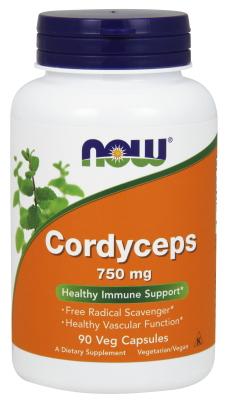
Serving size 1 capsule Cordyceps sinensis (mycelium)..................750mg Supplies 8% cordycepic acid (60mg) 0.3 adenosine (2mg) other ingredients: modified cellulose (vegetarian capsules), cellulose, magnesium silicate. suggested adult use: take 1 to 4 capsules daily, with food or without. note: cordyceps has mild blood-thinning properties. use with caution when taking anti-coagulant (blood Thinning) medications. Ultra Cordyceps contains a strain of pure cultivated Cordyceps sinensis recognized by the Chinese government as very similar to wild Cordyceps sinensis. Highly valued in China as a food and tonic herb, wild Cordyceps is a black, blade-shaped fungus found mainly above 13,000 feet in a mountainous region of China known as the Qinghai-Tibetan Highlands. Also called "Chinese caterpillar fungus," wild Cordyceps grows on, and derives nutrients from, several species of caterpillars. Because wild Cordyceps is rare and difficult to harvest, due to its harsh growing environment, efforts have been made to cultivate Cordyceps mycelia for commercial application. Ultra Cordyceps contains an award-winning strain of cultivated Cordyceps mycelia standardized by HPLC for consistent potency. It contains a minimum level of 8% cordycepic acid, a polysaccharide considered to be the major active component. Cordyceps naturally contains many other ingredients, including proteins, peptides, polysaccharides, nucleic acids such as adenosine, fatty acids, sterols, vitamins and minerals.
· Boosts energy and stamina* Cordyceps-History and Science The historical use of Cordyceps as an anti-aging herb in traditional Chinese medicine (TCM) dates back to 1700 BCE. During China's Chin Dynasty, one emperor is said to have paid an ounce of gold for a three days supply of the precious fungus. Tibetan scholars wrote detailed descriptions of Cordyceps in 15th and 18th century texts. Cordyceps was introduced to Europe at a scientific meeting in Paris in 1726, and first imported to Japan in 1728. The traditional use of Cordyceps includes improving circulation, as well as health of the lungs, heart, kidneys and liver. Cordyceps was also used to boost general vitality, increase longevity and improve sexual health.1 Cordyceps is known as a "kidney tonic" in traditional Chinese medicine. In the terminology of TCM theory, "the kidneys" refer to a functional organ system that stores vital energy and governs reproduction/sexual ability. Cordyceps promotes both the "yin and yang" aspect of the body, thus it has a very balancing, normalizing effect on many facets of human physiology.2 Commercial cultivation of Cordyceps sinensis began in the early 1980s, making the herb readily available for clinical research. More than 2000 patients have been enrolled in clinical trials in China. The results of this research show that cultivated Cordyceps has the same effects as wild Cordyceps on energy, vitality and numerous other parameters of health. Pre-clinical Animal Studies: Higher biochemical energy levels; more efficient use of oxygen Animal experiments suggest Cordyceps may increase the body's supply of ATP, which is the primary form of biochemical energy used by cells to produce metabolic energy. Mice given Cordyceps show substantial increases in liver stores of ATP.3 Cordyceps increased survival time of mice kept in a low oxygen environment, suggesting that Cordyceps helps the body use oxygen more efficiently.4 Studies are underway in China to determine if these findings explain the energy enhancing, anti-fatigue effects of Cordyceps observed in humans. Animal experiments indicate Cordyceps may improve blood supply to the brain and heart by increasing arterial blood flow to these organs.5 Human Clinical Trials The various effects of Cordyceps on humans have been seen in both open (uncontrolled) and placebo-controlled human trials. Cordyceps was given to a group of elderly persons experiencing fatigue and other age-related complaints. Compared to subjects on placebo, those taking Cordyceps reported better energy, greater tolerance to cold, better memory and improved libido.6 Similar improvements in energy, mental health and sexual function, along with improvements in heart function, were seen in a long-term study giving Cordyceps to patients with chronic heart failure.7 Further evidence that Cordyceps benefits the cardiovascular system is shown in trials where the herb has improved heart rhythm as seen on ECG.8 Clinical trials appear to validate the traditional uses of Cordyceps as a beneficial herb for the lungs, respiratory system, kidneys, liver and immune system. At a dose of 3 grams per day, Cordyceps improved respiratory function and lung health by as much as 92 % after 12 weeks.9 In several trials, Cordyceps has improved various parameters of kidney function such as increased creatinine clearance, reduced BUN and decreased in urinary protein excretion.10 Cordyceps also protects the kidneys from the toxic effects of potent antibiotics, as seen in both human and animal studies.11 Cordyceps has successfully improved liver health, as measured by liver function tests, in patients with hepatitis and liver cirrhosis.12 Numerous in vitro and in vivo animal studies have shown that Cordyceps influences various aspects of immune function, including phagocytosis, natural killer cells, interleukin-2 and T lymphocytes. Positive changes in T cells have been observed in human trials, as well.13 Antioxidant effects Extracts of Cordyceps exhibit strong free radical scavenging properties. Cordyceps has increased red blood cell SOD activity in humans, while at the same time reducing blood levels of MDA (monodialdehyde), a free radical by-product.14 Cordyceps shows an ability to inhibit both oxidation of LDL by free radicals and the accumulation of oxidized LDL in macrophages.15 Cordyceps has also decreased cholesterol deposition in the aortas of atherosclerotic mice.16 Safety Suggested Adult Use: Take 1 to 4 capsules daily, with or without food. Note: Cordyceps may exhibit mild blood-thinning properties. Use with caution when taking anti-coagulant (blood-thinning) medications. Use with caution when taking MAO inhibitors. Cordyceps has been regarded as a very safe herb throughout its traditional history, and is considered completely safe for clinical use today. Experiments on animals have not found a lethal dose, even when Cordyceps is given in extremely high amounts (10 to 80 grams per kilogram of body weight), nor does Cordyceps have any teratogenic or mutagenic effects.17 Instances of mild stomach discomfort have been reported in clinical trials.18 Does Not Contain: milk, egg, wheat, corn, sugar, sweeteners, starch, salt, or preservatives. Scientific References 1. Zhu, J., Halpern, G., Jones, K. The scientific rediscovery of an ancient Chinese herbal medicine: Cordyceps sinensis Part I. The Journal of Alternative and Complimentary Medicine 1998;4(3):289-303. 2. Bensky, D., Gamble, A. Chinese Herbal Medicine, Materia Medica. Seattle: Eastland Press; 1986:486-7. 3. Manabe, N. et.al. Effects of the mycelial extract of cultured Cordyceps sinensis on in vivo hepatic energy metabolism in the mouse. Jap J Pharmacol 1996;70(1):85-88. 4. Lou, Y, Liao, X., Lu, Y. Cardiovascular pharmacological studies of ethanol extracts of Cordyceps mycelia and Cordyceps fermentation solution. Chinese Traditional and Herbal Drugs 1986;17(5):17-21, 209-13. 5. Feng, M., et. al. Vascular dilation by fermented mycelia of Cordyceps sinensis in anesthetized dogs. J Chinese Materia Medica 1987;12(12):745-49. 6. Cao, Z., Wen, Y. Therapeutic effect analysis of JinShuiBao capsule in treatment of 33 elderly senescent XuZheng patients. J Applied Traditional Chinese Med 1993;1:32-33. 7. Chen, G. Effects of JingShuiBao capsule on quality of life of patients with chronic heart failure. J Administration Traditional Chinese Medicine 1995;5(suppl):40-43. 8. Tang, L. Jiang, X. Clinical observation of fermented Cordyceps (JinShui Bao capsule) in treating 38 elderly patients with intractable arhythmia. Practical J Integrating Chinese with Western Medicine 1994;7(B8-9):532. 9. Han, S. Experiences in treating patients of chronic bronchitis and pulmonary diseases with Cs-4 capsule (JinShuiBao). J Administration Traditional Chinese Medicine 1995;5(suppl):33-34. 10. Jiang, J., Gao, Y. Summary of treatment of 37 chronic renal dysfunction patients with JinShuiBao. J Administration Traditional Chinese Medicine 1995;5(suppl):23-24. 11. Bi, J., Ma, S., Liu, X. Therapeutic effects of JinShuiBao capsule on gentamycin nephrotoxic damage. J Applied Med 1994;10(5):466-467. 12. Yang, Y. et. al. Short-term observation of treating chronic hepatitis B and post-hepatitis cirrhosis with XinGanBao. Res. Chinese Materia Medica 1994;1:19-20. 13. Zhu, J., Halpern, G., Jones, K. The scientific rediscovery of a precious ancient Chinese herbal regimen: Cordyceps sinensis Part II. The Journal of Alternative and Complimentary Medicine 1998;4(4):429-457. 14. Zhang, et. al. Clinical and laboratory studies of JinShuiBao in scavenging oxygen free radicals in elderly senescent XuZheng patients. J Administration Traditional Chinese Medicine 1995;5(suppl):14-18. 15. Yamaguchi, Y. et. al. Antioxidant activity of the extracts from fruiting bodies of cultured Cordyceps sinensis. Phytotherapy Res 2000;14(8):647-49. 16. Yamaguchi, Y. et. al. Inhibitory effects of water extracts from fruiting bodies of cultured Cordyceps sinensis on raised lipid peroxide levels and aortic cholesterol deposition in atherosclerotic mice. Phytotherapy Res 2000;14(8):650-52. 17. Zhu, J., Halpern, G., Jones, K. The scientific rediscovery of a precious ancient Chinese herbal regimen: Cordyceps sinensis Part II. The Journal of Alternative and Complimentary Medicine 1998;4(4):429-457. 18. Zhu, J., Halpern, G., Jones, K. The scientific rediscovery of a precious ancient Chinese herbal regimen: Cordyceps sinensis Part II. The Journal of Alternative and Complimentary Medicine 1998;4(4):429-457.
|