


- UPC: 753950001060
- # DRB-00106
| Supplement Facts:
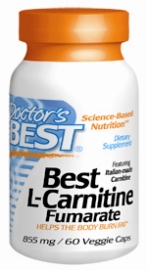
serving size 1 capsule l-carnitine fumarate ......... 855mg (yielding 500mg L-Carnitine) Other Ingredients: Magnesium Stearate (Vegetable Source), silicon dioxide, vegetable-derived capsule. suggested adult use: take 1 to 4 capsules daily, with out food L-Carnitine fumarate patent# 460239 Suitable for vegetarians L-Carnitine is a vitamin-like nutrient that is synthesized in the body, using the amino acids lysine and methionine as precursors. Because the body produces L-Carnitine on its own, it cannot be classified as a vitamin, even though it has functions similar to B vitamins. Fumarate is also a natural compound found in the body. Fumarate serves as an intermediate in the Krebs cycle, a key cellular energy-producing process. L-Carnitine and Fumarate both play important roles in energy metabolism. Best L-Carnitine contains BIOSINT™ L-Carnitine Fumarate, which is made in Italy by Sigma Tau Health Science. It is derived from a base of pharmaceutical-grade L-Carnitine manufactured using an FDA-approved process that fully complies with international monograph standards for carnitine production. No biotechnology or genetically modified organisms are involved. L-Carnitine Fumarate is certified GMO free, BSE safe, pesticide free and Kosher. It is also ISO 9002 certified and NNFA GMP certified. L-Carnitine Fumarate is highly stable and bioavailable. Known as a global leader in L-Carnitine research, Sigma Tau holds numerous patents for production of L-Carnitine, and its L-Carnitine derivatives are used in clinical trials. Sigma Tau Health Science has the only FDA-approved (1984) pharmaceutical batch process system for consistent L-Carnitine quality, and has been manufacturing L-Carnitine derivatives for 30 years. Helps the body burn fat for energy* L-Carnitine promotes energy production in cells by transporting fatty acids into the mitochondrion. Its primary function is to transfer long-chain fatty acids across the inner mitochondrial membrane. Fatty acid molecules are activated to coenzyme A (CoA) esters in the cytoplasm of the cell, and then esterified to L-Carnitine. The combination of a fatty acid molecule and L-Carnitine is called “acyl-carnitine.” Much of the body's L-Carnitine content is stored in the form of acyl-carnitine.1 The mitochondrion is the cell’s energy-generating furnace. Called an “organelle,” the mitochondrion is a self-contained structure inside the cell. Like all cellular structures, the mitochondrion is surrounded by a membrane. This membrane is an impenetrable barrier to acyl-CoA esters; passage across the membrane requires L-Carnitine as a transporter. On the inside of the mitochondrial membrane, the acyl-CoA esters are made available to be metabolized through the process of beta oxidation. One of the key metabolic byproducts of this process is acetyl-CoA, also called “active acetate,” which enters the Krebs cycle (also known as the “citric acid cycle”) to supply fuel for production of ATP, the cell’s primary energy “currency.” L-Carnitine shuttles excess fatty acid residues out of the mitochondrion, and in this role is essential for preventing toxic buildup of fatty acids inside the mitochondrion. Evidence suggests that L-Carnitine and short chain acyl-carnitine esters can protect the mitochondrion from adverse effects of drugs and toxic chemicals. L-Carnitine has been shown to protect animals form cardiotoxins and decrease mortality rate in animals with diphtheria, due to this cardioprotective effect.2 Helps maintain a healthy heart and cardiovascular system* Muscle tissue contains a high concentration of L-Carnitine. With its constant energy needs, heart muscle tissue is especially rich in L-Carnitine. If the body’s ability to biosynthesize L-Carnitine is compromised, energy production in muscle tissue is impaired, and a toxic buildup of fatty acids can occur.3 Defective production of L-Carnitine by the body can result from a variety of factors, including kidney or liver malfunction, increased catabolism or the inability of tissues to extract and retain L-Carnitine from the blood. Along with glucose and lactate, fatty acids are the primary oxidation fuel for the heart. A considerable amount of scientific data from animal experiments indicates that L-Carnitine protects the heart under conditions of hypoxia, or low oxygen. In addition to the oxidation of fat for energy in the cell, L-Carnitine is involved in the metabolism of glucose.4 Evidence of L-Carnitine’s role in glucose metabolism was uncovered in a small trial on 9 diabetic individuals. Given intravenously, L-Carnitine improved insulin-mediated glucose utilization and insulin sensitivity.5 Depletion of the body’s L-Carnitine supply is linked to various abnormal states, especially of the heart muscle. The effect of L-Carnitine on hypoxic (oxygen-starved) isolated heart muscle tissue has been studied.6 At high concentrations, L-Carnitine demonstrates a clear-cut ability to potentiate the contractility of isolated heart muscle tissue, indicating the L-Carnitine has a strengthening effect on the heart. L-Carnitine has been shown to improve the performance of rats subjected to fatigue test. Research has revealed that in animals and humans with defective heart muscle, the amount of free L-Carnitine (not bound to fatty acids) is reduced. Administration of L-Carnitine to hamsters prevents damage to the heart muscle. Given to humans with angina, L-Carnitine was found to improve exercise tolerance. In a small study, patients with congestive heart failure showed gains in heart function with oral consumption of L-Carnitine, reportedly by restoring normal oxidation of fatty acids.7 In heart valve replacement patients, L-Carnitine has been shown to increase the valve tissue levels of ATP, pyruvate and creatine phosphate, which are key cellular energy substrates. In a controlled study, L-Carnitine was administered to 38 patients prior to open heart surgery. Prior to surgery, heart circulatory function, as assessed by measurements of hemodynamics, was “good” in all 38. While there was evidence of a “preserving” effect of L-Carnitine on heart cells, no differences in cardiac performance were observed. These results suggest that noticeable improvements in heart muscle performance with L-Carnitine are most likely to occur in people with compromised hearts.8 It has been suggested that L-Carnitine favorably influences blood lipids. Preliminary evidence of this was seen in a small open trial on 26 patients who took 3 grams of L-Carnitine daily for 40 days. Blood levels of cholesterol and triglycerides dropped substantially, while the ratio of total to HDL cholesterol–– a known marker of cardiovascular health––markedly improved.9 While L-Carnitine is not a treatment for heart disease, (nor should it be used as a substitute for medical treatment) the results of these and other studies suggest that oral consumption of L-Carnitine has a beneficial influence on maintaining a healthy heart and cardiovascular system. Safety Suggested Adult Use: Take 1 to 4 capsules daily. L-Carnitine is considered to be very safe for oral consumption. L-Carnitine is generally well tolerated, even at doses as high as 15 grams daily. Toxicity or overdosage has not been reported.10 Does Not Contain: milk, egg, wheat, corn, sugar, sweeteners, starch, salt, or preservatives. Scientific References 1. Wagenmakers, A. L-Carnitine supplementation and performance in man. Brouns, F. ed. Advances in Nutrition and Top Sport. Med Sport Sci. Basel, Karger, 1991;32:110-27. 2. Arrigoni-Martelli, E., Caso, V. Carnitine protects mitochondria and removes toxic acyls from xenobiotics. Drugs Exptl. Clin. Res. 2001;27(1):27-49) 3. Pepine, C.J. The therapeutic potential of carnitine in cardiovascular disorders. Clinical Therapeutics 1991;13(1):2-21. 4. Calvani, M., Reda, E., Arrigoni-Martelli, E. Regulation by carnitine of myocardial fatty acid and carbohydrate metabolism under normal and pathological conditions. Basic Research in Cardiology 2000;95(2):75-83. 5. Capaldo, B. et al. Carnitine improves peripheral glucose disposal in non-insulin-dependent diabetic patients. Diabetes Research and Clinical Practice 1991;14:191-96. 6. Fanelli, O. Carnitine and acetyl-carnitine, natural substances endowed with interesting pharmacological properties. Life Sciences 1978;23:2563-2570. 7. Kobayashi, A., Masumura, Y., Yamazaki, N. L-Carnitine treatment for congestive heart failure-experimental and clinical study. Japanese Circulation Journal 1992;56:86-94. 8. Pastoris, O. et al. Effect of L-Carnitine on myocardial metabolism: results of a balanced, placebo-controlled, double-blind study in patients undergoing heart surgery. Pharmacological Research 1998;37(2):115-22. 9. Pola, P. et al. Carnitine in the therapy of dyslipidemic patients. Current Therapeutic Research 1980;27(2):208-16. 10. L-Carnitine. PDR for Nutritional Supplements. First Ed. 2001.Montvale, NJ:Medical Economics.
|
Helpful Customer Reviews
Supplemental Information
- Acetyl-L-Carnitine - Anti-Aging Brain Nutrient ...
- Enhancer for Youthful Vitality
- Acetyl L-Carnitine & Alpha Lipoic Acid - For Cellular Vitality
- New - Best Alpha Lipoic 35 from Doctors Best
- New - t L-Carnitine 855mg from Doctors Best