- *MSRP:
$7.99- Our Price:
- $4.40
- Buy: at $4.40


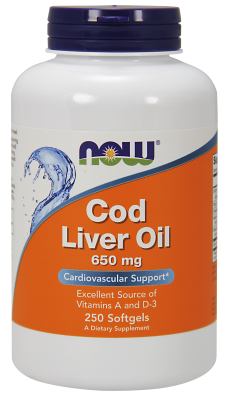
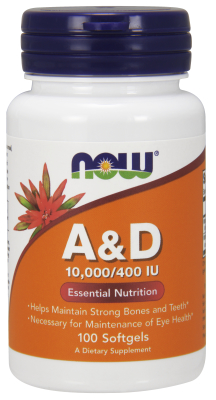
Looking for a simple, dependable way to fortify your body's frontline physical barriers, keep your night vision sharp, and nourish your skeletal framework? NOW Foods Vitamin A & D 10,000 / 400 IU (100 SGELS) pairs two vital, fat-soluble nutrients into a single, easy-to-swallow softgel. Sourced from nutrient-dense fish liver oil alongside pure retinyl palmitate and cholecalciferol, this synergistic daily supplement supplies the exact building blocks your body uses every day to renew sensitive epithelial tissues, fuel immune cells, and direct calcium where your bones need it most.
Active Potency Per Softgel 10,000 IU Vit. A + 400 IU Vit. D3Vitamins A and D are not solo operators—in human biology, they function like well-coordinated partners. While many people take vitamin A solely for eyesight or vitamin D strictly for winter mood and bones, research confirms that their true power lies in how they interact at the genetic level inside your cells.
To understand this simply: every cell in your body contains tiny molecular receptors. The Vitamin D Receptor (VDR) cannot switch on critical health-protecting genes entirely on its own. Instead, it must physically join hands with the Retinoid X Receptor (RXR), which is activated by Vitamin A. When both nutrients are present in balanced amounts, they form an active team (known in scientific terms as a VDR-RXR heterodimer). This molecular key unlocks your body's natural instructions for balancing immune response, renewing skin and gut membranes, and remodeling bone tissue properly without depositing calcium in soft tissues.
Taking both nutrients together helps prevent one from overpowering the other, maintaining what nutritional scientists call fat-soluble balance throughout your system.
Your epithelial tissues are the physical "security walls" that line your entire body—including your skin, eyes, respiratory tract, digestive tract, and urinary system. Vitamin A is essential for cellular specialization (differentiation), meaning it ensures these protective boundary cells continually repair themselves, produce protective mucus, and stay resilient against external environmental threats and pollutants.
Vitamin A is an irreplaceable component of rhodopsin, a specialized light-sensitive protein found in the retina of your eye. When light hits your eye, rhodopsin breaks down to send visual signals to your brain, and active vitamin A is required to regenerate it instantly. Adequate daily intake supports comfortable night driving, normal tear film stability, and long-term corneal protection.
A resilient immune system requires both defensive barriers and active cellular defense. Vitamin A oversees the development and maturation of T-lymphocytes and B-cells, while Vitamin D acts as an immune response regulator, signaling your immune system to manufacture antimicrobial peptides (such as cathelicidins) that help disarm invading microbes before they take hold.
While Vitamin D is famous for helping your intestines absorb dietary calcium and phosphorus into the bloodstream, Vitamin A ensures that specialized bone cells (osteoblasts and osteoclasts) maintain steady, balanced skeletal renewal. Together, they help keep bones dense, teeth strong, and joint matrices structurally sound through all stages of life.
NOW Foods adheres to strict labeling standards. Every softgel delivers concentrated fat-soluble vitamins derived from deep-sea fish liver oil, providing high biological availability without unwanted fillers.
| Amount Per Serving | % Daily Value |
|---|---|
| Vitamin A (from Fish Liver Oil and Retinyl Palmitate) 10,000 IU (3,000 mcg RAE) |
333% |
| Vitamin D (as Cholecalciferol from Fish Liver Oil and Lanolin) 400 IU (10 mcg) |
50% |
| Fish Liver Oil | † |
Because Vitamins A and D are fat-soluble (meaning your liver and fat tissues store excess amounts rather than flushing them out in urine daily), responsible supplementation is vital. Please read the following clinical guidance carefully:
Do not use if you are pregnant, may become pregnant, or are nursing. High daily intake of preformed Vitamin A (retinol/retinyl palmitate) exceeding 10,000 IU (3,000 mcg RAE) has been clinically documented to increase the risk of severe congenital birth defects. Women of childbearing potential should consult their healthcare provider and should not exceed recommended dietary allowances without direct medical supervision.
As a dietary supplement, take one (1) softgel daily, preferably with a meal that contains healthy dietary fats (such as avocado, olive oil, or yogurt). Dietary fats trigger gallbladder bile secretion, which is needed to absorb fat-soluble vitamins efficiently.
One softgel supplies 10,000 IU of Vitamin A, which equals the established adult Tolerable Upper Intake Level (UL). Do not exceed the recommended dose of one softgel per day unless specifically directed by a licensed physician after blood serum evaluation.
Consult your physician before taking this product if you are currently using prescription retinoid medications (such as isotretinoin or acitretin), weight-management drugs that block fat absorption (such as Orlistat), bile acid sequestrants (such as cholestyramine), or anticoagulant medications.
Since 1968, NOW Foods has set the industry standard for natural health products. Every batch of fish liver oil used in NOW Vitamin A & D undergoes rigorous screening to ensure pure, uncompromised quality:
✓ Molecular Purity TestingMarine oils are stringently screened via state-of-the-art testing for heavy metals (mercury, cadmium, lead), PCBs, dioxins, and oxidative rancidity.
✓ cGMP Certified FacilitiesManufactured in FDA-inspected, UL-certified Good Manufacturing Practice facilities with comprehensive in-house quality control laboratories.
✓ VitaNet 100% Satisfaction GuaranteeServing health-conscious customers online since 1995 from Hartville, Ohio. We back all orders with friendly customer support and authentic formulas.
Vitamins A and D work together synergistically inside your body. Vitamin D activates the Vitamin D Receptor (VDR), which must pair with the Retinoid X Receptor (RXR, activated by Vitamin A) to turn on protective genes for mucosal immunity, cell division, and bone remineralization. Combining both ensures balanced biochemical activity.
For healthy non-pregnant adults, 10,000 IU (3,000 mcg RAE) represents the established Tolerable Upper Intake Level (UL) set by health authorities. It is safe when taken at the recommended dose of one softgel per day. However, you should not take additional high-dose vitamin A supplements concurrently, and you should never exceed one softgel daily without medical advice.
No. Women who are pregnant, planning to become pregnant, or nursing should avoid high doses of preformed Vitamin A (retinyl palmitate) exceeding 10,000 IU daily because excess preformed vitamin A can cause serious congenital birth defects. Pregnant women should instead use prenatal formulas formulated specifically for their needs.
Preformed Vitamin A (retinol/retinyl palmitate) is already in its active biological state and is ready for immediate cellular use by your eyes and tissues. In contrast, beta-carotene is a provitamin carotenoid from plants that your body must convert into vitamin A. Many individuals have genetic variations that make this conversion inefficient, making preformed vitamin A from fish liver oil a reliable direct source.
The best time to take your softgel is alongside your largest meal of the day, such as breakfast or dinner, containing healthy dietary fats. Because both Vitamins A and D are fat-soluble, dietary fats stimulate bile acids and digestive enzymes needed to transport the vitamins across your intestinal wall.
This product contains fish liver oil (derived from cod, saithe, haddock, and pollock) and soybean oil. It is free from wheat, gluten, milk, egg, shellfish, tree nuts, and artificial preservatives. If you have a fish or soy allergy, do not consume this product.