

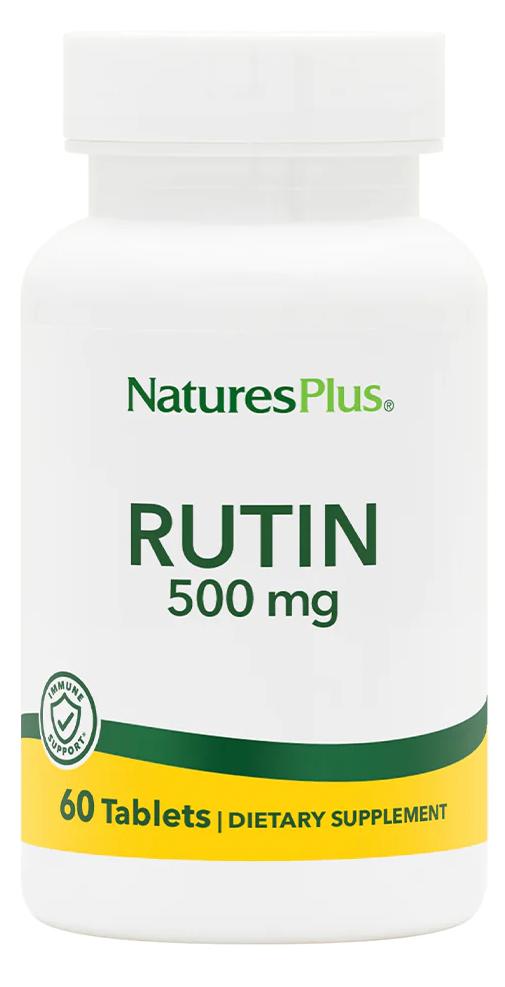

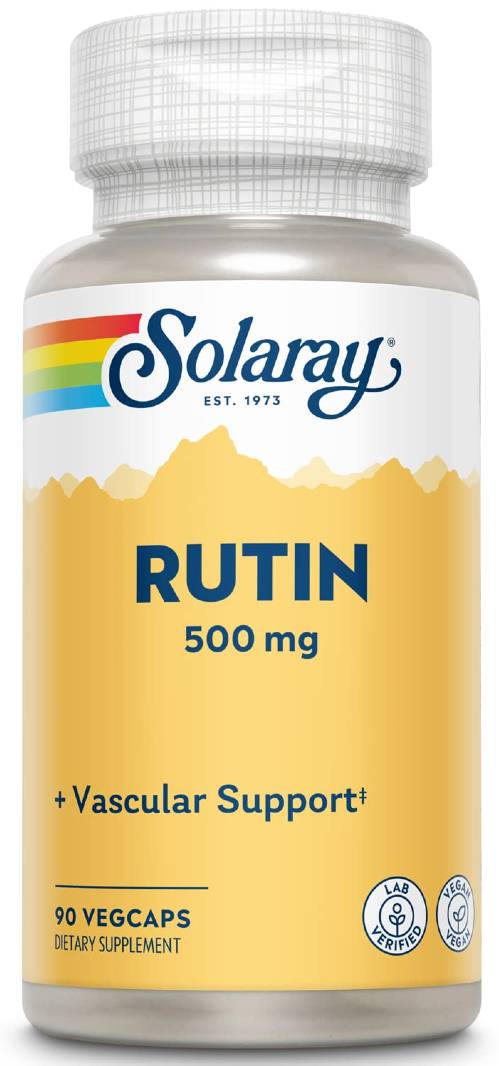
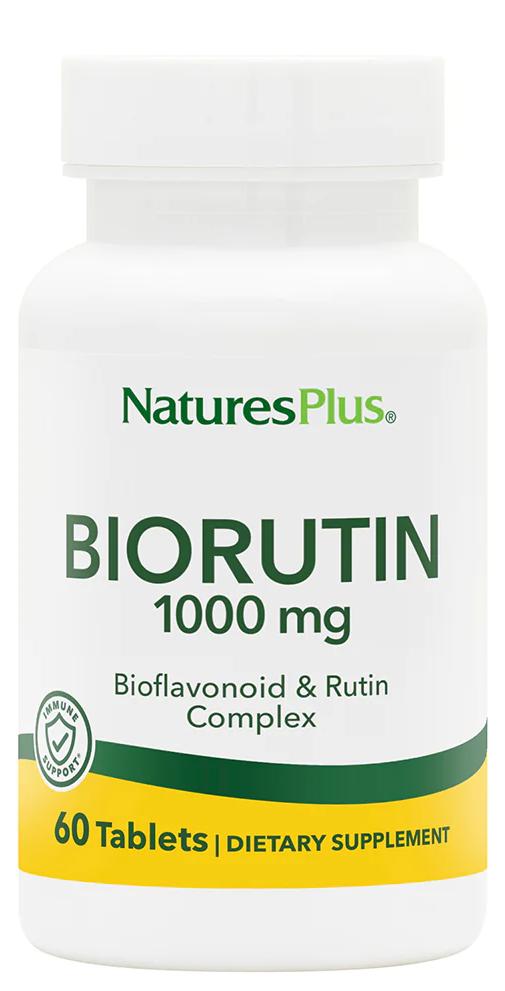
Nature's Plus Rutin 500 mg – 60 Tablets
Product No. 2550 | UPC: 097467025509 | High-Potency Sophora japonica Bioflavonoid
High-Potency Bioflavonoid Support for Vascular & Capillary Health
Bioflavonoids work synergistically with Vitamin C, boosting its antioxidant properties and playing an essential role in maintaining microvascular integrity. Nature's Plus is committed to offering the best supplements available anywhere. Formulated under strict cGMP standards, each tablet delivers a concentrated 500 mg of pure Rutin derived naturally from premium Saphora japonica leaf (also recognized botanically as Styphnolobium japonicum). Look for the Nature's Plus The Energy Supplements logo as your guarantee of quality, potency, and purity.
Biochemical Profile & Mechanisms of Action
Rutin, chemically known as quercetin-3-O-rutinoside (or rutoside), is a low-molecular-weight polyphenolic flavonoid glycoside. Structurally composed of the flavonol aglycone quercetin linked to the disaccharide rutinose (a-L-rhamnopyranosyl-(1?6)-ß-D-glucopyranose), rutin serves as one of nature’s most effective compounds for microcirculatory wellness and cellular defense.
1. Microvascular Integrity & Capillary Permeability
Capillary fragility and hyperpermeability often lead to microvascular fluid leakage, tissue edema, and compromised peripheral circulation. Rutin exerts a direct vasoprotective effect by inhibiting the enzymatic degradation of the endothelial basement membrane:
- Inhibition of Hyaluronidase & Elastase: Rutin down-regulates enzymes that degrade vascular extracellular matrix proteoglycans, preserving the mechanical elasticity of capillary walls.
- Modulation of Endothelial Nitric Oxide (eNOS): By supporting healthy endothelial nitric oxide synthase expression, rutin promotes basal vascular tone and smooth blood flow through delicate capillary networks.
- Reduction of Venous Stasis: Rutin and its active hydroxyethyl derivatives (such as oxerutins) have been clinically demonstrated to improve venous refill time, attenuate venous hypertension, and reduce microvascular pooling in the lower extremities.
2. Synergistic Action with Vitamin C (Ascorbic Acid)
In biological systems, bioflavonoids and ascorbic acid operate as an interdependent redox couple. Rutin acts as a sacrificial antioxidant that shields Vitamin C from premature auto-oxidation. Concurrently, it chelates transition metal ions (such as ferrous iron, Fe2+, and cupric copper, Cu2+), preventing the Fenton reaction that catalyzes damaging hydroxyl radical formation. This reciprocal synergy extends the biological half-life of Vitamin C, optimizing its availability for prolyl-hydroxylase enzymes critical to vascular collagen synthesis.
3. Free Radical Scavenging & Nrf2 Pathway Activation
Rutin directly neutralizes reactive oxygen species (ROS), including superoxide anions and peroxyl radicals, preventing the oxidation of low-density lipoproteins (LDL) within the arterial intima. At the genomic level, rutin up-regulates the Nrf2/ARE (Antioxidant Response Element) signaling axis, stimulating endogenous production of primary antioxidant enzymes including Superoxide Dismutase (SOD), Catalase (CAT), and Glutathione Peroxidase (GPx).
Scientific Studies & Biomedical Citations
The clinical efficacy and physiological benefits of rutin and Sophora japonica extracts are substantiated by extensive peer-reviewed literature:
-
Capillary Resistance & Venous Tone:
Ganeshpurkar, A., & Saluja, A. K. (2017). The Pharmacological Potential of Rutin. Saudi Pharmaceutical Journal, 25(2), 149–164.
Demonstrated that rutin significantly attenuates capillary fragility, reduces microvascular hyperpermeability, and exhibits potent cytoprotective effects against oxidative endothelial stress. -
Antioxidant Mechanisms & Metal Chelation:
Selloum, L., et al. (2003). Anti-inflammatory and antioxidant activities of rutin and quercetin. International Journal of Molecular Medicine, 12(6), 947–952.
Showed that rutin chelates redox-active transition metals and inhibits xanthine oxidase, preventing radical-induced lipid peroxidation in cell membranes. -
Microcirculatory Endothelial Protection:
Habtemariam, S. (2019). Rutin as a Natural Therapy for Vascular Diseases. In: Pharmacognosy - Medicinal Plants, IntechOpen. DOI: 10.5772/intechopen.84364.
Explored the therapeutic applications of rutosides in chronic venous insufficiency (CVI), microvascular fragility, and capillary leak syndromes. -
Botanical Extraction & Standardized Potency:
Chua, L. S. (2013). A review on plant-based rutin extraction methods and its pharmacological activities. Journal of Ethnopharmacology, 150(3), 805–817.
Confirmed the superior purity, stability, and bioactivity of rutin fractions derived specifically from Sophora japonica flower buds and leaves.
Supplement Facts & Complete Ingredient Profile
Supplement Facts
Serving Size: 1 Tablet
Servings Per Container: 60
| Amount Per Serving | % Daily Value |
|---|---|
| Rutin (from Saphora japonica leaf) | 500 mg |
| * Percent Daily Values are based on a 2,000 calorie diet. | |
| † Daily Value (DV) not established. | |