  |
Is Your Histamine Bucket Overflowing? How DAO and HNMT Can Help |
|
 Is Your Histamine Bucket Overflowing? How DAO and HNMT Can Help
|
Darrell Miller | 02/25/26 |
This content is for informational purposes only and is not a substitute for professional medical advice.


Date:
February 25, 2026 04:09 PM
Author: Darrell Miller
(support@vitanetonline.com)
Subject: Is Your Histamine Bucket Overflowing? How DAO and HNMT Can Help
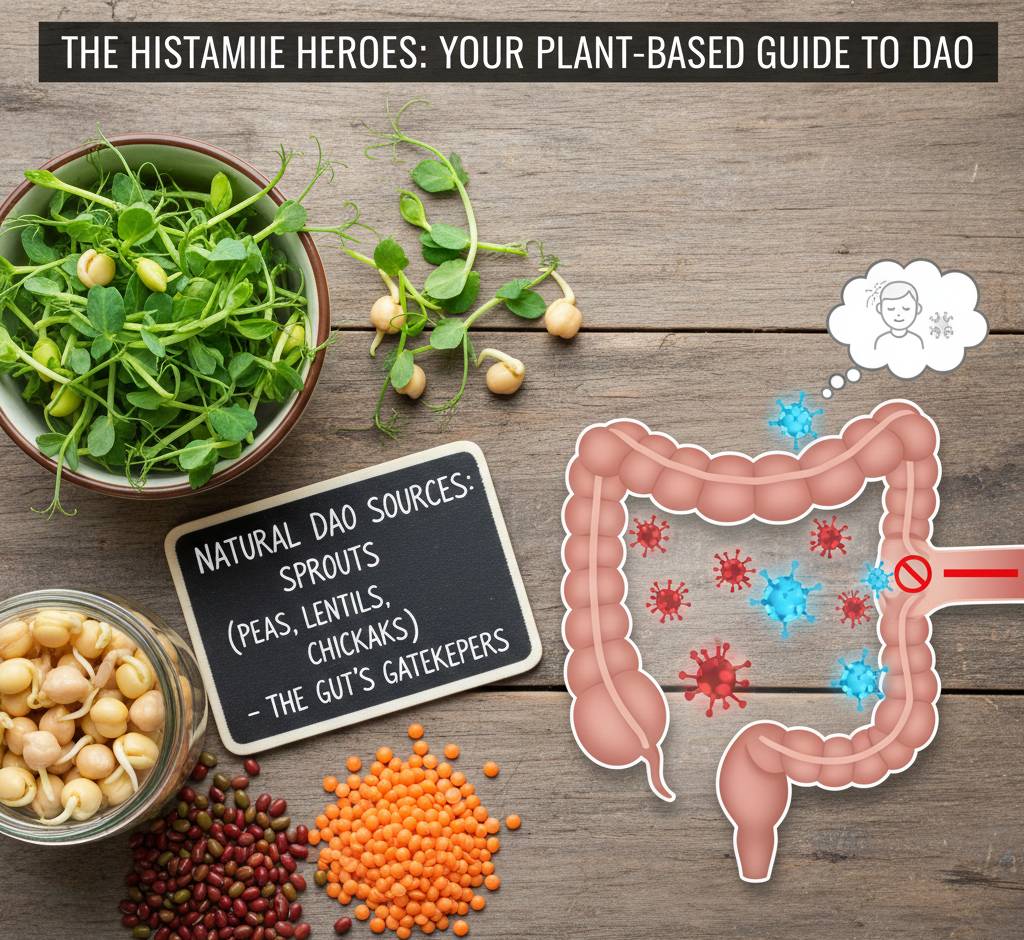
Diamine Oxidase (DAO) is a fascinating little enzyme that acts as your body’s primary "cleanup crew" for histamine found in food. While pea sprouts are the most famous plant source, they aren't the only ones.
Other Plant Sources of DAO
The highest concentrations of DAO are found in the Fabaceae (legume) family, particularly when they are in the germination (sprouting) phase. Beyond green peas, researchers have identified DAO activity in:- Grass Peas (Lathyrus sativus): Often show even higher DAO activity than common garden peas.
- Chickpeas (Garbanzo Beans): Sprouted chickpeas contain significant levels of the enzyme.
- Lentils: All varieties (red, green, black) produce DAO during the first few days of sprouting.
- Broad Beans (Fava Beans): Another potent source when germinated in the dark.
- Soybeans: While they contain DAO, the levels are generally lower than those found in peas or grass peas.
What Does DAO Actually Do?
Think of DAO as a metabolic "bouncer." Its main job is to break down histamine and other biogenic amines (like putrescine and cadaverine) before they can enter your bloodstream from your digestive tract.The Mechanism
In the body, DAO is primarily produced in the intestinal mucosa. When you eat histamine-rich foods (like aged cheese, wine, or sauerkraut), DAO performs a chemical reaction called oxidative deamination.R-CH2-NH2 + H2O + O2 –>DAO R-CHO + NH3 + H2O2
In simple terms:
- Neutralization: It converts active histamine into an inactive byproduct (an aldehyde).
- Prevention: By breaking histamine down in the gut, it prevents "Histamine Intolerance," where excess histamine leaks into the blood and causes symptoms like flushing, headaches, hives, or bloating.
- Regulation: It keeps the total "histamine bucket" from overflowing, allowing you to enjoy a wider variety of foods without a reaction.
Comparison of DAO Sources
| Source | Availability | Concentration |
| Porcine Kidney | Most supplements | Very High |
| Pea Sprouts | Common / DIY | High (if dark-grown) |
| Grass Peas | Specialty | Very High |
| Lentil Sprouts | Common / DIY | Moderate |
Does DAO enter the blood stream or does it stay in the gut?
That is a great question that gets to the heart of how our bodies manage "histamine overload." The short answer is: DAO primarily stays in the gut and the space between cells (extracellular space), but it is not the only enzyme on the job.Here is the breakdown of how DAO works versus its "partner" enzyme that handles the blood.
1. DAO: The "Gatekeeper"
Diamine Oxidase is a secretory protein. It is produced by the cells lining your small intestine (enterocytes) and is secreted into the intestinal tract.- Primary Location: The gut lumen and the intestinal lining.
- Role: It acts as a barrier, neutralizing histamine from food and drink before it can cross into your bloodstream.
- Does it enter the blood? While small amounts of DAO can be found circulating in the plasma, it isn't very effective there. DAO is "bulky" and prefers to hang out in the extracellular matrix (the fluid surrounding cells) rather than inside them or traveling freely in high concentrations through the blood.
2. HNMT: The "Internal Cleanup"
Since DAO isn't great at cleaning up histamine that's already "in the system," your body uses a second enzyme called Histamine N-methyltransferase (HNMT).- Location: Found inside cells throughout the body, especially in the liver, kidneys, bronchial passages, and the central nervous system.
- Role: HNMT handles endogenous histamine - the stuff your own body releases (like during an allergic reaction) or the histamine that managed to "sneak past" the DAO in your gut.
- Mechanism: Unlike DAO, which "chews" histamine up in the open spaces of the gut, HNMT works inside the cells to chemically deactivate it.
DAO vs. HNMT: A Quick Comparison
| Feature | DAO (Diamine Oxidase) | HNMT (N-methyltransferase) |
| Main Territory | Extracellular (Gut, placenta, kidneys) | Intracellular (Liver, brain, lungs) |
| Source of Histamine | Exogenous (Food, drink, bacteria) | Endogenous (Immune cells, nerves) |
| Speed | Fast-acting "barrier" | Slower internal "recycling" |
| Analogy | The security guard at the front door. | The janitorial crew inside the building. |
The "Histamine Bucket" Reality
When people talk about Histamine Intolerance, it's usually because their "Histamine Bucket" is overflowing.If your DAO levels are low, the "security guard" is asleep, and too much food-based histamine enters the blood. This puts an enormous burden on HNMT to clean it up. If HNMT can't keep up, that's when you feel the symptoms (headaches, heart palpitations, or skin flushing) because the histamine is circulating freely in your blood.
Diamine Oxidase (DAO) serves as the body’s primary extracellular "gatekeeper," concentrated in the intestinal mucosa to neutralize histamine from food and drink before it can enter the bloodstream. While primarily associated with pea sprouts, DAO is also found in other germinated legumes like grass peas, chickpeas, and lentils, particularly when sprouted in darkness to maximize enzyme activity. Because DAO functions mainly in the gut lumen and the spaces between cells, it acts as a barrier against external histamine; once histamine successfully crosses into the blood or is released by the body's own immune cells, a secondary internal enzyme called Histamine N-methyltransferase (HNMT) takes over the cleanup process within the liver, brain, and kidneys.