
  |
Pine Bark Extract vs. Grape Seed Extract: Which is Better? |
|
 Pine Bark vs. Grape Seed: Comparing Antioxidant Absorption
|
Darrell Miller | 09/11/26 |
This content is for informational purposes only and is not a substitute for professional medical advice.


Date:
September 11, 2026 10:33 AM
Author: Darrell Miller
(support@vitanetonline.com)
Subject: Pine Bark vs. Grape Seed: Comparing Antioxidant Absorption
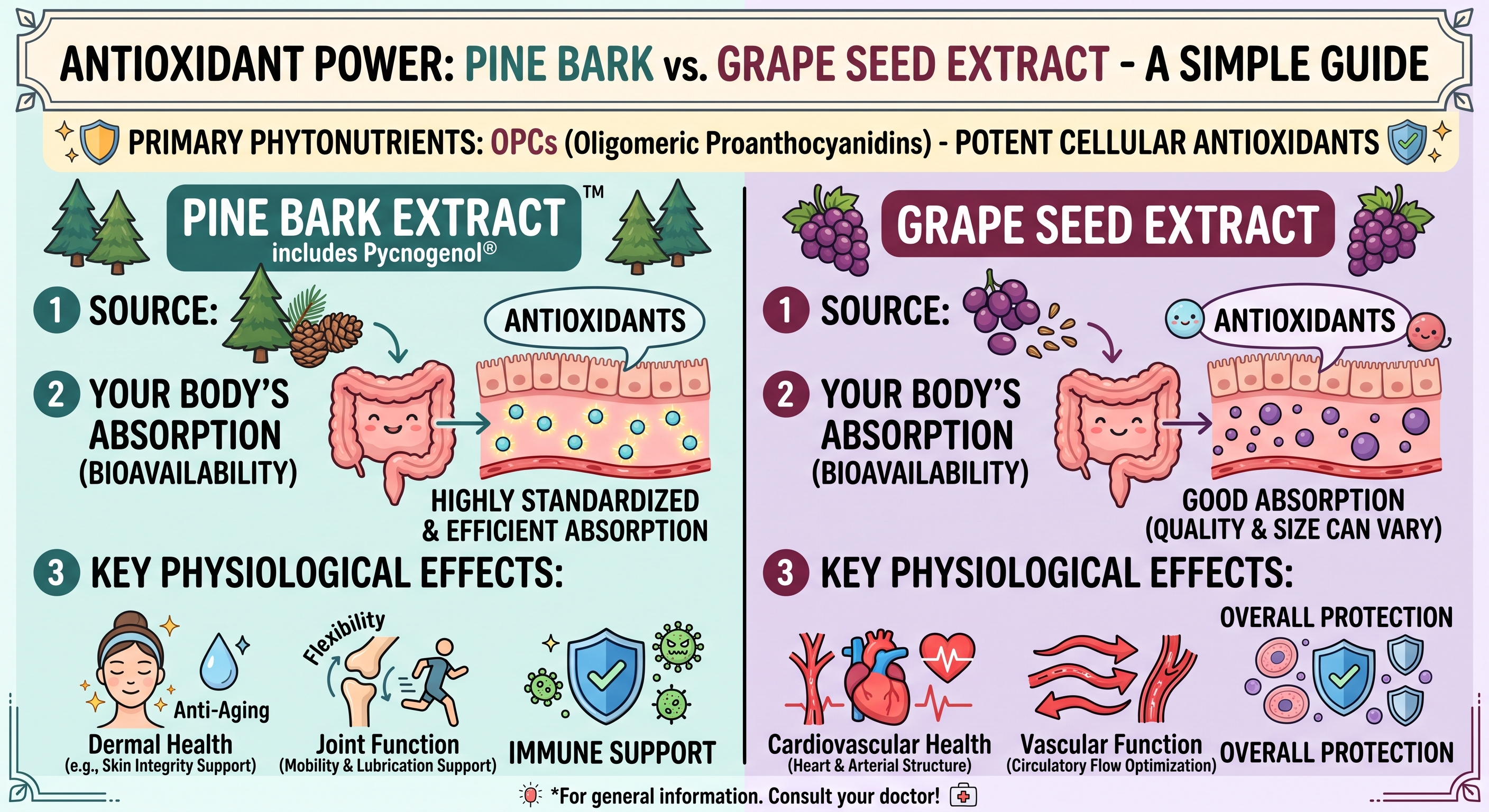
The Ultimate Guide to Plant-Based Antioxidants: Pine Bark Extract vs. Grape Seed Extract
If you have ever left a sliced apple on the counter and watched it turn brown, you have witnessed oxidative stress. The same "rusting" process happens inside our bodies every day due to pollution, stress, poor diet, and natural aging. To fight this, our bodies rely on antioxidants—microscopic defenders that neutralize the damage.While vitamins C and E are famous antioxidants, the plant kingdom offers something much stronger. Two of the most powerful natural antioxidants on the planet are extracted from parts of plants we usually throw away: the bark of pine trees and the seeds of grapes.
If you're looking to boost your health, you might find yourself stuck trying to figure out pine bark extract vs grape seed extract. And more specifically, you might be wondering about Pycnogenol vs grape seed extract.
Let's break down the science of these plant-based powerhouses, explain what makes them tick, and look at how well your body actually absorbs them—all without needing a degree in chemistry.
The Secret Ingredient: What are OPCs?
To understand why these two extracts are so powerful, you need to know a very long word: Oligomeric Proanthocyanidins, or OPCs for short.Think of OPCs as the elite special forces of the antioxidant world. They are natural compounds found in the woody, outer parts of plants (like bark, stems, and seed shells). In nature, OPCs protect the plant from harsh weather, bugs, and UV rays. When we consume them, they offer us incredible protection.
In fact, OPCs have been shown to be dramatically more powerful at fighting off cellular damage than standard Vitamin C or Vitamin E. Both pine bark and grape seeds are absolutely packed with OPCs, which is why they are so famous in the wellness world.
Grape Seed Extract (GSE): The Circulation Champion
Just as the name suggests, Grape Seed Extract is pulled from the seeds of grapes (usually red wine grapes). For decades, scientists wondered why certain European cultures could eat diets high in rich foods and fats but still maintain incredible heart health. Part of the answer was found in the grapes they used to make wine.What it does:
Grape Seed Extract is famous for supporting blood vessels. It helps keep your arteries flexible and strong, which promotes healthy blood pressure and reduces swelling (edema) in the legs.
The makeup:
GSE is highly concentrated with OPCs. It also contains a unique compound called gallic acid, which is excellent for fighting inflammation.
Pine Bark Extract and Pycnogenol: The Premium Defender
Pine bark extract comes from the inner bark of pine trees. While there are many generic pine bark supplements, you will almost always see the name Pycnogenol.What is Pycnogenol?
Pycnogenol is a patented, highly standardized form of pine bark extract sourced exclusively from the French maritime pine tree. Because it is trademarked, every batch is guaranteed to have the exact same ratio of active ingredients. When scientists study pine bark, they are almost always studying Pycnogenol.
What it does:
Like grape seed extract, Pycnogenol is fantastic for blood flow. However, it is also famous for its effects on the skin and joints. It actually binds to collagen and elastin - the proteins that keep your skin looking plump and youthful—and protects them from breaking down.
The Main Event: Pycnogenol vs Grape Seed Extract
So, if both of these supplements are packed with OPCs, what is the difference? The real battle comes down to bioavailability (absorption rates).What is Bioavailability?
"Bioavailability" is just a fancy way of asking: How much of this actually makes it into my bloodstream?You can swallow 1,000 milligrams of a supplement, but if your body can't absorb it, it just passes through your digestive tract and ends up in the toilet. To get into your bloodstream, antioxidant molecules have to be small enough to pass through the lining of your gut.
The Size of the Molecules (Oligomers vs. Polymers)
Here is where the comparison between pine bark extract vs grape seed extract gets interesting.OPCs come in different sizes.
- Oligomers are small, lightweight chains of molecules. They are tiny enough to slip right through your intestinal walls and into your blood.
- Polymers (often called tannins) are large, clunky chains. They are simply too big to be absorbed into the bloodstream.
The Grape Seed Absorption Profile
Grape seeds naturally contain a very wide mix of both small oligomers and large polymers. If you buy a cheap, low-quality grape seed extract, you might be getting a lot of large polymers that your body cannot absorb. However, high-quality, standardized Grape Seed Extracts are specially filtered to ensure they contain mostly small, easily absorbed OPCs. Once absorbed, the gallic acid in grape seed extract stays in the blood for a long time, providing excellent, long-lasting antioxidant protection.The Pine Bark (Pycnogenol) Absorption Profile
Pycnogenol is famous precisely because of its absorption. The natural composition of the French maritime pine tree bark is already heavily skewed toward the smaller, highly absorbable oligomers. Furthermore, because Pycnogenol is a strictly controlled, patented extract, the molecule size is guaranteed. When you take it, you know with absolute certainty that a massive percentage of those OPCs are crossing the gut barrier and entering your system rapidly.Which One Should You Choose?
Both extracts are spectacular choices for fighting oxidative stress, but your choice depends on your specific health goals and your budget.Choose Grape Seed Extract if:
- You want a budget-friendly option: Grape seed extract is generally much more affordable because grape seeds are a massive byproduct of the global wine industry.
- You are focused on cardiovascular health: GSE is heavily researched for its ability to support healthy blood pressure and reduce leg swelling.
- You want the unique benefits of gallic acid: This specific inflammation-fighter is found in grapes but not in pine bark.
- You want guaranteed absorption: The trademarked standardization means you know exactly what you are getting, and that your body will absorb it.
- You care about skin health and anti-aging: Pycnogenol's unique ability to bind to and protect collagen makes it a favorite in the skincare world.
- You are fighting allergies or joint pain: Pycnogenol has a massive body of clinical trials showing it helps calm the immune system's overreaction to allergens and reduces joint discomfort.
The Bottom Line
When comparing Pycnogenol vs grape seed extract, there is no "loser." Both are incredibly potent sources of plant-based antioxidants that protect your body from cellular rust.If you are looking for an affordable, heart-healthy daily shield, high-quality Grape Seed Extract is a phenomenal choice. If you are willing to spend a little more for a premium, heavily researched extract that targets skin, joints, and guaranteed absorption, Pycnogenol is the gold standard.
Clinical OPC French Grape Seed Extract Extra Strength 60 SoftGels
Pine Bark Extract 240 mg 90 Veg Capsules