
  |
Beyond Probiotics: How to Build a Thriving Gut Microbiome |
|
 The Secret to Gut Health: Feeding Your Microbiome for Maximum SCFAs
|
Darrell Miller | 09/11/26 |
This content is for informational purposes only and is not a substitute for professional medical advice.


Date:
September 11, 2026 01:29 PM
Author: Darrell Miller
(support@vitanetonline.com)
Subject: The Secret to Gut Health: Feeding Your Microbiome for Maximum SCFAs
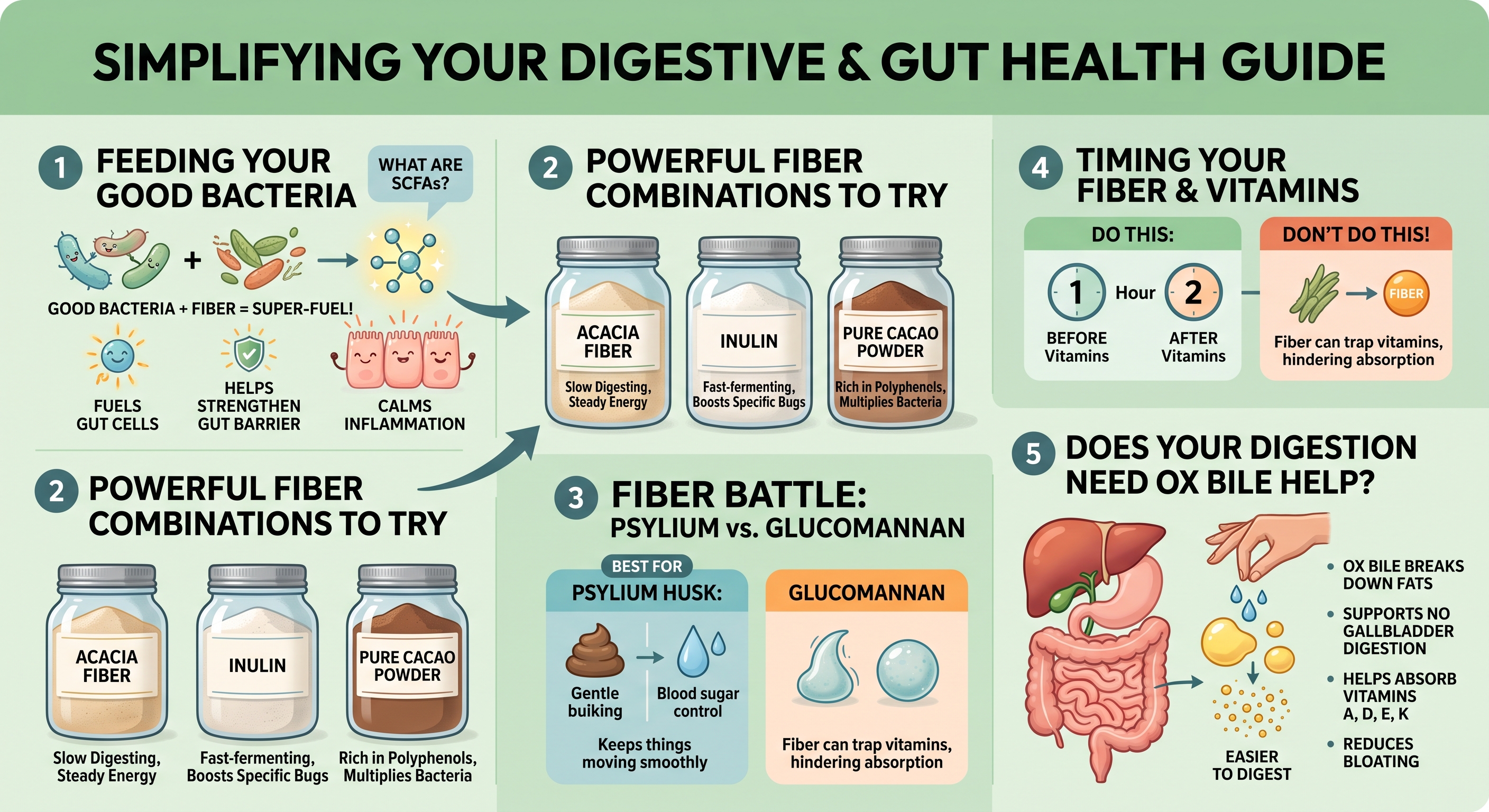
Your Complete Guide to Digestive Support: Building a Thriving Gut Microbiome
When we talk about digestive health, the conversation usually stops at taking a daily probiotic or drinking enough water. But true microbiome health goes much deeper. It involves feeding the good bacteria you already have, ensuring your body can properly break down fats, and timing your supplements right.If you want to optimize your digestion, you need to understand how different fibers work, the magic of "postbiotics," and how specialized enzymes keep everything running smoothly.
The Magic of Short-Chain Fatty Acids (SCFAs)
To understand gut health, you have to understand a process called fermentation. When you eat dietary fiber that your stomach can't digest, it travels down into your colon. There, your gut bacteria feast on it.When these good bacteria eat fiber, they release beneficial byproducts called Short-Chain Fatty Acids (SCFAs) - most notably butyrate, acetate, and propionate.
Think of SCFAs as the ultimate super-fuel for your digestive system. They provide the main energy source for the cells lining your colon, helping to keep the gut barrier strong and preventing "leaky gut." SCFAs also help calm inflammation throughout the body and play a massive role in healthy metabolism. But to get these benefits, you have to feed your microbiome the right type of fibers.
The Ultimate SCFA-Boosting Trio
Not all fibers are created equal. Some just add bulk to your stool, while others are "prebiotics" - meaning they actively feed your good bacteria. To maximize SCFA production, combining different types of prebiotic fibers is incredibly effective.Here is a functional combination that acts as a powerhouse for your microbiome:
- Acacia Fiber: Sourced from the sap of the acacia tree, this fiber ferments very slowly in the gut. Because it ferments slowly, it provides a steady stream of food for bacteria all the way through the digestive tract without causing the sudden gas and bloating that other fibers can trigger.
- Inulin: Found in foods like chicory root and Jerusalem artichoke, inulin is a fast-fermenting fiber. It acts like high-octane fuel for specific beneficial bacteria, particularly Bifidobacteria.
- Pure Cacao Powder: While not a traditional fiber, pure, unsweetened cacao is packed with polyphenols (plant compounds). Your gut bacteria actually break these polyphenols down, and in the process, they multiply and produce even more SCFAs.
Glucomannan vs. Psyllium: Which Fiber is Right for You?
If you are looking to supplement with an isolated fiber for digestive support, you will likely encounter two heavyweight contenders: Glucomannan and Psyllium. Both are soluble fibers, meaning they dissolve in water to form a gel in your stomach, but they act a bit differently.| Feature | Psyllium Husk | Glucomannan (Konjac Root) |
| Main Benefit | Daily regularity and gentle bulking. | Appetite control and feeling full. |
| Water Absorption | High. Swells nicely to form a sweeping gel. | Extreme. Can absorb up to 50x its weight in water. |
| Digestive Speed | Moves smoothly through the digestive tract. | Significantly slows down stomach emptying. |
| Best Used For | Keeping bowel movements consistent and solid. | Managing weight and curbing between-meal cravings. |
Can You Take Fiber With Vitamins?
A very common question is whether you can take your daily fiber supplement alongside your morning vitamins.The short answer is no. You should separate them.
Because soluble fibers (like psyllium, glucomannan, and even high doses of acacia) form a thick, sticky gel in your digestive tract, they act like a sponge. If you take them at the exact same time as your daily vitamins or minerals, the fiber can bind to the nutrients. Instead of absorbing those vitamins into your bloodstream, your body will simply sweep them out in your next bowel movement.
The Golden Rule: Take your vitamin and mineral supplements at least 1 hour before or 2 hours after taking a heavy fiber supplement.
Beyond Fiber: The Benefits of Ox Bile for Fat Digestion
Fiber takes care of the carbohydrates, but what about the fats? Many people eat a healthy diet but still experience bloating, indigestion, or floating stools after a rich meal. This is often an issue with bile.Bile is a fluid produced by your liver and stored in your gallbladder. When you eat fats, your gallbladder squirts bile into your intestines. Think of bile like dish soap on a greasy frying pan—it emulsifies the fat, breaking it down into tiny droplets so your body can absorb it.
If you have had your gallbladder removed, or if your liver is simply sluggish, your body might not release enough bile. This means fats pass through your system undigested, missing out on crucial fat-soluble vitamins (like Vitamins A, D, E, and K).
This is where ox bile comes in.
Taken as a supplement with meals, ox bile closely mimics human bile. The benefits include:
- Better Nutrient Absorption: Helps your body extract vitamins from healthy fats like olive oil, avocados, and fish.
- Reduced Bloating: Prevents undigested fats from fermenting and causing gas in the lower intestines.
- Gallbladder Support: Provides relief for those who struggle to digest fats after gallbladder removal surgery.