Prostate
problems too often put a damper on the activities of men of all ages
and they are far more common than previously thought. According to
numerous studies, virtually all men will eventually experience an
enlarged prostate.*
Men
with enlarged prostates experience discomforts that may include:
difficulty urinating; increased frequency and urgency of urination;
bouts with sleep-disturbing nighttime urination; and lower back
discomfort. Dealing with the discomforts from enlarged prostates may
be costly, too. Every year about 400,000 men have prostate surgery,
adding over $3 billion annually to the national health care bill.
Nature’s
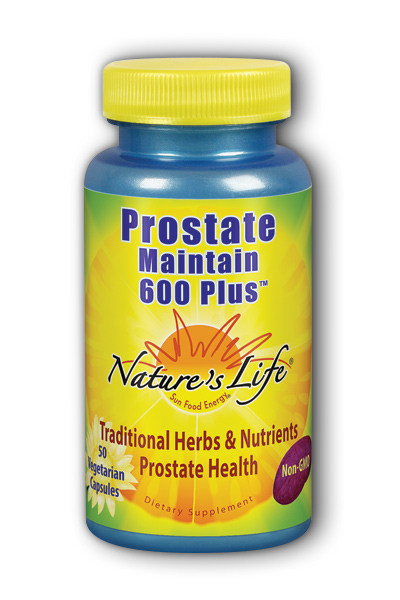
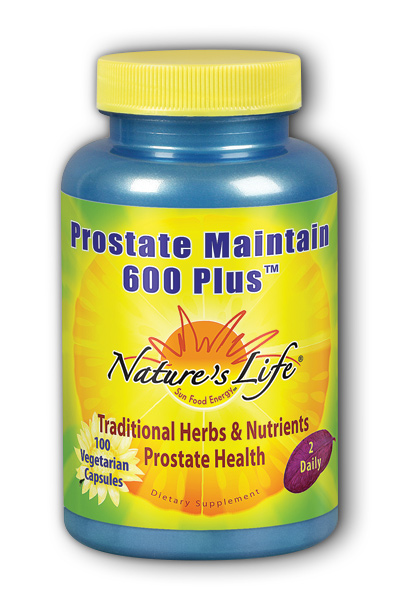
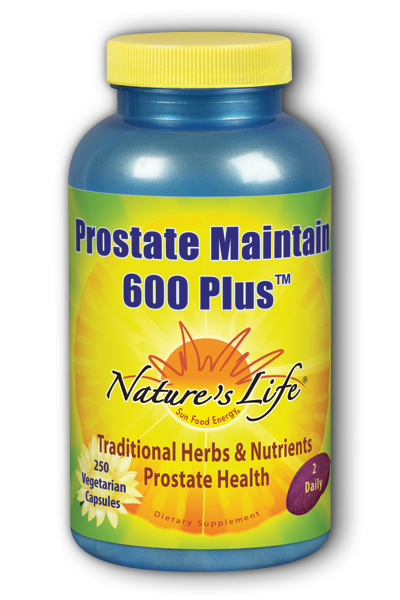
Life offers two great products to support prostate health: Men’s 800
Plus Prostate Supportä*
(high-potency standardized extract of Saw Palmetto – the choice for
a stronger dosage) and Formula 600+ Prostate Supportä*
(a complete whole herb form of Saw Palmetto for a regular maintenance
dosage). Both products
are doctor-formulated to:
-
improve
prostate gland function;*
-
increase
urine flow;*
-
relieve
prostate-related discomfort*
-
improve
nighttime sleep.*
These
formulas are made from all natural ingredients...only the finest
available. Regardless of the formula you prefer, you can always be
sure of the same superior quality and consistent results.
Prostate Health...Naturally
Prostate
function
A
small doughnut-shaped gland, the prostate surrounds the urethra where
it leaves the bladder. The prostate produces an alkaline substance
which makes up the largest part of the seminal reproductive fluid
(semen).
Most
men's prostates start to enlarge at about age 50. As the prostate
gland enlarges, it pinches the urethra causing reduced urine flow and
increased discomfort. Research into prostate enlargement is focusing
on male hormones, or androgens. In older men, androgen production
changes result in higher levels of dihydrotestosterone (DHT), which is
produced from testosterone. The prostate is more likely to enlarge
when higher levels of DHT are present.1
The
holistic approach
A
unique combination of herbs, amino acids, vitamins, minerals and
essential fatty acids provides critical nutritional support to
maintain good prostate health.*
Saw
Palmetto Berry
(Serenoa repens B.)
The
berries from this small tropical palm contain lipophilic sterols and
essential fatty acids, including beta sitosterol, which reduce the
production and effects of DHT 2 partly by inhibiting the enzyme
5-alpha-reductase.*3
Saw Palmetto extract also helps reduce the natural inflammatory
response by inhibiting the production of prostaglandins.*4
Research confirms that Saw Palmetto increases urine flow and
decreases nighttime discomfort.*5,
6
Widely used in Europe as a standardized extract for over 20 years, Saw
Palmetto has proven effectiveness in double blind clinical trials.7,8
All
of these effects of Saw Palmetto make it the key ingredient to support
prostate health and maintain healthy prostate size.*
Zinc
& Copper
Zinc
is concentrated in the prostate gland and is a major constituent of
seminal fluid. Zinc appears to play a role in maintaining male hormone
balance9,
10
and has been shown to inhibit 5-alpha reductase, the enzyme which
produces powerful androgens (male hormones) in the enlarged prostate.*11
Two preliminary reports suggest that zinc is helpful in reducing
urinary discomfort.*12,
13
Copper is added to balance the zinc and prevent a copper
deficiency.
Stinging
Nettle
(Urtica dioica L.)
A
common "weed" around the world, stinging nettle has a long
history of traditional use to increase urine flow.*14
Nettle contains substances with anti-androgen (male hormone)
activity.*15 The
beneficial effects of Nettle extract are increased when combined with
Saw Palmetto.*16,
17
Golden
Flax Oil
(Linum usitatissimum L.)
The
oil of the flax plant is one of nature's richest plant sources of the
Omega 3 essential fatty acid, alpha linolenic acid (ALA) plus valuable
linoleic fatty acid. Flax seed oil has traditionally been recommended
for men's health care as both of these essential fatty acids are
precursors of prostaglandins which regulate prostate function.*18
Active
AminosÔ
(Glutamic Acid, Alanine & Glycine)
These
are the three amino acids found in highest concentration in the
prostate.* Controlled
studies showed that this combination of amino acids decreased
nighttime urination and urinary urgency.*19,
20
Pygeum
Bark
(Pygeum africanum H.)
The
bark of this tall African tree contains lipophilic sterols, including
beta sitosterol and sitosterone plus unique fatty acids. These
ingredients influence prostaglandin synthesis to help control the
damaging effects of the body’s natural inflammatory response.*21
Other components of pygeum help maintain normal prostate size.*22
Pygeum extract has been used successfully in patients with a
mild to moderately enlarged prostate.23,
24
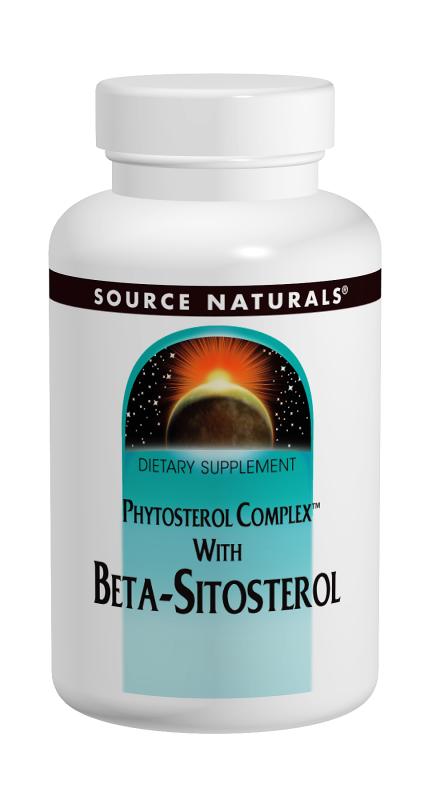
Beta
Sitosterol
The
oil constituents of a few plants, including soybeans, contain a
mixture of phytosterols, or plant hormones, called beta sitosterol.
Recent controlled studies have validated the ability of beta
sitosterol to increase urine flow and decrease residual urine volume
significantly.*25,26
Research suggests that beta sitosterol inhibits prostaglandin
synthesis thus reducing the natural inflammatory response.*27
Vitamin
B-6
(Pyridoxine HCl)
This
essential B vitamin is required for many metabolic processes,
including the use of amino acids* such as Glutamic Acid, Alanine and
Glycine.
Traditional
Medicinal Herbs
Several
other herbs have traditionally been used for prostate and urinary
tract health:*
Pumpkin
Seed
(Cucurbita pepo)
A
good source of zinc and essential fatty acids, nutrients which promote
prostate health.* Also contains curcurbitin and phytosterin.
Burdock
Root
(Arctium lappa L.)
Contains
polyacetylenes, amino acids and inulin; restores harmony to the body
and also aids kidney function.*
Cayenne
Fruit
(Capsicum annuum L. var. annuum)
Contains
capsaicin and saponins which stimulate blood flow.*
Goldenseal
Root
(Hydrastis canadensis L.)
Contains
alkaloids, including berberine, a powerful tonic for all mucus
membranes.*
Gravel
Root
(Eupatorium purpureum L.)
Contains
active volatile oils and flavonoids; used to stimulate kidney and
bladder function.*
Juniper
Berry
(Juniperus oxycedrus L.)
Contains
essential oils, flavone glycosides, organic acids and terpenes which
stimulate the kidneys and bladder.*
Marshmallow
Root
(Althaea officinalis L.)
Mucilage, containing polysaccharides and uronic acid and traditionally
used to increase urine flow.*
Parsley
Leaf
(Petroselinum crispum M.)
Contains coumarin and flavonoids and therefore effectively increases
urine flow.*
White
Pond Lily Root
(Nymphaea odorata)
A
natural intestinal cleanser.*
Lifestyle
Choices
Nutritionists
are unanimous in their belief that diet and exercise contribute a great
deal to the success of natural prostate self-care. In addition to a
comprehensive prostate support formula, men should reduce dietary fat,
eat more fruits and vegetables and commit to a regular exercise program.
This is not just a program to maintain a healthy prostate, but a choice
for a healthier, happier life.
Nature's
Life
has two comprehensive formulas with herbs and nutrients to maintain
healthy prostate size, improve prostate gland function and increase
urine flow*, as well as individual supplements to complement these
formulas:
Saw
Palmetto, 500 mg whole herb
Golden
Flax Oil softgels or liquid
Lycopene
6 mg, an antioxidant carotenoid* found primarily in most tomato
products. In men, the phytonutrient lycopene is stored in the prostate
and testes, and has been associated with protecting the health of the
prostate by inhibiting the growth of harmful cells.*28 As men
age, the level of lycopene is diminished, therefore should be replaced
by food intake or supplements. 28
References
-
Pizzorno J, Murray M. A
Textbook of Natural Medicine, John Bastyr College Publications,
Seattle, 1987, VI:ProsBH-1-3.
-
Sultan C, Terraza A,
Deviller C, et al. Inhibition of androgen metabolism and binding
by a liposterolic extract of Serenoa
repens in human foreskin fibroblasts.
J Steroid Biochem
1984; 20:2041-8.
-
Weissrer H, Tunn S,
Behnke B, et al. Effects of the Sabal
serrulata extract IDS 89 and its subfractions on 5a-reductase
activity in human benign prostatic hyperplasia. Prostate
1996;28:300-306.
-
Breau W, Hagenlocher M,
et al. Antiphlogistic activity of an extract from Sabal
serrulata fruits prepared by supercritical carbon dioxide: in
vitro inhibition of the cyclooxygenase and 5-lipoxygenase
metabolism. Arzneimittelforshung
1992 42:547-51.
-
Braeckman J. The extract
of Serenoa repens in the
treatment of benign prostatic hyperplasia: a multicenter open
study. Curr Ther Res
1994 55:776-85.
-
Schneider HJ, Honold E,
Mashur T. Treatment of benign prostatic hyperplasia; results of a
surveillance study in the practices of urological specialists
using a combined plant-based preparation. Fortschr
Med 1995;113:37-40.
-
Champault G, Bonnard AM,
et al. The medical treatment of prostatic adenoma – a controlled
study: PA-109 versus placebo in 100 patients. Ann Urol 1984;6:407-10.
-
Carraro JC, Raynaud JP,
Koch G, et al. Comparison of phytotherapy (Permixon ®) with
finisteride in the treatment of benign prostatic hyperplasia: a
randomized international study of 1098 patients. Prostate
1996;29:231-40.
-
Hunt CD, Johnson PE,
Herbel JOL, et al. Effects of dietary zinc depletion on seminal
volume and zinc loss, serum testosterone concentrations, and sperm
morphology in young men. Am
J Clin Nutr 1992;56:148-57.
-
Leake A, Chisholm GD,
Habib FK. Interaction between prolactin and zinc in the human
prostate gland. J Endocrinol
1984;102:73-6.
-
Leake A, Chisholm GD,
Habib FK. The effect of zinc on the 5-alpha-reduction of
testosterone by the hyperplastic human prostate gland. J Steroid Biochem 1984;20:651-5.
-
Bush IM, Berman E,
Nourkayhan S, et al. Zinc and the prostate. Presented at the
annual meeting of the American Medical Association, Chicago, 1974.
-
Fahim MS, Fahim Z, Der R,
et al. Zinc treatment for the reduction of hyperplasia of the
prostate. Fed Proc
1976;35:361.
-
Wagner H, Willer F,
Samtleben R, et al. Search for the antiprostatic principle of
stinging nettle (Urtica
dioica) roots. Phytomed
1994;1:213-24.
-
Koch E, Biber A.
Pharmacological effects of Sabal and Urtica extracts as a basis
for rational medication of benign prostatic hyperplasia. Urologe 1994;34:3-8.
-
Krzeski T, Kazon M,
Borkowsky A, et al. Combined extracts of Urtica dioica and Pygeum
africanum in the treatment of benign prostatic hyperplasia:
double-blind comparison of two doses. Clin
Ther 1993;15:1011-20.
-
Metzker H, Kieser M,
Holscher U. Efficacy of a combined Sabal-Urtica preparation in the
treatment of benign prostatic hyperplasia (BPH). Urologe [B] 1996;36:292-300.
-
Hart JP, Cooper WL.
Vitamin F in the treatment of prostatic hypertrophy. Report Number
1, Lee Foundation for Nutritional Research, Milwaukee, WI, 1941.
-
Feinblatt HM, Gant JC.
Palliative treatment of benign prostatic hypertrophy: value of
glycine-alanine-glutamic acid combination. J
Maine Med Assoc 1958;49:99-102.
-
Damrau F. Benign
prostatic hypertrophy:amino acid therapy for symptomatic relief. Am
J Geriatr 1962;10:426-30.
-
Paubert Braquet M, Cave
A, Hocquemiller R, et al. Effect of Pygeum africanum on A23187-stimulated production of lipoxygenase
metabolites from human polymorphonuclear cells. J Lipid Mediators Cell Signal 1994;9:285-90.
-
Yablonsky F, Nicolas V,
Riffaud JP, et al. Antiproliferative effect of Pygeum
africanum extract on rat prostatic fibroblasts. J
Urol 1997;157:2381-7.
-
Andro MC, Riffaud JP. Pygeum
africanum extract for the treatment of patients with benign
prostatic hyperplasia: a review of 25 years of published
experience. Curr Ther Res
1995;56:796-817.
-
Breza J, Dzurny O,
Borowka A, et al. Efficacy and acceptability of tadenan (Pygeum
africanum extract) in the the treatment of benign prostatic
hyperplasia (BPH): a multicentre trial in central Europe. Curr
Med Res Opin 1998;14:127-39.
-
Berges RR, Windeler J,
Trampisch HJ, et al. Randomised, placebo-controlled, double-blind
clinical trial of b-sitosterol
for the treatment of benign prostatic hyperplasia. Lancet 1995;348:1529-32.
-
Klippel KP, Hiltl DM,
Schipp B. A multicentric, placebo-controlled, double-blind
clinical trial of b-sitosterol
for the treatment of benign prostatic hyperplasia. Br J Urology 1997;80:427-32.
-
Zahradnik HP, Schillfahrt
R, Schoening R, et al. Prostaglandin content in prostate adenomas
following treatment with a sterol. Fortschr Med 1980;98:69-72.
-
Gerster H. The Potential
Role of Lycopene for Human Health. (review) J
Am Col Nut 1997;16:109-126.
|