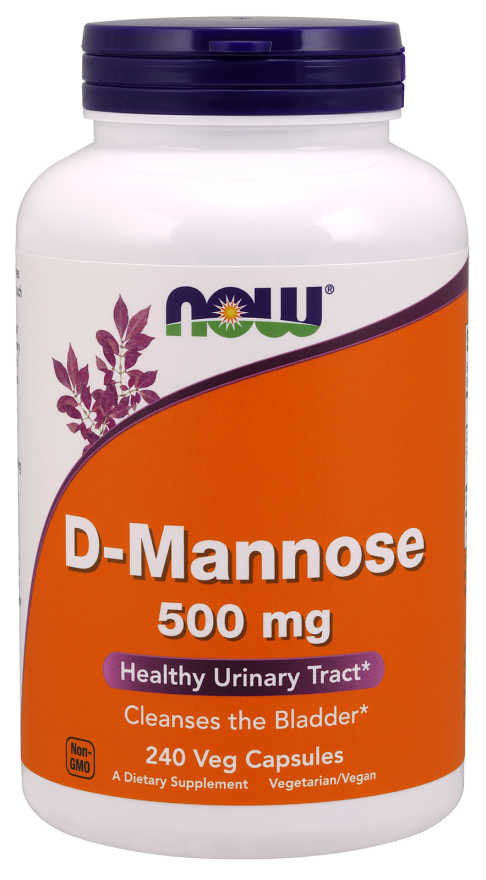
- *MSRP:
$35.99- Our Price:
- $28.79
- Subscribe and Save:
- $21.96ea.
- Buy: at $28.79


A clinically formulated botanical and glyconutrient complex engineered to support bladder health, uroepithelial integrity, and targeted bacterial anti-adherence.
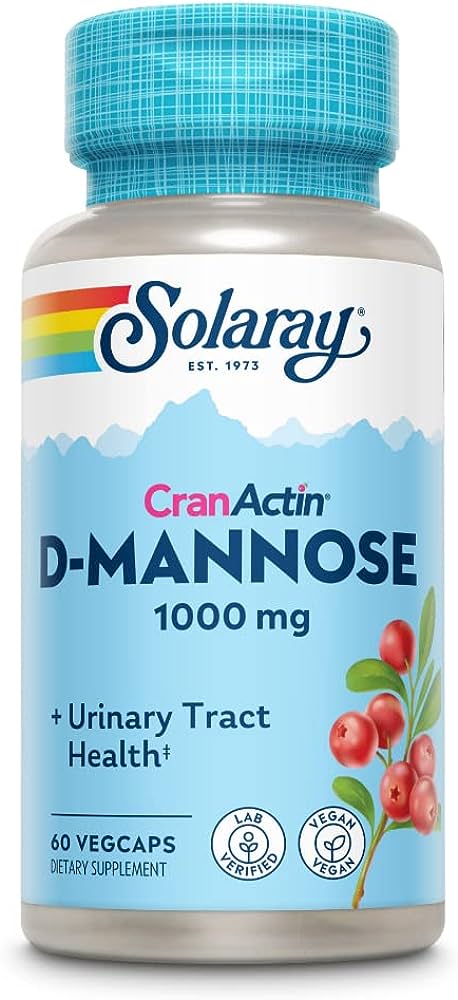
Product Overview: D-Mannose with CranActin unites two biochemically verified urinary health interventions into a single synergistic protocol: 1,000 mg of pure D-Mannose and 400 mg of CranActin® Cranberry AF™ Extract per 2-capsule serving, fortified with 30 mg of Vitamin C. Unlike generic cranberry juices laden with fructose, this concentrated formula delivers the anti-adherence factor (AF) of approximately 14 standard six-ounce glasses of cranberry juice without added sugar, calories, or gastric irritation.
The primary pathogen responsible for roughly 80% to 90% of uncomplicated urinary tract discomfort is Uropathogenic Escherichia coli (UPEC). To initiate irritation or colonization, UPEC must adhere to the mucosal lining of the bladder (the urothelium) via specialized hair-like surface projections known as fimbriae or pili. Solaray D-Mannose with CranActin employs a complementary two-prong mechanistic strategy to neutralize bacterial binding without disrupting beneficial vaginal or intestinal microflora.
D-Mannose is a naturally occurring hexose monosaccharide. Unlike glucose, it is minimally metabolized by human cells; upon oral ingestion, over 90% is rapidly absorbed in the upper gastrointestinal tract and cleared intact into the urinary bladder via glomerular filtration. UPEC bacteria utilize mannose-sensitive Type 1 fimbriae tipped with the FimH adhesin protein to dock onto mannosylated uroplakin receptors lining the bladder wall. By flooding the urine with free D-Mannose, bacteria bind preferentially to the free-floating sugar molecules rather than the urothelium, allowing them to be naturally flushed away during normal micturition.
While D-Mannose blocks Type 1 fimbriae, UPEC strains also deploy mannose-resistant P-fimbriae (pyelonephritis-associated pili) that target galabiose receptors on human kidney and bladder tissues. Standard cranberry juices contain random polyphenol concentrations, but CranActin® Cranberry AF™ Extract is standardized specifically for A-type proanthocyanidins (PACs). Research shows that A-type double-interflavan linkages exert strong non-covalent binding against PapG adhesins on P-fimbriae, inhibiting bacterial docking across multiple independent receptor sites.
The therapeutic rationale behind combining D-Mannose with standardized cranberry proanthocyanidins is grounded in decades of in vitro, in vivo, and clinical research. Below are landmark clinical investigations evaluating these active compounds:
1. D-Mannose Prophylaxis vs. Standard Therapy (Randomized Clinical Trial)
In a landmark randomized clinical trial published in the World Journal of Urology, 308 women with a documented history of recurrent urinary tract infections were randomized to receive 2 g of D-mannose powder daily, 50 mg nitrofurantoin daily, or no prophylaxis for 6 months. Recurrence rates were 14.6% in the D-mannose group compared to 60.8% in the control group (P < 0.001), demonstrating efficacy comparable to pharmaceutical prophylaxis with a substantially superior tolerability profile and significantly reduced incidence of adverse events.
Citation: Kranjčec B, Papeš D, Altarac S. D-mannose powder for prophylaxis of recurrent urinary tract infections in women: a randomized clinical trial. World J Urol. 2014 Feb;32(1):79-84. doi: 10.1007/s00345-013-1091-5. PMID: 23633128.2. Cranberry A-Type Proanthocyanidins and Anti-Adherence Specificity
A seminal investigation published in Phytochemistry isolated and characterized the structural configurations of cranberry proanthocyanidins. Researchers established that only proanthocyanidins containing specific A-type interflavan bonds (as isolated in CranActin®) elicited robust in vitro bacterial anti-adhesion activity against uropathogenic P-fimbriated E. coli at 60 µg/mL, whereas common B-type PACs found in other dietary fruits exhibited negligible or no biological activity.
Citation: Howell AB, Reed JD, Krueger CG, Winterbottom R, Cunningham DG, Leahy M. A-type cranberry proanthocyanidins and uropathogenic bacterial anti-adhesion activity. Phytochemistry. 2005 Sep;66(18):2281-91. doi: 10.1016/j.phytochem.2005.05.022. PMID: 16054181.3. D-Mannose for Urinary Comfort and Symptom Resolution
A clinical pilot investigation evaluated oral D-mannose administration in female subjects experiencing acute uncomplicated urinary discomfort. Following an initial intensive regimen followed by maintenance dosing over 15 days, patients reported significant improvement in dysuria, urgency, and pelvic discomfort, concluding that D-mannose represents a safe, well-tolerated supportive intervention.
Citation: Domenici L, Monti M, Bracchi C, Giorgini M, Colagiovanni V, Muzii L, Benedetti Panici P. D-mannose: a promising support for acute urinary tract infections in women. A pilot study. Eur Rev Med Pharmacol Sci. 2016 Jul;20(13):2920-5. PMID: 27424995.Scientific Rigor & Medical Transparency: While systematic reviews emphasize that clinical protocols should be individualized, both D-mannose and standardized cranberry PACs possess clear biological plausibility and substantial clinical documentation for non-antibiotic bladder wellness support. Dietary supplements are not intended to replace prescription antibiotic therapy for acute pyelonephritis or systemic bacterial infections. Always consult a healthcare professional for suspected active urinary tract infections.
Full label transparency is paramount for informed clinical choices. Every batch of Solaray D-Mannose with CranActin is formulated with pure active bioactives without unnecessary binders, artificial colorants, or synthetic fillers.
Serving Size: 2 VegCaps
Servings Per Container: 30 (for 60 VegCaps) | 60 (for 120 VegCaps)
| Amount Per Serving | % Daily Value |
|---|---|
| Total Carbohydrate | 2 g (<1%†) |
| Total Sugars | 1 g * |
| Vitamin C (as Ascorbic Acid) | 30 mg (33%†) |
| D-Mannose | 1,000 mg * |
|
Cranberry (Vaccinium macrocarpon) (berry extract) (as CranActin® Cranberry AF™ Extract) |
400 mg * |
† Percent Daily Value based on a 2,000-calorie diet.
* Daily Value not established.
Other Ingredients: Vegetable Cellulose Capsule, Maltodextrin (from non-GMO corn), Organic Rice Bran Extract, Tricalcium Phosphate, Magnesium Hydroxide, Silica, and Cellulose.
In an unregulated marketplace saturated with substandard herbal powders, product integrity requires analytical transparency. Solaray manufactures over 95% of its products in its state-of-the-art facility in Ogden, Utah, utilizing a rigorous Triple-Test Quality Protocol to verify ingredient identity, potency, and purity:
Quantified via Inductively Coupled Plasma Mass Spectrometry (ICP-MS) to ensure lead, arsenic, cadmium, and mercury levels remain strictly under strict USP and Prop 65 safety thresholds.
Tested for total aerobic bacterial count, mold, yeast, E. coli, Salmonella, and Staphylococcus aureus to guarantee absolute biological purity.
Screened via High-Performance Liquid Chromatography (HPLC) to confirm exact active constituent concentrations while confirming the absence of ethylene oxide, residual solvents, or adulterants.
Packaging Sustainability: Bottles are produced from 100% Post-Consumer Recycled (PCR) resin to minimize ecological footprint while maintaining barrier protection against moisture, UV rays, and oxygen degradation.
Take 2 VegCaps daily with a meal or a large 8-ounce glass of pure water. For ongoing urinary tract maintenance, consistent daily dosing ensures continuous saturation of urinary tract tissues with anti-adhesion molecules.
During episodes of acute urinary stress or post-coital susceptibility, practitioners frequently recommend increasing intake to 2 VegCaps two to three times daily spaced evenly throughout the day, accompanied by abundant water consumption (at least 64–80 oz daily) to facilitate consistent bladder flushing.
If you experience severe flank or lower back pain, fever, chills, nausea, vomiting, or visible hematuria (blood in the urine), consult a physician immediately. These are clinical indicators of an ascending upper urinary tract infection (pyelonephritis), which necessitates prompt prescription medical evaluation and antimicrobial therapy. Do not rely on dietary supplements for active kidney infections.
D-Mannose and cranberry extract target entirely different docking mechanisms on pathogenic bacteria. D-Mannose selectively inhibits the Type 1 (mannose-sensitive) fimbriae of E. coli, while CranActin® provides concentrated A-type proanthocyanidins (PACs) that block mannose-resistant P-fimbriae (PapG adhesins). Combining them creates a dual-pathway anti-adherence defense that is significantly more comprehensive than single-ingredient formulas.
Although D-Mannose is biochemically classified as a simple hexose sugar, human metabolism handles it differently than glucose or sucrose. Over 90% passes into the bloodstream without being converted into glycogen or utilized for cellular energy, and it is excreted rapidly through the kidneys into the urine. For most individuals, standard supplemental doses have minimal impact on fasting blood glucose or HbA1c levels. However, individuals with type 1 or type 2 diabetes should monitor their blood sugar and consult their managing physician before beginning daily supplementation.
Pharmacokinetic studies demonstrate that oral D-mannose is rapidly absorbed in the upper gastrointestinal tract, with peak urinary concentrations typically achieved within 60 to 90 minutes post-consumption. Users taking the supplement for acute discomfort often report urinary relief within 24 to 48 hours, although a full 5- to 7-day protocol or ongoing maintenance regimen is recommended to ensure sustained uroepithelial protection.
Yes. D-Mannose and CranActin function purely through a physical anti-adherence mechanism and do not interfere with the bactericidal or bacteriostatic mechanisms of standard antibiotics such as nitrofurantoin, sulfamethoxazole-trimethoprim, or cephalosporins. Many urology clinicians recommend pairing them as supportive nutritional adjuncts during and immediately following antibiotic therapy to promote bladder wall clearance and reduce the risk of secondary recurrence.
Solaray D-Mannose with CranActin is exceptionally well tolerated. Because a small portion of unabsorbed mannose reaches the colon, a minority of individuals taking very high doses may experience mild gastrointestinal effects such as loose stools, transient bloating, or abdominal cramping. These symptoms are typically mild and self-limiting, resolving rapidly by reducing the dosage or taking capsules with a full meal.
Yes. While urinary tract challenges are statistically more prevalent in women due to anatomical differences, men also experience bacterial colonization from E. coli, particularly related to prostate enlargement, catheter use, or post-instrumentation recovery. The anti-adhesion mechanism works identically in male urinary tracts.