- *MSRP:
$10.59- Our Price:
- $9.53
- Subscribe and Save:
- $6.47ea.
- Buy: at $9.53


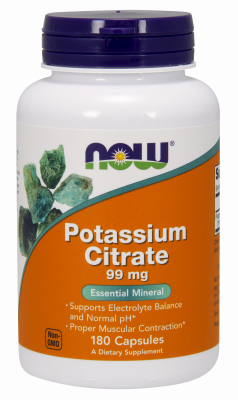
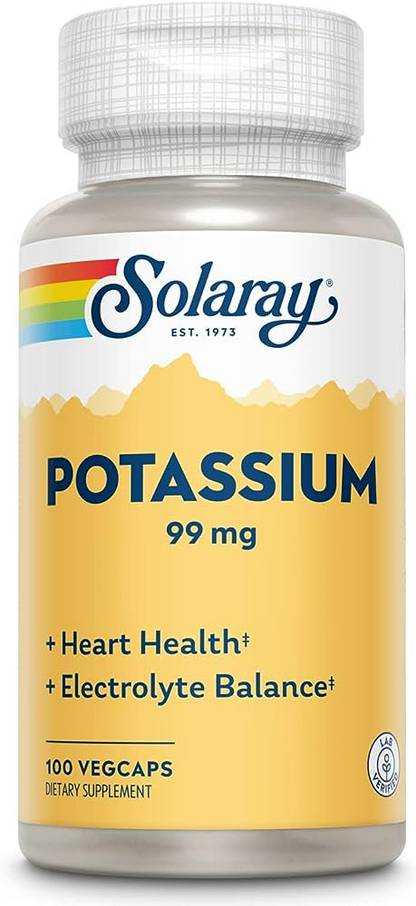
Potassium is the primary mineral that keeps your cells hydrated, your heartbeat rhythmic, and your muscles firing smoothly. Solaray Potassium-99 delivers 99 mg of elemental potassium bound to natural whole-rice amino acids—creating a bioavailable, stomach-friendly formula designed for daily cardiovascular and cellular replenishment.
Why Customers Choose Solaray Potassium 99:
Think of your body as an electrical engine. Every beat of your heart, every twitch of your eyelid, and every step you take relies on microscopic electrical currents flowing across your cell walls. Potassium is the spark plug inside the cell, while sodium works on the outside.
Every human cell runs a tiny motor called the Sodium-Potassium Pump (Na+/K+-ATPase). It pumps sodium out and pulls potassium in. This tiny chemical difference acts like a charged battery, allowing your nerves to send clear signals and preventing erratic firing that causes leg cramps and muscle twitches.
Excess sodium causes your body to retain fluid, raising the pressure inside your blood vessels like water in a narrow garden hose. Potassium signals your kidneys to release that excess sodium through urine and encourages blood vessel walls to relax, supporting healthy circulation.
Water goes where minerals flow. While sodium holds water outside your cells, potassium pulls water inside the cells where repair and energy metabolism happen. Without sufficient potassium, muscles tire quickly and cellular dehydration can set in.
The daily recommended intake for potassium is between 2,600 mg and 3,400 mg per day for healthy adults, yet over-the-counter tablets are virtually all capped at 99 mg (roughly 2% of the Daily Value). Many people ask: “Is a 99 mg supplement even doing anything?”
The 99 mg limit is a strict safety standard established by the U.S. Food and Drug Administration (under 21 CFR § 201.306). Decades ago, high-dose prescription potassium salt tablets (often 750 mg or more of potassium chloride) were found to dissolve too quickly in one concentrated spot in the digestive tract. This localized burst of concentrated salt could irritate the delicate lining of the small intestine.
To protect consumers, federal regulations require that non-prescription potassium supplements provide no more than 99 mg of elemental potassium per unit. This ensures you can gently supplement and fill dietary gaps throughout the day without overwhelming your stomach or intestinal lining.
Not all potassium supplements are created equal. Inexpensive supermarket potassium supplements often use raw potassium chloride, which tastes salty, can cause minor stomach upset, and breaks down rapidly.
Solaray bonds (chelates) elemental potassium to an amino acid complex derived from whole brown rice concentrate. Here is why that matters:
Serving Size: 1 VegCap
Servings Per Container: 100
| Amount Per Serving | % Daily Value |
|---|---|
| Potassium (as Potassium Amino Acid Complex) | 99 mg (2%) |
* The % Daily Value (DV) tells you how much a nutrient in a serving of food contributes to a daily diet. 2,000 calories a day is used for general nutrition advice.
Other Ingredients: Vegetable Cellulose Capsule, Whole Rice Concentrate, Rice Flour, Magnesium Stearate, Parsley Leaf (Petroselinum crispum), Chamomile Flower (Matricaria recutita), Watercress Herb (Nasturtium officinale), and Citric Acid.
Suggested Use: Adults take 1 VegCap daily with a meal or a large glass of water (8 oz). Use only as directed by your healthcare practitioner.
Allergen Free Statement: Formulated without soy, yeast, milk, eggs, wheat, corn, gluten, artificial colors, or artificial preservatives. Lab-verified in Solaray’s state-of-the-art facility for identity, purity, and potency.
Supplements are designed to fill nutritional gaps, not replace a wholesome diet. According to federal dietary surveys, fewer than 3% of American adults meet their daily potassium targets due to high reliance on processed foods (which strip potassium and load sodium).
Pair your Solaray Potassium 99 mg capsule with these nutrient-dense food sources to reach optimal electrolyte equilibrium:
Because potassium directly controls cardiac muscle firing and heart rate rhythm, maintaining balance is vital. Too much potassium in your bloodstream (a clinical condition called hyperkalemia) can be dangerous.
*Disclaimer: These statements have not been evaluated by the Food and Drug Administration. This product is not intended to diagnose, treat, cure, or prevent any disease. Always keep your licensed healthcare practitioner informed when introducing any mineral supplement.
Standard potassium chloride tablets can break down aggressively in the stomach and frequently cause nausea or digestive upset. Solaray’s potassium is chelated with whole brown rice amino acids, forming a gentle organic matrix that your stomach processes like food, ensuring smooth absorption and optimal gastrointestinal tolerance.
Yes. Muscle contractions rely directly on the balance between calcium, magnesium, sodium, and potassium. When potassium levels drop (often due to sweat, heat, or low intake), nerve endings become hypersensitive and trigger involuntary spasms. Taking 99 mg daily helps replenish baseline electrolyte stores to maintain normal muscle relaxation.
Very beneficial. When you cut carbohydrates, your insulin levels drop, prompting your kidneys to flush water, sodium, and potassium rapidly. This electrolyte depletion is a prime cause of the fatigue, brain fog, and muscle cramps known as the "keto flu." A daily 99 mg potassium supplement helps replenish cellular electrolytes smoothly.
Take your capsule with a meal (such as breakfast or dinner) along with a tall 8-ounce glass of water. Consuming potassium with food mirrors natural mineral ingestion and ensures optimal nutrient absorption.
Solaray incorporates a proprietary botanical base of parsley, chamomile, and watercress to supply natural co-factors, trace phytonutrients, and gentle soothing botanicals that work in harmony with the amino acid chelate.