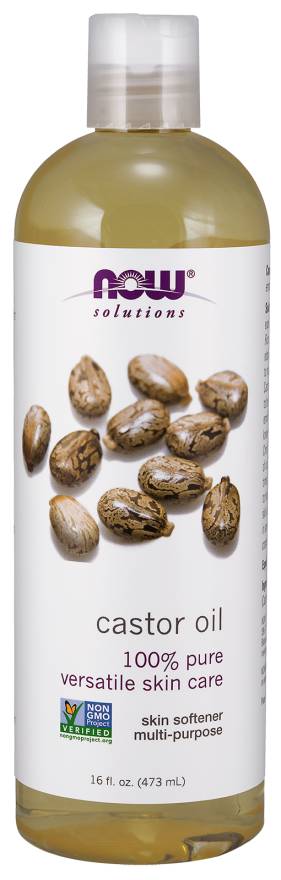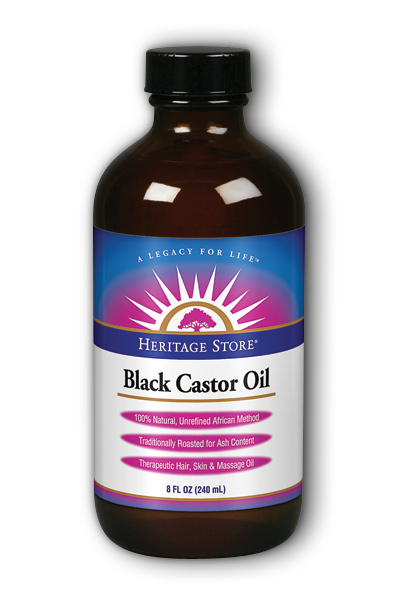
- *MSRP:
$25.20- Our Price:
- $21.39
- Subscribe and Save:
- $15.38ea.
- Buy: at $21.39


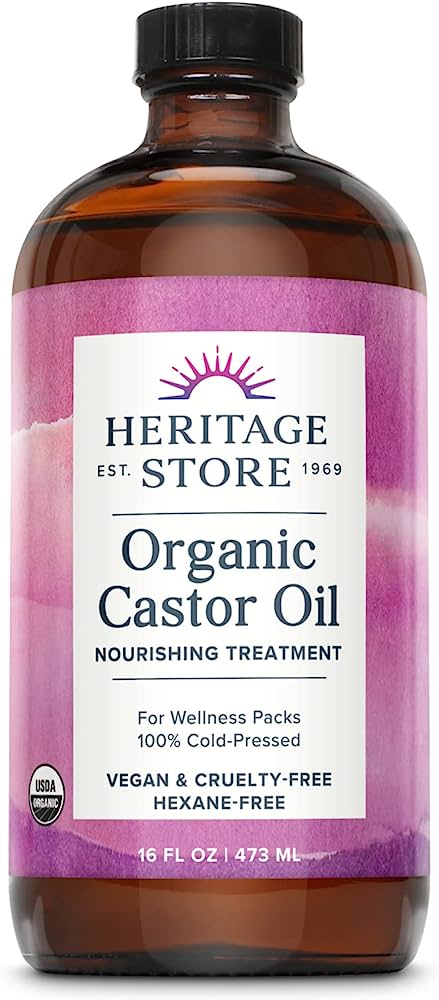
Heritage Store Organic Castor Oil is a pure, unrefined, single-origin botanical lipid expressed from the seeds of certified organic Ricinus communis. Renowned in both Ayurvedic pharmacognosy and Western integrative health traditions, this thick, deeply penetrating oil serves as a foundational therapy for topical castor oil packs, intensive dermatological hydration, and follicle strengthening. Free of artificial fragrances, hexane, solvents, and petrochemical derivatives, our 16-ounce formulation preserves the natural spectrum of active phytosterols and fatty acids essential for therapeutic use.
Unlike common carrier oils such as jojoba, sweet almond, or olive oil—which consist predominantly of balanced oleic and linoleic triglycerides—castor oil features an exceptional biochemical profile dominated by ricinoleic acid (12-hydroxy-9-octadecenoic acid). Comprising roughly 85% to 90% of the oil’s total fatty acid content, ricinoleic acid is an 18-carbon monounsaturated fatty acid possessing a rare hydroxyl (-OH) functional group located at the 12th carbon atom.
This unique hydroxyl moiety confers several critical physical and physiological properties:
| Fatty Acid Constituent | Lipid Structure | Typical Concentration (%) | Primary Biological Function |
|---|---|---|---|
| Ricinoleic Acid | C18:1-OH | 85.0% – 90.0% | EP3 receptor agonism, anti-inflammatory mediation, occlusive barrier repair |
| Oleic Acid | C18:1 (Omega-9) | 2.5% – 6.0% | Stratum corneum penetration enhancement, lipid membrane fluidity |
| Linoleic Acid | C18:2 (Omega-6) | 1.0% – 5.0% | Ceramide synthesis, Transepidermal Water Loss (TEWL) reduction |
| Stearic & Palmitic Acids | C18:0 / C16:0 | 1.0% – 3.0% | Structural skin lipid support, emollient texture stabilization |
While social media often attributes panacea-like capabilities to castor oil, sound clinical literature and dermatological science identify specific, validated pathways where pure topical castor oil provides genuine physiological support:
Transdermal castor oil packs applied over the right upper quadrant and abdomen have been clinically documented to soften fecal consistency, mitigate defecation straining, and alleviate chronic constipation symptoms without the spastic cramping often seen with oral stimulant laxatives (Arslan & Eşer, 2011).
Controlled pharmacological investigations reveal that ricinoleic acid reduces acute and subchronic edema through neurokinin-1 (NK-1) and substance P pathways, exerting localized analgesic actions analogous to capsaicin, but without initial sensory irritation (Vieira et al., 2000).
By virtue of its high molecular weight and dense hydrophobic character, topical castor oil seals microscopic fissures in the stratum corneum, creating a resilient semi-permeable film that drastically curtails Transepidermal Water Loss (TEWL) in xerotic or eczema-prone tissue.
Prospective trials examining periocular and eyelid margin application have shown significant improvements in meibomian gland expressibility, tear film stability, and resolution of ocular surface discomfort caused by chronic blepharitis (Craig et al., 2021).
The external application of castor oil via layered unbleached wool or cotton flannel is a time-tested methodology designed to optimize transdermal absorption. Follow this clinical protocol for abdominal and liver meridian applications:
Beyond abdominal packs, cold-pressed castor oil acts as an intensive topical restorative for compromised skin barriers, coarse hair, and delicate facial follicles.
Scientific Reality vs. Hype: Castor oil does not alter genetic hair cycles or cure androgenetic alopecia. However, massaged into the scalp, its ricinoleic content alleviates micro-inflammation around the infundibulum while delivering humectant moisture. Applied to mid-lengths and ends, the thick triglyceride coating cushions the hair cuticle, dramatically reducing mechanical breakage and split ends during styling.
Dip a clean spoolie or cotton swab into a single drop of Heritage Store Organic Castor Oil. Gently comb through brow hairs and along the upper lash tips before bed. Its rich lipid matrix conditions brittle hair shafts, preventing premature snapping and imparting a visibly denser, lustrous sheen.
Because castor oil retains a higher specific gravity than lighter botanical oils, it adheres effectively to severely hyperkeratotic zones such as cracked heels, calloused elbows, and ragged nail cuticles, softening dense keratin plaques over consecutive overnight applications.
In compliance with strict consumer health standards, users must understand the physiological boundaries and safety profile of castor oil:
Do not use castor oil packs over the abdomen or ingest castor oil if you are pregnant. As demonstrated by Tunaru et al. (2012), ricinoleic acid directly activates smooth-muscle EP3 receptors in both the intestinal tract and the myometrium of the uterus. This can induce uterine spasms, premature contractions, and severe fetal/maternal distress. Castor oil should never be taken orally without the direct supervision of an obstetrician.
100% Pure, Certified Organic Cold-Pressed Castor (Ricinus communis) Seed Oil.
Contains nothing else. Contains no artificial fillers, fragrances, synthetic preservatives, phthalates, parabens, mineral oil, or solvent residues.
Brand / Manufacturer: Heritage Store Item SKU / Code: HG0111 Universal Product Code (UPC): 076970221219 Net Volume: 16 fl oz / 473 mL Extraction Technique: Expeller Cold-Pressed (Hexane-Free) Packaging Vessel: Dark Amber UV-Blocking BottleOur clinical information is cross-referenced with peer-reviewed pharmacological, dermatological, and biochemical studies:
Cold-pressed castor oil is mechanically expeller-pressed below 120°F without the use of chemical solvents like hexane or excessive industrial heat. This preserves the delicate bioactive hydroxyl bonds of ricinoleic acid, natural antioxidants, and phytosterols. Standard commercial castor oil is frequently solvent-extracted using chemical distillates and subjected to high-heat deodorization, which can denature beneficial lipids.
Yes. Clinical trials evaluating topical castor oil packs over the abdomen revealed significant reductions in defecation straining, improvements in stool consistency, and enhanced sensation of bowel evacuation (Arslan & Eşer, 2011). While not acting as an instantaneous chemical laxative when applied topically, the soothing warmth and transdermal ricinoleic acid aid in relaxing abdominal smooth muscle and stimulating regional circulation.
Castor oil does not alter the biological rate of follicular anagen (growth) cycles or revive non-viable follicles. However, its high concentration of ricinoleic acid and dense emollient properties deeply coat the eyebrow and eyelash shafts, sealing moisture into the cuticle. This significantly reduces brittle breakage and shedding, allowing brow and lash hairs to reach their full potential length and appear visibly thicker.
No. Ricin is a water-soluble toxalbumin protein present in the seed hulls and pulp of Ricinus communis. Because ricin is completely insoluble in lipids, it does not partition into the expressed oil during cold-press extraction. Furthermore, modern lab testing and quality standards ensure that finished organic castor oil contains undetectable ricin levels, making it entirely non-toxic for topical cosmetic use.
Unsaturated fatty acids are vulnerable to photo-oxidation when exposed to ambient visible and ultraviolet (UV) light. Exposure to light and oxygen can break down fatty acid chains into free radicals and rancid aldehydes. Dark amber packaging filters out harmful UV wavelengths, ensuring the therapeutic potency, viscosity, and shelf life of the cold-pressed oil remain stable for years.
A high-quality wool or cotton flannel pack can generally be reused 20 to 30 times. Store the saturated flannel in a sealed glass Mason jar in the refrigerator between applications to prevent oxidation. Discard and replace the flannel if it develops a rancid odor, becomes discolored, or has been used after an illness.
Yes, but due to its exceptionally high viscosity (comedogenic rating of 1 to 2), it is best used either as a targeted spot treatment on dry patches or blended with a lighter carrier oil such as jojoba or rosehip oil (1 part castor oil to 3 parts carrier oil). It excels as a night-time occlusive barrier over damp skin to prevent transepidermal water loss.