- *MSRP:
$39.99- Our Price:
- $22.00
- Buy: at $22.00


High-potency cellular antioxidant derived from natural Haematococcus pluvialis microalgae to defend against screen fatigue, support skin elasticity, and promote joint recovery.
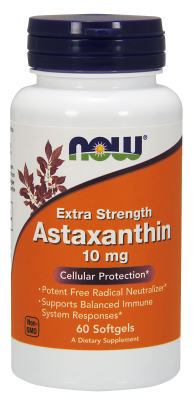
✓ 10 mg Active Astaxanthin Per Softgel ✓ Non-GMO Microalgae Source ✓ In-House ISO 17025 Lab Verified ✓ Free of Gluten, Soy, and Artificial SolventsEvery day, your body contends with environmental stressors, digital blue light from monitors, and natural metabolic waste known as free radicals. While standard antioxidants like Vitamin C and Vitamin E offer basic support, NOW® Extra Strength Astaxanthin 10 mg provides more than double the potency of traditional 4 mg formulas. Extracted directly from freshwater microalgae rather than synthetic petroleum derivatives, this red carotenoid delivers whole-body cellular defense that reaches tissues many other nutrients simply cannot penetrate.
Carotenoids are vibrant natural pigments produced by plants and algae. Beta-carotene gives carrots their orange hue, and lycopene gives tomatoes their deep red color. Astaxanthin belongs to this family, but its molecular structure gives it extraordinary biological advantages.
Most antioxidants are either water-soluble (working only outside or inside the cell fluid, like Vitamin C) or fat-soluble (working only within cell walls, like Vitamin E). Astaxanthin features a polar head and non-polar tail that physically spans the entire lipid bilayer of your cells, defending both the internal fluid and external barrier simultaneously (Ambati et al., 2014).
Under intense metabolic stress or heavy free radical loads, common antioxidants can become depleted and inadvertently act as free radicals themselves (pro-oxidation). Astaxanthin's unique chemical arrangement allows it to dissipate excess oxidative energy without breaking down or turning into a harmful reactive molecule (Capelli & Cysewski, 2014).
Your central nervous system and eyes possess specialized physiological filters designed to block foreign substances. Natural astaxanthin safely traverses both the blood-brain barrier and blood-retinal barrier, delivering targeted antioxidant nourishment directly to the retina, optic nerve, and cerebral tissue.
NOW® Astaxanthin 10 mg is formulated to support four key physiological systems that experience high daily oxidative strain:
Prolonged focus on computer monitors, smartphones, and harsh indoor lighting strains the ciliary body—the delicate focusing muscle of the eye. Clinical investigations demonstrate that astaxanthin supplementation promotes healthy microcirculation in retinal capillaries and helps reduce subjective eye fatigue, blurred vision, and ocular stiffness caused by continuous screen time (Nagaki et al., 2010; Balcerczyk et al., 2025).
Sunlight and environmental pollutants generate reactive oxygen species that degrade collagen fibers in the dermis. In human clinical trials, oral astaxanthin significantly improved skin moisture retention, enhanced epidermal elasticity, smoothed fine surface texture, and reduced UV-induced inflammatory redness across both men and women (Tominaga et al., 2012; Ito et al., 2018).
Intense physical exertion produces lactic acid and oxidative waste within mitochondrial membranes. Astaxanthin shields cellular energy factories from lipid peroxidation, helping active individuals and athletes manage exercise-induced soreness, support healthy joint flexibility, and accelerate power output recovery (Earnest et al., 2011).
Astaxanthin helps protect low-density lipoproteins (LDL cholesterol) from oxidizing in the vascular stream. By reducing lipid peroxidation, it helps preserve endothelial wall function, supports natural nitric oxide balance for healthy arterial circulation, and moderates normal immune cell response (Fassett & Coombes, 2011).
Not all astaxanthin products on the market contain what their labels claim. In independent quality audits conducted by NOW Foods on commercial marketplace supplements, an alarming percentage of discount astaxanthin brands failed potency tests—with some products containing less than 1 mg of active carotenoid despite claiming 10 mg on the front panel.
To ensure absolute safety and label verification, NOW operates one of the most advanced, privately held analytical testing facilities in the dietary supplement industry:
NOW’s in-house analytical laboratories are formally accredited under ISO/IEC 17025 standards (A2LA Certificate #6253.01), executing over 19,000 analytical tests monthly using verified scientific methodologies.
Using High-Performance Liquid Chromatography (HPLC), NOW tests raw materials and finished softgels to confirm the precise 10 mg concentration of biologically active (3S, 3'S) natural astaxanthin isomers, ruling out adulterated synthetic substitutes.
Inductively Coupled Plasma Mass Spectrometry (ICP-MS) screens every batch for toxic heavy metals—including Lead (Pb), Cadmium (Cd), Arsenic (As), and Mercury (Hg)—down to parts-per-billion (ppb) to meet stringent California Proposition 65 and USP standards.
Because carotenoids and carrier oils are sensitive to oxidation, NOW rigorously measures Peroxide Value (PV) and Acid Value to verify that the olive oil and active carotenoids remain completely fresh and shelf-stable.
Many bargain supplements utilize synthetic astaxanthin synthesized from petrochemical compounds. While chemical formulas may appear similar on paper, the physical shape and stereochemistry differ significantly:
| Comparison Factor | NOW® Natural Microalgae (Haematococcus pluvialis) | Synthetic Astaxanthin (Petrochemical) |
|---|---|---|
| Primary Source | Cultivated freshwater microalgae (Zanthin® / AstaReal®) | Synthesized from petroleum derivatives |
| Molecular Form | Esterified with natural fatty acids for enhanced absorption | Free, unesterified synthetic molecules |
| Stereoisomer Profile | Pure 3S, 3'S optical isomer (natural form found in nature) | Mixture of 3R, 3'R, 3S, 3'S, and meso forms |
| Human Clinical Support | Validated across dozens of peer-reviewed human trials | Primarily studied and approved as an animal feed dye |
Verified direct from NOW Foods product specifications (Item Code: 2251 / NWF-02251 / UPC: 733739022516):
Serving Size: 1 Softgel | Servings Per Container: 60
| Amount Per Serving | % Daily Value |
|---|---|
| Calories | 5 |
|
Natural Astaxanthin (from Haematococcus pluvialis Extract) [Zanthin®] |
10 mg * |
* Daily Value not established.
Other Ingredients: Extra Virgin Olive Oil, Softgel Capsule [bovine gelatin (BSE-free), glycerin, water], Mixed Tocopherols (from non-GMO sunflower), Sunflower Oil, and Rosemary Extract (Rosmarinus officinalis leaf).
Allergen Free: Not manufactured with wheat, gluten, soy, milk, egg, fish, shellfish, or sesame ingredients. Produced in a GMP-compliant facility that processes other ingredients containing these allergens.
Dietary Designations: Non-GMO, Halal compliant, Kosher (contains bovine gelatin), BSE-Free certified gelatin.
Astaxanthin is fat-soluble (lipophilic). Taking it on an empty stomach with plain water will result in poor intestinal absorption. For optimal bioavailability, take your 1 softgel daily alongside a meal that contains healthy dietary fats—such as eggs, avocado, olive oil, nuts, or Greek yogurt.
As part of our commitment to transparent health guidance, we encourage reviewing these practical safety guidelines before adding any concentrated antioxidant to your routine:
Astaxanthin may naturally support healthy blood pressure and blood sugar levels. If you are currently prescribed antihypertensive medications, anticoagulants (blood thinners), or 5-alpha-reductase inhibitors, consult your treating physician before use to monitor routine health markers.
While natural astaxanthin is a normal component of wild seafood diets, concentrated 10 mg therapeutic dosages have not been extensively evaluated in pregnant or lactating mothers. Please consult your obstetrician prior to supplementation.
Astaxanthin is exceptionally well-tolerated. At 10 mg doses, a harmless reddish tint to the stool may occasionally occur due to the natural deep-red carotenoid pigment passing through the digestive tract.
Natural carotenoids are sensitive to heat and moisture. Keep the bottle tightly capped and store it in a cool, dark cupboard at room temperature. Avoid humid bathroom cabinets or leaving softgels in direct sunlight.
VitaNet®, LLC is an independent, family-owned American retailer providing high-quality nutritional supplements online since 1995[cite: 1]. With over 31 years of direct industry experience evaluating vitamin formulations and biochemistry, we help you bypass unverified marketplace third-party sellers[cite: 1].
NOW Astaxanthin 10 mg is primarily used as an extra-strength antioxidant to ease digital eye fatigue and computer strain, enhance skin moisture and elasticity, speed up muscle recovery after workouts, and protect cellular membranes from everyday oxidative damage.
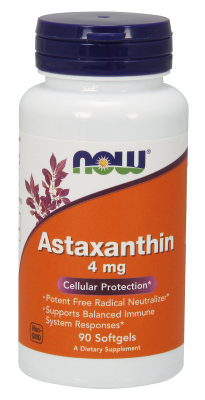
While 4 mg is a standard maintenance dose, 10 mg provides an extra-strength serving frequently favored in clinical research for pronounced digital screen fatigue, intensive athletic physical exertion, and active dermal anti-aging support.
It is 100% natural astaxanthin extracted from non-GMO Haematococcus pluvialis microalgae (Zanthin® / AstaReal®). It features natural esterified fatty acids and the pure (3S, 3'S) stereoisomer that matches the human clinical literature, unlike synthetic petroleum derivatives.
Yes. Astaxanthin is a fat-soluble nutrient. Taking it with a meal containing dietary fats (such as avocado, eggs, olive oil, or yogurt) significantly enhances intestinal absorption and cellular delivery.
NOW tests every lot in its ISO/IEC 17025 accredited in-house laboratories using Inductively Coupled Plasma Mass Spectrometry (ICP-MS) for heavy metals (lead, arsenic, cadmium, mercury down to parts per billion) and High-Performance Liquid Chromatography (HPLC) to confirm 100% active carotenoid potency.