- *MSRP:
$8.99- Our Price:
- $8.55
- Buy: at $8.55


Item SKU: N7133 | UPC: 733739071330 | Brand: NOW Foods (NOW Real Food® Slender Zero™)
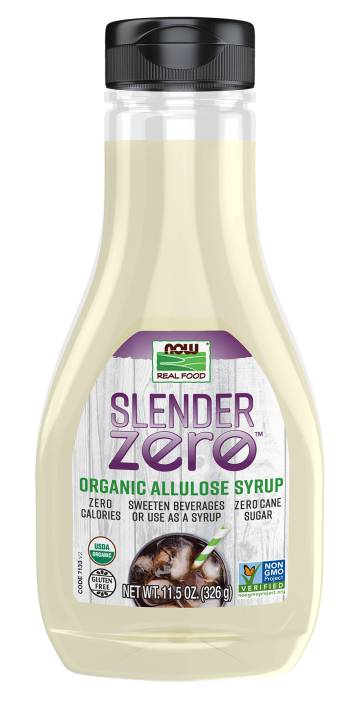
Finding a liquid sweetener that tastes like pure cane sugar without wrecking your blood sugar or kicking you out of ketosis used to feel impossible. Selender Zero Organic Allulose Syrup (featured in the NOW Real Food® Slender Zero™ lineup) changes that completely. Made from 100% certified organic liquid allulose, this smooth, pourable syrup delivers the authentic sweetness, clean mouthfeel, and rich body of traditional syrup with zero net carbs, zero added sugars, and virtually zero calories.
Unlike artificial chemical sweeteners that leave a harsh metallic aftertaste, or stevia and monk fruit extracts that can taste licorice-like, organic allulose is an actual sugar molecule found in nature. It binds to your tongue's sweet receptors just like table sugar, yet passes through your digestive tract without turning into glucose energy.
To understand why Selender Zero Organic Allulose Syrup is so revolutionary for low-carb, ketogenic, and diabetic meal plans, it helps to look at the molecule itself. In simple terms: allulose is real sugar that your body doesn't know how to burn.
Known scientifically as D-psicose, allulose is classified as a “rare sugar” because it exists naturally in tiny traces within real foods like dried figs, raisins, and jackfruit. Structurally, it is an epimer of fructose—meaning it shares the exact same chemical formula as fructose, but one small hydroxyl group is arranged in a mirror-image direction.
That tiny twist makes all the difference:
If you have ever tried keto treats made with sugar alcohols like maltitol, sorbitol, or large amounts of erythritol, you are probably familiar with their most common downside: stomach cramps, loud rumbling, and painful gas.
Sugar alcohols cause digestive distress because they are poorly absorbed in the small intestine. Instead, they travel down into the large intestine (colon), where resident gut bacteria ferment them rapidly, creating gas and pulling excess water into the bowel.
Allulose works differently:
Granulated sugar alternatives often fail in liquids: they crystallize in iced drinks, turn gritty in cold sauces, and stay chalky in recipes. Selender Zero Organic Allulose Syrup solves these texture problems because it comes pre-dissolved as a rich liquid nectar.
Stirs instantly into hot morning coffee, cold brew, iced matcha, tea, and homemade lemonade without sinking to the bottom or re-crystallizing into hard crunches.
Pour it straight onto low-carb almond flour pancakes, chaffles, yogurt, and oatmeal bowls for that authentic, comforting diner syrup mouthfeel without the sugar spike.
Unlike erythritol, allulose participates in the natural Maillard browning reaction. It caramelizes beautifully on roasted vegetables, in sugar-free BBQ glazes, and on baked goods. Pro-tip: Lower your oven temperature by 25°F, as allulose browns faster than cane sugar!
Allulose depresses the freezing point just like sucrose, preventing low-carb homemade ice creams and sorbets from freezing into solid rock cubes in your freezer.
Transparency is essential for healthy living. Here is the verified product profile for NOW Foods Selender Zero Organic Allulose Syrup (11.5 fl oz / 340 mL):
Not a significant source of saturated fat, trans fat, cholesterol, dietary fiber, vitamin D, calcium, iron, or potassium. *The % Daily Value tells you how much a nutrient in a serving of food contributes to a daily diet.
Ingredients: Organic Liquid Allulose.
USDA Organic, Non-GMO Project Verified, Gluten-Free, Vegan / Vegetarian, Kosher Certified, Keto-Friendly, Low-Glycemic, No Artificial Colors, Flavors, or Preservatives. Packaged and quality-tested in the USA by NOW Foods.
To calculate net carbs, take the Total Carbohydrates (5g per tablespoon) and subtract the Allulose (5g). Because allulose is not metabolized into glucose by the human body, the result is 0g Net Carbs per serving. It fits seamlessly into strict ketogenic diets without interrupting fat-burning ketone production.
Yes. Multiple clinical trials demonstrate that allulose does not elevate postprandial blood glucose or trigger insulin spikes in healthy or diabetic individuals. Unlike high fructose corn syrup or agave, allulose bypasses conventional hepatic sugar metabolism and is excreted primarily through the kidneys. As always, individuals managing diabetes should monitor their personal readings when introducing new dietary items.
Allulose is naturally about 70% as sweet as table sugar. As a liquid syrup, it pours and coats pancakes, waffles, and berries with a satisfying mouthfeel comparable to light maple syrup or agave nectar. If you prefer intense sweetness, you can use a 1.25:1 replacement ratio compared to traditional syrups, or pair it with a pinch of pure stevia or monk fruit.
Allulose has a dramatically higher digestive tolerance than sugar alcohols. Because over 70% is rapidly absorbed in the small intestine and excreted in the urine, very little ever enters the colon where bacterial fermentation causes bloating. Clinical tolerance studies show healthy adults comfortably tolerate up to 0.4 grams per kilogram of body weight in a single serving (roughly 5 to 6 tablespoons for an average adult).
Unlike sugar alcohols, allulose is a reducing monosaccharide capable of undergoing the Maillard reaction (the chemical reaction between amino acids and reducing sugars that produces golden-brown coloration and rich aroma). Because it caramelizes at lower temperatures than table sugar, reduce your baking oven temperature by approximately 25°F (15°C) or cover your pans loosely with foil during the final minutes of baking.
No. Xylitol is notorious for triggering severe hypoglycemia and acute liver failure in canines. In published veterinary and animal safety research, allulose does not cause the catastrophic insulin surge in dogs that xylitol causes. However, pets should not be fed human syrups or human sweeteners as standard food.
No refrigeration is required after opening. Store the bottle at room temperature in a cool, dry pantry with the cap tightly sealed. Storing it in the refrigerator may cause the syrup to thicken excessively.
Scientific References & Authoritative Sources:
*These statements have not been evaluated by the Food and Drug Administration. This product is not intended to diagnose, treat, cure, or prevent any disease.


