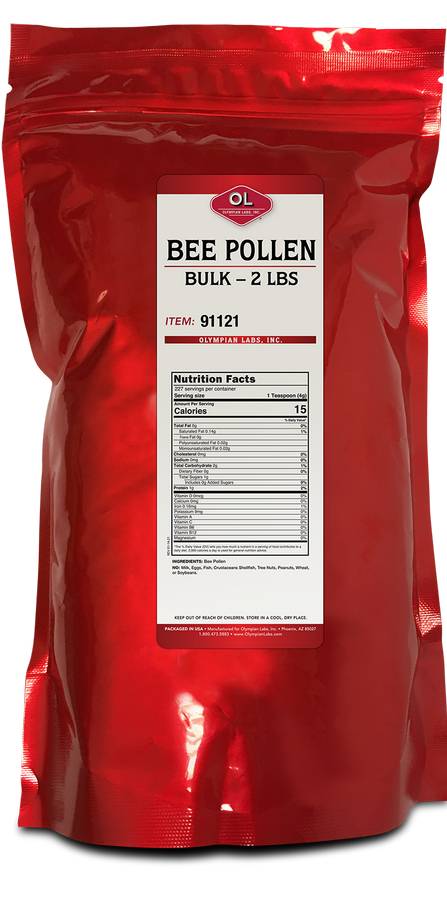
Bee Pollen Granules Resealable Bag – 2 LB (907g) by Olympian Labs
Olympian Labs Bee Pollen Granules (2 LB Resealable Bag) deliver unadulterated, raw apitherapeutic nutrition directly from floral nectars into a bioavailable, whole-food supplement. Engineered for maximum freshness, our multi-layer barrier resealable pouch safeguards delicate live enzymes, heat-sensitive B-vitamins, and potent polyphenolic antioxidants against moisture, light degradation, and oxidative rancidity.
The Nutritional Biochemistry of Raw Bee Pollen Granules
Bee pollen is not an isolated micronutrient; it is a complex biological matrix composed of flower pollen grains gathered by worker honeybees (Apis mellifera), combined with plant nectar and specialized salivary enzymes such as diastase, invertase, and glucose oxidase. According to comprehensive chemical analyses published in Evidence-Based Complementary and Alternative Medicine (Komosinska-Vassev et al., 2015), raw bee pollen contains over 250 biologically active substances, including:
Complete Protein & Free Amino Acids (approx. 22.7%): Contains all essential amino acids (leucine, isoleucine, valine, lysine, methionine, phenylalanine, threonine, tryptophan) in free-form configurations that require minimal digestive processing.
Complex Carbohydrates & Prebiotic Fibers (approx. 30.8%): Primarily digestible polysaccharides, fructose, glucose, and prebiotic oligosaccharides that nourish gut flora.
Polyphenolic Bioflavonoids & Phenolic Acids: Abundant concentrations of rutin, quercetin, kaempferol, isorhamnetin, caffeic acid, and ferulic acid, responsible for potent free-radical scavenging capacity (Rzepecka-Stojko et al., 2015).
Natural Coenzymes & Micronutrients: Co-factors across the entire vitamin B-complex (thiamine B1, riboflavin B2, niacin B3, pantothenic acid B5, pyridoxine B6, and folate), alongside provitamin A (carotenoids) and trace minerals including zinc, selenium, copper, and magnesium.
Evidence-Based Mechanisms: What Science Says
1. Cellular Energy, Metabolic Tone, and Athletic Recovery
Unlike synthetic stimulants or caffeine that force central nervous system excitation, bee pollen supplies natural substrates for adenosine triphosphate (ATP) synthesis. The synergetic presence of B-complex vitamins acts as mandatory enzymatic cofactors in the Krebs cycle, converting carbohydrates and amino acids into usable cellular energy. Preliminary animal and physiological models suggest that pollen supplementation enhances muscle glycogen repletion and nitrogen retention during periods of intensive physical output (Denisow & Denisow-Pietrzyk, 2016).
2. Modulation of Oxidative Stress & Inflammatory Markers
Chronic oxidative stress compromises cellular integrity and accelerated tissue aging. In peer-reviewed assays, the high Trolox equivalent antioxidant capacity (TEAC) of bee pollen polyphenols demonstrates the capacity to suppress lipid peroxidation and neutralize reactive oxygen species (ROS). Studies indicate that specific flavonoid isolates from bee pollen downregulate cyclooxygenase-2 (COX-2) and inducible nitric oxide synthase (iNOS), supporting a balanced inflammatory response within joint tissue and the cardiovascular system (Li et al., 2018).
3. Immune Defense and Seasonal Resilience
Laboratory investigations published in the Journal of Medicinal Food reveal that honeybee-collected pollen extracts can modulate mast cell degranulation, helping stabilize histamine release in response to environmental triggers (Ishikawa et al., 2008). Additionally, its enzymatic constituents and polysaccharide complexes stimulate nonspecific immune defense, assisting macrophages and phagocytic cells in maintaining mucosal and systemic health.
Why the Olympian Labs 2 LB Resealable Barrier Bag Matters
Raw bee pollen granules are inherently hygroscopic—meaning they actively absorb moisture and atmospheric humidity from the ambient air. Exposure to air, elevated temperatures, and ultraviolet light accelerates the oxidation of unsaturated fatty acids and inactivates sensitive enzymes like invertase and catalase.
The Olympian Labs OY0395 packaging uses a heavy-duty, food-grade barrier film with an airtight seal to lock out ambient humidity, inhibit lipid degradation, and prevent granule clumping. This ensures that the 227 servings inside retain their golden color, fresh floral aroma, crisp mouthfeel, and nutritional potency from the first scoop to the last.
Complete Supplement Facts & Ingredient Listing
Supplement Facts
Serving Size: 1 Teaspoon (approx. 4g)
Servings Per Container: Approximately 227
Amount Per Serving
% Daily Value*
Calories 15
Total Fat 0 g
0%
Saturated Fat 0.14 g
1%
Polyunsaturated Fat 0.02 g
†
Monounsaturated Fat 0.02 g
†
Cholesterol 0 mg
0%
Sodium 0 mg
0%
Total Carbohydrate 2 g
1%
Dietary Fiber 0 g
0%
Total Sugars 1 g
†
Includes 0g Added Sugars
0%
Protein 1 g
2%
Iron 0.16 mg
1%
Potassium 9 mg
less than 1%
* Percent Daily Values are based on a 2,000-calorie diet.
† Daily Value not established.
Ingredients: 100% Pure Raw Bee Pollen Granules.
Allergen Free of: Milk, Eggs, Fish, Crustacean Shellfish, Tree Nuts, Peanuts, Wheat, and Soybeans.
Product Specifications: Net Wt. 2 LBS (32 oz / 907 grams) | SKU: OY0395 | UPC: 710013911216 | Distributed by Olympian Labs (Division of New Nordic US Inc).
If you have never consumed raw bee products, you should rule out acute IgE-mediated hypersensitivity prior to full dosing:
Place one single granule on the tip of your tongue and allow it to dissolve completely.
Wait 20 to 30 minutes. Monitor for any signs of itching, oral tingling, lip swelling, wheezing, or throat tightness.
If no adverse symptoms appear, consume 1/4 teaspoon the following morning. Slowly titrate up over 1 to 2 weeks until reaching the recommended serving of 1 full teaspoon (or 1 tablespoon for high-intensity athletes).
Culinary Directions & Heat Precautions
Do not cook or microwave bee pollen. High temperatures above 115°F (46°C) denature delicate enzymes and degrade heat-labile vitamins. Instead, chew granules thoroughly or mix them directly into cold or room-temperature foods:
Stir into Greek yogurt, kefir, acai bowls, or overnight oats.
Blend into raw green smoothies or post-workout whey protein shakes after the blending cycle finishes.
Sprinkle over organic salads or blend into raw honey as a restorative spread.
YMYL Safety & Medical Precautions
Allergy Warning: Individuals with known allergies to honey, bees, or composite plant pollens (e.g., ragweed, chrysanthemums, daisies) should avoid bee pollen or consult a board-certified allergist prior to consumption. Pregnancy & Lactation: Do not use during pregnancy or while nursing, as insufficient safety data exists regarding uterine stimulation. Drug Interactions: Bee pollen may potentiate the anticoagulant effects of prescription blood thinners such as Warfarin (Coumadin), elevating INR and increasing bleeding risks. Consult your prescribing physician before using.
Peer-Reviewed Scientific References
Komosinska-Vassev, K., et al. (2015). "Bee Pollen: Chemical Composition and Therapeutic Applications." Evidence-Based Complementary and Alternative Medicine, 2015: 297425. PMC4377380.
Denisow, B., & Denisow-Pietrzyk, M. (2016). "Biological and therapeutic properties of bee pollen: a review." Journal of the Science of Food and Agriculture, 96(13), 4303–4309.
Rzepecka-Stojko, A., et al. (2015). "Polyphenols from Bee Pollen: Structure, Absorption, Metabolism and Biological Activity." Molecules, 20(12), 21732–21749.
Ishikawa, Y., et al. (2008). "Inhibitory Effect of Honeybee-Collected Pollen on Mast Cell Degranulation in Vivo and in Vitro." Journal of Medicinal Food, 11(1), 14–20.
Li, Q., et al. (2018). "Antioxidant and Anti-inflammatory Properties of Bee Pollen: A Mechanistic Review." Frontiers in Pharmacology, 9: 1201.
Frequently Asked Questions About Olympian Labs Bee Pollen Granules
What is the difference between bee pollen granules, propolis, and royal jelly?
While all three originate in the beehive, their biological purposes and compositions differ substantially:
Bee Pollen: Flower pollen pellets harvested by bees and combined with nectar; the primary protein, mineral, and vitamin nourishment for the hive colony.
Propolis: A dark, resinous tree sap used by bees as an antimicrobial sealant and sterile mortar to sanitize the hive interior.
Royal Jelly: A nutrient-dense, creamy secretion produced exclusively by the hypopharyngeal glands of nurse bees to feed the queen bee and developing larvae.
What do raw bee pollen granules taste like?
Olympian Labs Bee Pollen Granules possess a mild, naturally floral, slightly sweet, and earthy flavor with a soft, powdery crunch that dissolves smoothly on the palate. Flavor nuances can shift slightly across seasonal harvests depending on the prevailing wild blossoms visited by the bees.
Should I refrigerate or freeze the 2 LB resealable bag after opening?
Yes. Because this is a 100% raw, unheated product free of artificial chemical preservatives, storing the resealable bag in the refrigerator or freezer is recommended. Cold temperatures safeguard delicate active enzymes, prevent moisture accumulation, and preserve the potency of essential fatty acids over extended periods.
Can bee pollen help desensitize against seasonal pollen allergies?
In traditional apitherapy, oral consumption of microscopic pollen antigens is used to support immune tolerance via oral allergen exposure. Clinical studies suggest that flavonoids in pollen help inhibit mast cell degranulation. However, individuals with severe airborne allergies or asthma should exercise extreme caution, start with a single granule tolerance test, and consult an allergist before use.
How many servings are in this 2 LB bag?
At the standard recommended daily serving size of 1 teaspoon (4 grams), the Olympian Labs 2 LB (907 gram) resealable bag provides approximately 227 servings—offering more than a 7-month daily supply.
Are Olympian Labs Bee Pollen Granules heated or irradiated?
No. These granules are collected using careful bee-friendly traps and naturally processed without extreme thermal heat or ionizing irradiation, ensuring that live enzymes, phytonutrients, and vitamins remain intact and biologically active.
Are there any known prescription drug interactions with bee pollen?
Yes. The most critical documented pharmaceutical interaction occurs with oral anticoagulants like Warfarin (Coumadin). Bee pollen can amplify anticoagulant activity, which may increase prothrombin time (INR) and the risk of bruising or bleeding. Always speak with your medical practitioner before combining bee pollen with anticoagulant medications.