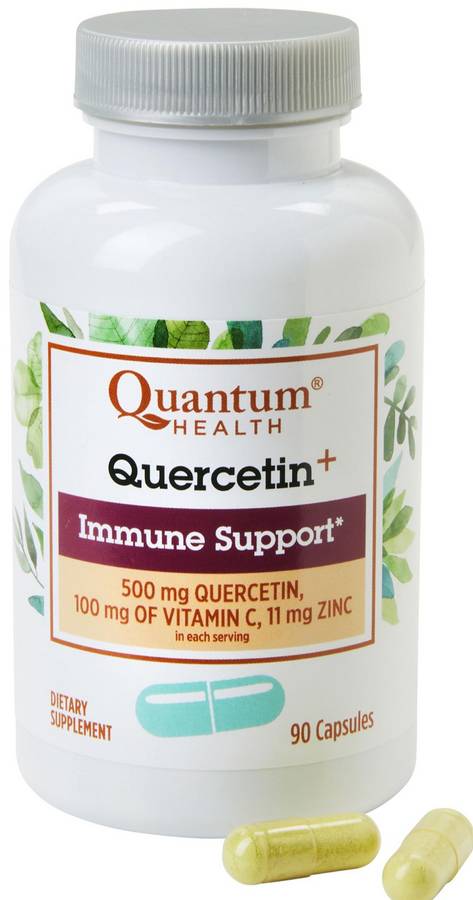
Advanced Botanical Bioflavonoid Complex: Quercetin Plus 500 mg
Quercetin Plus 500 mg is a targeted nutritional formulation engineered to optimize seasonal immune response, reinforce respiratory mucosal integrity, and maintain healthy histamine release. Derived from the floral buds of the Japanese Pagoda Tree (Sophora japonica), each single-capsule serving delivers 500 mg of pure quercetin dihydrate—the naturally occurring, non-citrus bioflavonoid form recognized in clinical pharmacology for superior biological activity and stability.
Unlike stand-alone quercetin supplements that suffer from low oral bioavailability, this specialized formulation pairs high-potency quercetin with two crucial synergistic micronutrients: Vitamin C (ascorbic acid, 100 mg) and Zinc (as zinc oxide, 11 mg). Together, these three compounds create a bio-enhanced triad that supports intracellular antioxidant recycling, stabilizes mast cell membranes, and drives intracellular zinc uptake.
The Science of Synergy: Quercetin, Zinc, and Vitamin C Triad
Flavonoids rarely operate in isolation within human physiology. The therapeutic efficacy of Quercetin Plus 500 mg relies on three distinct biochemical pathways validated by peer-reviewed research:
1. Quercetin as an Intracellular Zinc Ionophore
Free zinc ions (Zn2+) play an indispensable role in halting intracellular pathogen proliferation and activating natural killer (NK) cells. However, because zinc is a hydrophilic divalent cation, it cannot passively diffuse through the lipophilic phospholipid bilayer of cell membranes.
Published molecular research in the Journal of Agricultural and Food Chemistry demonstrates that quercetin acts as a natural zinc ionophore [Dabbagh-Bazarbachi et al., 2014]. Quercetin binds extracellular Zn2+, forming a lipid-permeable complex that directly shuttles zinc across the plasma membrane and lysosomal membranes into the cytosol. This dramatically elevates intracellular zinc concentrations, maximizing the mineral's protective cellular signaling without requiring supra-physiological zinc doses.
2. Redox Regeneration via Vitamin C Co-Factor
During the neutralization of reactive oxygen species (ROS), quercetin donates electrons and transiently oxidizes into a semiquinone radical intermediate. In the absence of an adequate reducing agent, oxidized flavonoids lose their functional potency.
Ascorbic acid (Vitamin C) acts as an essential electron donor in this cycle, actively reducing oxidized quercetin back into its bioactive polyphenol state [Colunga Biancatelli et al., 2020]. Furthermore, research confirms that Vitamin C protects quercetin from premature oxidative degradation within the gastrointestinal tract, substantially enhancing systemic absorption and extending plasma half-life.
3. Mast Cell Stabilization & Histamine Pathways
For individuals seeking seasonal sinus and respiratory comfort, quercetin is widely documented as an effective natural mast cell stabilizer. It inhibits the influx of calcium ions into mast cells and basophils, preventing the degranulation process that triggers the release of histamine, leukotrienes, and pro-inflammatory prostaglandins [Mlcek et al., 2016]. Comparative pharmacological studies have found quercetin to be equally or more effective than certain conventional stabilizers (such as sodium cromoglycate) at dampening cytokine transcription (IL-6, TNF-alpha) via the down-regulation of nuclear factor kappa B (NF-?B) [Weng et al., 2012].
Formulation Breakdown: Dihydrate vs. Conventional Quercetin
Includes 11 mg Zinc (100% DV) as ionophore substrate
Requires separate zinc supplementation
Antioxidant Recycling
Includes 100 mg Ascorbic Acid for redox regeneration
None; higher rate of auto-oxidation in vivo
Capsule Delivery
Vegetarian Hypromellose (Clean-label excipients)
Gelatin or formulas with artificial fillers
Complete Ingredient Listing & Supplement Facts
VitaNet is dedicated to complete label transparency. Below is the verified nutritional disclosure for Quantum Health Quercetin Plus 500 mg (Product Code: QU0163):
Because pure quercetin is a lipophilic aglycone, administering it on an empty stomach results in modest absorption. To maximize systemic plasma concentrations, follow these evidence-based administration guidelines:
Co-Ingestion with Dietary Lipids: Clinical pharmacokinetic trials indicate that taking quercetin alongside meals containing healthy fats (such as avocado, olive oil, or omega-3 fatty acids) increases micellar solubilization in the small intestine, boosting bioavailability up to threefold.
Standard Daily Regimen: Take 1 capsule daily with a meal for general immune maintenance and zinc ionophore action, or as directed by a healthcare provider.
Intensive Seasonal Protocol: During times of acute seasonal pollen exposure or respiratory challenges, healthcare practitioners often recommend taking 1 capsule twice daily (1,000 mg total quercetin dihydrate) for 8 to 12 consecutive weeks.
Cycling Recommendations: Long-term continuous high-dose quercetin supplementation (>1,000 mg daily beyond 12 weeks) should be cycled under medical supervision to monitor renal clearance markers.
Safety, Drug Interactions & Precautions
While quercetin, zinc, and vitamin C exhibit high safety profiles in healthy adults, specific pharmacodynamic and pharmacokinetic drug interactions must be evaluated:
Cytochrome P450 Enzyme Modulation: Quercetin is a competitive inhibitor of CYP3A4 and CYP2C9 enzymes. It may increase plasma concentrations of pharmaceutical medications metabolized by these pathways, including certain statins, calcium channel blockers, and immunosuppressants (e.g., cyclosporine).
P-Glycoprotein Substrates: Quercetin interacts with the P-glycoprotein efflux pump, potentially altering the systemic absorption of cardiovascular drugs like digoxin.
Antibiotic Chelation: Divalent cations like zinc can bind to fluoroquinolone (e.g., ciprofloxacin) and tetracycline antibiotics in the digestive tract, impairing their absorption. Separate intake of Quercetin Plus and antibiotics by at least 2 to 4 hours.
Renal Considerations: Individuals with pre-existing kidney disease or compromised renal function should consult their nephrologist before taking high-dose supplemental polyphenols.
Pregnancy & Lactation: Insufficient clinical safety trials exist regarding therapeutic quercetin dihydrate administration during pregnancy or breastfeeding; use is not recommended unless explicitly prescribed by an obstetrician.
Peer-Reviewed Scientific References
Dabbagh-Bazarbachi, H., et al. (2014). Zinc ionophore activity of quercetin and epigallocatechin-gallate: From cultured cells to a technique for identifying additional ionophores. Journal of Agricultural and Food Chemistry, 62(32), 8085–8093.
Colunga Biancatelli, R. M., et al. (2020). Quercetin and Vitamin C: An experimental, synergistic therapy for the prevention and treatment of SARS-CoV-2 related disease (COVID-19). Frontiers in Immunology, 11, 1451.
Mlcek, J., et al. (2016). Quercetin and its anti-allergic immune response. Molecules, 21(5), 623.
Weng, Z., et al. (2012). Quercetin is more effective than cromolyn in blocking human mast cell cytokine release and inhibits contact dermatitis and photosensitivity in humans. PLoS ONE, 7(3), e33805.
Prasad, A. S. (2008). Zinc in human health: Effect of zinc on immune cells. Molecular Medicine, 14(5-6), 353–357.
Boots, A. W., et al. (2008). Health effects of quercetin: From antioxidant to nutraceutical. European Journal of Pharmacology, 585(2-3), 325–337.
Frequently Asked Questions About Quercetin Plus 500 mg
What makes Quercetin Plus 500 mg different from standard quercetin supplements?
Standard quercetin products typically deliver standalone quercetin with low intestinal absorption and rapid clearance. Quantum Health Quercetin Plus 500 mg pairs 500 mg of pure quercetin dihydrate from Sophora japonica with 100 mg of Vitamin C and 11 mg of Zinc. Vitamin C recycles oxidized quercetin back into its active antioxidant state, while quercetin acts as a lipid-soluble ionophore to transport zinc directly into cells, creating an integrated immune and cellular defense network.
How does quercetin act as a zinc ionophore?
Zinc ions (Zn2+) carry an electrical charge that prevents them from crossing cellular membranes on their own. Quercetin binds to zinc ions, shielding their charge and enabling them to pass through the lipophilic cell membrane. Once inside the cell, zinc is released into the cytoplasm where it supports normal enzyme function, protein synthesis, and cellular immune mechanisms.
When is the best time of day to take Quercetin Plus 500 mg?
Quercetin Plus 500 mg is best taken in the morning or early afternoon with a meal that contains healthy dietary fats (such as eggs, avocado, nuts, or olive oil). Dietary lipids enhance the solubility and absorption of quercetin dihydrate across the intestinal wall. Taking it with food also minimizes any potential mild stomach upset from zinc.
Does Quercetin Plus help with seasonal allergies and sinus pressure?
Yes. Quercetin is clinically recognized as a natural mast cell and basophil stabilizer. It helps inhibit calcium influx into these immune cells, which reduces the degranulation and release of histamine. Combined with the mucosal support of Vitamin C and Zinc, it helps maintain comfortable respiratory passages, clear sinuses, and normal ocular comfort during seasonal environmental challenges.
Can I take Quercetin Plus 500 mg every day year-round?
At the labeled dosage of 1 capsule daily (providing 500 mg of quercetin, 100 mg of Vitamin C, and 11 mg of zinc), Quercetin Plus is safe for continuous daily use in healthy adults. However, if using higher therapeutic doses (such as 2 capsules daily) during peak allergy or cold seasons, many practitioners suggest cycling the supplement (for instance, 8 to 12 weeks of daily use followed by a 2 to 4-week break) or consulting a qualified healthcare professional.
Are there any prescription medication interactions with quercetin?
Yes. Quercetin can inhibit the cytochrome P450 enzyme CYP3A4 and interact with P-glycoprotein transport pumps. This may affect blood levels of certain medications, such as blood thinners (warfarin), calcium channel blockers, immunosuppressants (cyclosporine), and digoxin. In addition, the zinc content can bind to fluoroquinolone and tetracycline antibiotics if taken simultaneously. Always review your supplement routine with your prescribing physician or pharmacist.