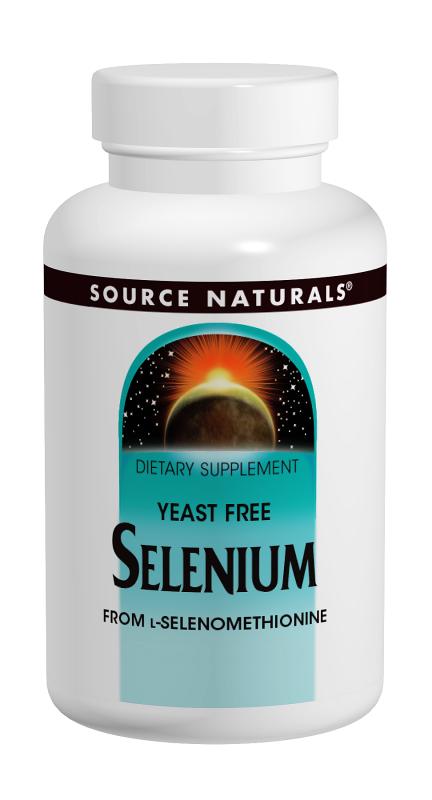
- UPC: 021078008101
- # SN0810
Advanced Food-Form Antioxidant & Thyroid Support
Selenomax® 200 mcg by Source Naturals delivers an organically bound, bioavailable form of the essential trace mineral selenium. Derived from non-pathogenic brewer’s yeast (Saccharomyces cerevisiae) cultivated on a selenium-enriched nutrient broth, Selenomax® replaces sulfur with selenium in cellular methionine, yielding standardized L-selenomethionine and a broad matrix of organically integrated selenocompounds.
Unlike synthetic inorganic salts such as sodium selenite or sodium selenate, food-form selenium yeast mimics the chemical profile found in natural dietary sources (such as Brazil nuts and whole grains). This natural organic matrix provides superior retention in tissue reserves, steady biological utilization, and lower acute cellular toxicity.
Biochemical Pathways: How Selenomax® Works in the Body
Selenium is unique among essential minerals: it does not function merely as an enzymatic cofactor. Instead, it is directly encoded into the genetic code as selenocysteine—the 21st amino acid—forming the active catalytic center of specialized functional proteins known as selenoproteins.
1. Cellular Redox Defense via Glutathione Peroxidase (GPx)
At least five distinct selenium-dependent glutathione peroxidases (GPx1 through GPx4 and GPx6) protect cellular membranes and DNA from oxidative injury. Specifically, GPx4 (phospholipid hydroperoxide glutathione peroxidase) halts lipid peroxidation within cell membranes and suppresses ferroptosis (an iron-dependent form of non-apoptotic cell death).
2. Thyroid Hormone Synthesis & Deiodinase Activation
The human thyroid gland contains the highest concentration of selenium per gram of tissue in the body. Selenium is a non-negotiable requirement for the iodothyronine deiodinases (DIO1, DIO2, and DIO3). These selenoproteins govern peripheral metabolism by catalyzing the cleavage of outer-ring iodine atoms from inactive thyroxine (T4) to yield active, metabolic triiodothyronine (T3). Maintaining optimal selenoprotein levels protects the thyroid against hydrogen peroxide (H2O2) autotoxicity generated during regular thyroglobulin iodination.
3. Innate and Adaptive Immune Signaling
Selenoproteins modulate calcium flux, eicosanoid metabolism, and redox-sensitive transcription factors such as NF-?B in T-lymphocytes, macrophages, and natural killer (NK) cells. Controlled trials indicate that maintaining baseline serum selenium above 70–80 ng/mL supports optimal CD4+ T-cell proliferation, natural killer cell cytotoxicity, and balanced inflammatory responses.
4. Synergistic Action with Vitamin E
Selenium and alpha-tocopherol (Vitamin E) act in close nutritional synergy. While Vitamin E sits inside lipid bilayers to trap lipophilic peroxyl radicals, selenium-dependent GPx neutralizes water-soluble and lipid hydroperoxides in cytoplasm and mitochondrial matrices, preventing the destruction of cell membranes.
Clinical Research & Comparative Bioavailability
Decades of human clinical trials distinguish organically bound selenium yeast from synthetic alternatives:
- Higher Absorption & Tissue Retention: Clinical bioavailability studies demonstrate that oral L-selenomethionine from high-selenium yeast achieves an intestinal absorption rate exceeding 90%, compared to approximately 50% for inorganic sodium selenite (Thomson, 2004). Because the human body integrates selenomethionine directly into general body protein reserves (e.g., skeletal muscle albumin), it establishes an endogenous reservoir that is slowly recycled during protein turnover.
- The Benchmark Nutritional Prevention of Cancer (NPC) Trial: In the landmark randomized, double-blind, placebo-controlled trial directed by Dr. Larry Clark at the University of Arizona (JAMA, 1996), daily supplementation with 200 mcg of high-selenium yeast over 4.5 years demonstrated profound systemic biological activity in adults with lower baseline selenium status.
- Immune and Cellular Vitality: In a double-blind, randomized trial evaluating high-selenium yeast supplementation (200 mcg daily) published in the Archives of Internal Medicine (Hurwitz et al., 2007), sustained supplementation successfully raised serum selenium concentrations, which correlated with favorable immune biomarkers, CD4 preservation, and reduced inflammatory progression.
Complete Supplement Facts & Ingredient Transparency
Source Naturals adheres to Current Good Manufacturing Practices (cGMP). Every batch undergoes rigorous identity, potency, and heavy metal screening.
Supplement Facts
Serving Size: 1 Tablet
Servings Per Container: 60
| Amount Per Serving |
% Daily Value |
| Selenium (as food-form [Selenomax®]) |
200 mcg (364% DV*) |
*Percent Daily Values (%DV) are based on a 2,000 calorie diet (FDA updated Daily Value: 55 mcg). Historical packaging may indicate 286% DV based on prior 70 mcg RDI guidelines.
Detailed Excipient (Other Ingredients) Breakdown
Unlike low-tier supplements packed with synthetic flow agents, Source Naturals utilizes pharmaceutical-grade, non-allergenic excipients to ensure tablet stability and targeted enteric dissolution:
- Microcrystalline Cellulose: A plant-derived dietary fiber that serves as a safe, inert binder to ensure tablet cohesion without interfering with nutrient dissolution.
- Dibasic Calcium Phosphate: A mineral-based tableting aid that supplies trace elemental calcium while improving powder compaction.
- Stearic Acid: A naturally occurring, plant-derived saturated fatty acid that acts as an emulsifier to prevent mechanical abrasion during compression.
- Colloidal Silicon Dioxide: A purified silica excipient that prevents atmospheric moisture absorption and maintains consistent mineral distribution across every tablet.
- Magnesium Stearate: A vegetable-sourced lubricant that prevents tablet sticking during automated pressing without inhibiting gastrointestinal absorption.
Allergen Information: Contains non-viable, heat-inactivated yeast. Contains no wheat, gluten, soy, egg, dairy, corn, sugar, starch, artificial colors, flavors, or fragrances.
Dosage Guidelines, Safety & Risk Assessment
Recommended Use
Adult Usage: Take 1 tablet daily, preferably with a meal, or as directed by your qualified healthcare provider. Taking this product alongside a fat-containing meal improves the concurrent absorption of complementary lipid-soluble antioxidants, particularly Vitamin E.
Tolerable Upper Intake Level (UL) & Toxicological Limits
Selenium is an essential micronutrient with a narrow therapeutic window. The National Academy of Medicine (Institute of Medicine) has established the Tolerable Upper Intake Level (UL) for adults at 400 mcg per day from all combined sources (diet plus supplements).
One tablet of Selenomax® provides 200 mcg. Users should evaluate total dietary intake (e.g., high consumption of Brazil nuts, which contain up to 90 mcg per single nut) to avoid cumulative excess.
Signs of Chronic Overexposure (Selenosis)
Do not exceed the recommended dose. Chronic intake persistently exceeding 800–1,000 mcg/day can trigger mild-to-moderate selenosis, characterized by:
- Garlic-like breath odor (dimethyl selenide excretion through the lungs)
- Brittle nails, horizontal white striations (Mees' lines), or nail loss
- Unexplained patchy alopecia (hair thinning or loss)
- Gastrointestinal distress, nausea, and persistent fatigue
- Peripheral mild neuropathy or paresthesia
Contraindications & Potential Drug Interactions
- Pregnancy & Nursing: If you are pregnant, planning to become pregnant, or nursing, consult an OB-GYN before use. The Recommended Dietary Allowance (RDA) is 60 mcg/day during pregnancy and 70 mcg/day during lactation.
- Thyroid Conditions with Low Iodine: In individuals with severe iodine deficiency, high-dose selenium supplementation without concurrent iodine repletion can aggravate hypothyroid conditions by accelerating peripheral T4 consumption.
- Anticoagulant/Antiplatelet Medications: High-dose selenium may display mild platelet aggregation inhibitory properties; consult your physician if you are taking warfarin, clopidogrel, or aspirin.
- Chemotherapy & Radiation Therapy: Because antioxidants neutralize reactive oxygen species (ROS), cancer patients undergoing active antineoplastic therapy should use selenium supplements only under direct oncological supervision.
Scientific & Clinical References
- Clark, L. C., Combs, G. F., Turnbull, B. W., et al. (1996). Effects of selenium supplementation for cancer prevention in patients with carcinoma of the skin: A randomized controlled trial. JAMA, 276(24), 1957–1963.
- Rayman, M. P. (2012). Selenium and human health. The Lancet, 379(9822), 1256–1268.
- Hurwitz, B. E., Klaus, J. R., Llabre, M. M., et al. (2007). Suppression of human immunodeficiency virus type 1 viral load with selenium supplementation: A randomized controlled trial. Archives of Internal Medicine, 167(2), 148–154.
- Thomson, C. D. (2004). Assessment of requirements for selenium and adequacy of selenium status: a review. European Journal of Clinical Nutrition, 58(3), 391–402.
- Schomburg, L. (2011). Selenium, selenoproteins and the thyroid gland: interactions in health and disease. Nature Reviews Endocrinology, 8(3), 160–171.
- National Institutes of Health (NIH) Office of Dietary Supplements. (2021). Selenium: Fact Sheet for Health Professionals. U.S. Department of Health and Human Services.
Frequently Asked Questions (FAQ)
What is Selenomax®, and how does it differ from standard selenium?
Selenomax® is a standardized, organically bound high-selenium yeast produced by fermenting Saccharomyces cerevisiae in a selenium-rich environment. In this matrix, the selenium is incorporated directly into amino acid chains as L-selenomethionine and related organic seleno-compounds. This food-form complex is absorbed and retained in tissue proteins more effectively than synthetic, inorganic selenium salts such as sodium selenite or selenate.