- *MSRP:
$24.59- Our Price:
- $18.45
- Buy: at $18.45


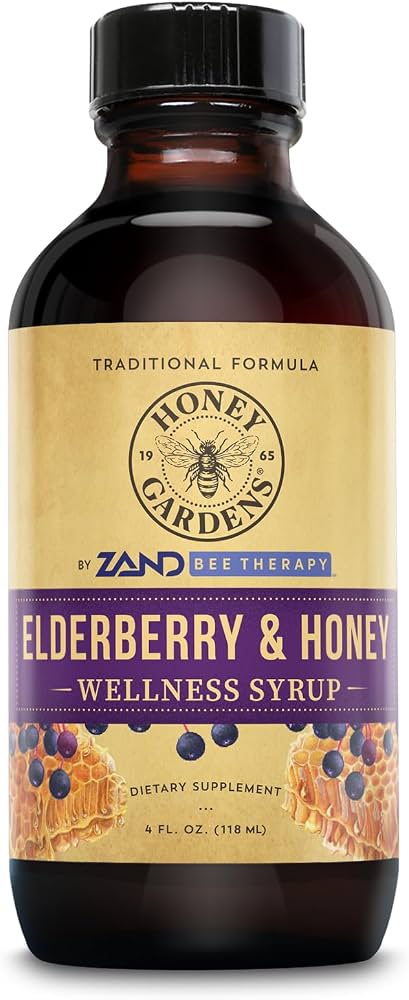
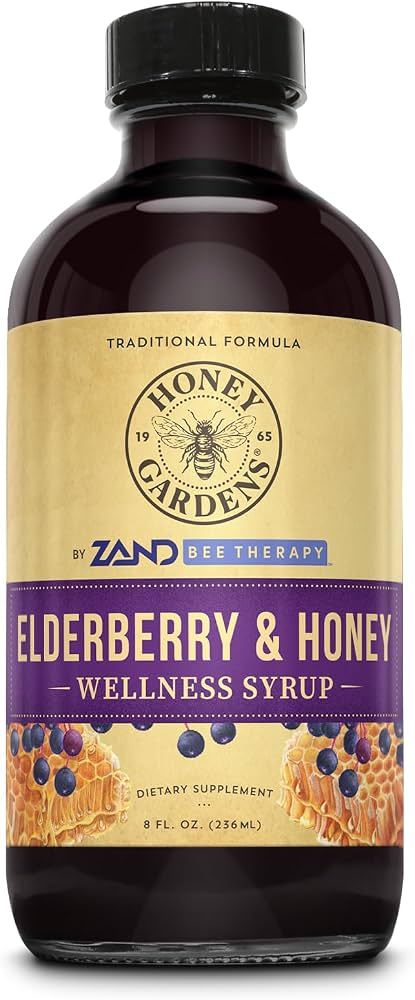
When seasonal weather changes leave your respiratory tract needing extra care, Elderberry and Honey Immune Syrup delivers a time-honored, whole-food solution. Rooted in traditional Vermont folk herbalism, this formula combines whole European black elderberries with unheated, unfiltered raw honey, bee propolis, organic apple cider vinegar, and fresh echinacea. It offers clean, effective immune support with zero refined sugar, corn syrup, or artificial preservatives.
Retailer Expertise Note (30+ Years in Nutrition): Many modern elderberry syrups on the market are little more than water and cane sugar mixed with elderberry flavoring. Honey Gardens remains true to original apitherapy standards: using raw, enzymatically active honey as the primary base and preservative, delivering both functional botanical actives and instant throat-coating relief.
To truly understand why Elderberry and Honey Immune Syrup stands apart from standard synthetic vitamins, it helps to examine the synergy of its five bio-active ingredients. Each element works on a distinct level of your immune and respiratory defenses:
In Plain English: Elderberries contain dark purple pigments known as anthocyanins. Think of these compounds as natural shields that support your cells against oxidative stress. Clinical research indicates that black elderberry extract can significantly shorten the duration and intensity of upper respiratory challenges by supporting the body's natural defense systems.
Clinical Evidence: A peer-reviewed meta-analysis of randomized controlled trials confirmed that black elderberry supplementation significantly reduced upper respiratory symptoms and illness duration compared to placebo (Hawkins et al., 2019). Furthermore, a trial conducted with international air travelers demonstrated a 50% reduction in cold duration and a 33% reduction in symptom severity (Tiralongo et al., 2016).In Plain English: Unlike typical processed grocery-store honey (which is ultra-filtered and boiled, destroying its nutritional value), raw apitherapy honey retains its natural bee enzymes, inhibine, and natural trace pollens. Honey acts as a thick demulcent—meaning it physically lines your throat, moistening scratchy tissue and calming cough reflexes while delivering natural antioxidants.
Clinical Evidence: Systematic reviews published by the Cochrane Database of Systematic Reviews and the BMJ Evidence-Based Medicine found that honey was clinically superior to usual over-the-counter care and diphenhydramine for relieving acute cough frequency and improving sleep quality during respiratory episodes (Oduwole et al., 2018; Abuelgasim et al., 2021).In Plain English: Propolis is the resinous compound honeybees collect from tree buds and sap flows to sterilize and protect their hives against pathogens. In herbal medicine, propolis provides a concentrated source of polyphenols (including chrysin, galangin, and pinocembrin) that deliver local defense right inside your mouth and throat.
Clinical Evidence: A double-blind, randomized, placebo-controlled trial published in Phytomedicine found that subjects taking a standardized propolis extract experienced symptom remission of upper respiratory tract discomfort two days faster than those on placebo, with 83% achieving full relief within three days (Esposito et al., 2021).In Plain English: Echinacea works like an alarm bell for your white blood cells, encouraging them to respond actively when you are feeling run down. Paired with raw organic apple cider vinegar, which provides organic acetic acid, it helps maintain mucosal balance and promotes healthy digestive pH (where 70% of your immune system resides).
Clinical Evidence: A comprehensive Cochrane meta-analysis including 24 clinical trials reported that preparations using fresh aerial parts of Echinacea purpurea reduced the relative risk of respiratory infection incidence by 10% to 20% (Karsch-Völk et al., 2014), while a 2024 meta-analysis in Antibiotics demonstrated a significant reduction in recurrent respiratory challenges (Gancitano et al., 2024).Originating in the Green Mountains of Ferrisburgh, Vermont, Honey Gardens was founded on the principles of apitherapy—the ancient practice of using beehive products to sustain vitality and wellness.
Conventional honey in grocery store syrups is pasteurized at temperatures exceeding 160°F. That heat denatures beneficial invertase and glucose oxidase enzymes and filters out micro-nutrients. Honey Gardens honey is raw and unfiltered, keeping nature's beneficial pollen and bee propolis intact.
The raw honey in every bottle is ethically collected in partnership with responsible American apiaries. Beekeepers prioritize colony health and floral biodiversity, ensuring the bees thrive through the seasons while producing nutrient-dense Grade A honey.
Total transparency is vital for your health. Here is the exact nutritional breakdown and botanical composition found in Honey Gardens Elderberry and Honey Immune Syrup (8 fl oz / 240 mL).
| Amount Per Serving | % Daily Value* |
|---|---|
| Calories 15 | |
| Total Fat 0 g | 0% |
| Sodium 0 mg | 0% |
| Total Carbohydrate 3 g | 1% |
| Total Sugars 3 g (Includes 3 g Added Sugars from Raw Honey) | 6% |
|
Apitherapy Proprietary Blend U.S. Grade A Raw Honey, Whole Elderberry Puree (Sambucus nigra), Organic Apple Cider Vinegar, Bee Propolis Tincture, Echinacea purpurea Root & Aerial Parts Tincture |
** |
Adults: Take 1 teaspoon (5 mL) once or twice daily. Can be enjoyed straight from the spoon, stirred into warm herbal tea (under 115°F to preserve raw honey enzymes), or mixed with seltzer water as a refreshing wellness tonic.
At First Onset: Take 1 teaspoon every 2 to 3 hours, up to 4 to 6 times daily for 3–5 days. Swish gently in the mouth and swallow slowly to allow the propolis and honey to coat the pharyngeal tissue.
See how this traditional whole-food Vermont formula stacks up against typical drugstore immune options:
Most standard elderberry syrups use boiled elderberry juice sweetened with refined white sugar, glucose, or pasteurized honey stripped of enzymes. Honey Gardens uses a traditional Vermont apitherapy recipe featuring whole black elderberries in raw, unheated, unfiltered Grade A honey, supplemented with bee propolis, organic apple cider vinegar, and fresh echinacea. This delivers living enzymes, floral pollen, and synergistic botanical compounds that standard syrups lack.
This syrup is safe and gentle for older children, but it must never be given to infants under 1 year of age because it contains genuine raw, unpasteurized honey, which carries a risk of infant botulism. For children ages 2 and older, a pediatric serving is typically 1/2 teaspoon once daily, or as directed by your pediatrician.
Raw honey and pure grain alcohol act as natural preservatives, so the syrup will remain stable at room temperature when kept away from direct sunlight and heat. However, refrigerating after opening helps maintain its crisp herbal flavor, thick demulcent viscosity, and maximum botanical potency over extended periods.
The small amount of pure grain alcohol (less than 7% by volume) is an essential menstruum used to extract the medicinal bio-flavonoids and resins from the bee propolis and fresh echinacea root. In a single 1-teaspoon serving, the amount of alcohol is minimal (equivalent to the natural alcohol content of an overripe banana).
Yes. For daily preventative immune maintenance, 1 teaspoon per day provides beneficial antioxidants and apitherapy nutrients. During active seasonal immune challenges or when traveling, herbalists frequently recommend increasing the dosage to 1 teaspoon every 2 to 3 hours (up to 4 to 6 times daily) for short-term intensive support.
It has a rich, earthy, sweet-and-tart flavor profile. The sweetness of raw wildflower honey is balanced by the natural astringency of whole elderberries and the tang of raw organic apple cider vinegar, finishing with a slight herbal warmth from the propolis and echinacea.