- *MSRP:
$39.99- Our Price:
- $26.00
- Buy: at $26.00


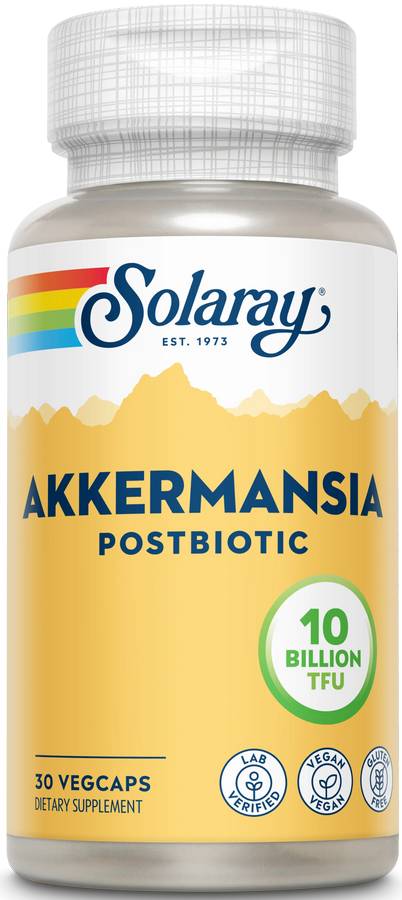
Strengthen your intestinal mucosal lining, combat leaky gut permeability, and support natural metabolic balance with clinically studied, shelf-stable Akkermansia muciniphila Akk11.
Potency 10 Billion TFU / ServingThink of your digestive tract as a castle. The digestive lining is the stone fortress wall, and the mucus covering that lining is the protective moat. In a healthy body, a microscopic hero called Akkermansia muciniphila lives directly inside that moat. In fact, muciniphila literally translates to "mucus-loving."
Unlike ordinary gut bacteria that float freely through food debris, Akkermansia feeds on the mucin proteins in your gut lining. While that might sound counterintuitive, it acts like a professional pruning crew for your gut: by consuming the older, worn-out mucus, it triggers specialized goblet cells to churn out fresh, thicker, and more resilient mucus. This continuous renewal process prevents unwanted toxins, undigested proteins, and bacterial fragments from slipping across the gut wall into your bloodstream.
Unfortunately, clinical evaluations indicate that millions of adults have severely low or completely undetectable levels of Akkermansia due to modern processed diets, stress, environmental pollutants, aging, and frequent antibiotic use. When your Akkermansia counts decline, your protective mucus layer thins out, leaving you susceptible to intestinal permeability (leaky gut), sluggish metabolism, and chronic digestive discomfort.
Many people looking for gut supplements ask: "Why choose an Akkermansia postbiotic instead of a live probiotic?" The answer comes down to microscopic biology and clinical stability.
Your intestinal lining uses microscopic seals called tight junctions (ZO-1, claudin, and occludin) to hold cells together. The key outer membrane protein in Akkermansia (known as Amuc_1100) binds directly to Toll-Like Receptor 2 (TLR2) on intestinal cells, locking those seals shut and stopping bacterial toxins (lipopolysaccharides or LPS) from escaping into the body.
When endotoxins breach your intestinal wall, they trigger systemic metabolic inflammation that can disrupt insulin receptors. By fortifying the gut barrier, Solaray Akkermansia helps keep inflammatory markers down, supporting healthy fasting glucose levels, lipid metabolism, and stable energy throughout the day.
Specialized enteroendocrine L-cells in the lower gut release GLP-1 (glucagon-like peptide-1), the natural hormone that communicates fullness to the brain and steadies gastric emptying. A fortified mucosal lining and short-chain fatty acid production provide the ideal microenvironment for your gut to optimize its own natural satiety signaling.
An irritated, thin gut barrier often reacts poorly to normal digestion, resulting in occasional gas, abdominal distension, and inconsistent bowel movements. Rebuilding the protective mucus shield creates a soothing cushion that supports smoother daily digestion and intestinal comfort.
At VitaNet®, we believe every health claim must be anchored in verified biomedical science. Unlike many dietary supplements that rely on generic associations, the therapeutic effects of postbiotic Akkermansia muciniphila have been thoroughly researched in landmark scientific literature:
In a double-blind, placebo-controlled human trial involving overweight and obese volunteers, daily oral supplementation with pasteurized (postbiotic) Akkermansia muciniphila for 3 months significantly enhanced insulin sensitivity, decreased total plasma cholesterol, reduced blood lipopolysaccharide (LPS) endotoxins, and helped curb body mass gain compared to placebo.
Reference: Depommier C, et al. Nature Medicine. 2019;25(7):1096–1103. DOI: 10.1038/s41591-019-0495-2.Researchers isolated a specific, heat-resistant outer membrane protein from Akkermansia called Amuc_1100. The study revealed that even after heat pasteurization, Amuc_1100 remains completely intact and directly activates Toll-like receptor 2 (TLR2) on the intestinal epithelium, improving gut barrier integrity and preventing dietary-induced metabolic dysfunction.
Reference: Plovier H, et al. Nature Medicine. 2017;23(1):107–113. DOI: 10.1038/nm.4236.This foundational review paper established Akkermansia muciniphila as a keystone guardian species in the human gut. The authors demonstrated that higher colonization rates correlate directly with lower incidence of systemic metabolic disturbances, healthy mucosal thickness, and enhanced immune defense.
Reference: Cani PD, de Vos WM. Frontiers in Microbiology. 2017;8:1765. DOI: 10.3389/fmicb.2017.01765.Solaray adheres to strict cGMP manufacturing standards, verifying every batch in state-of-the-art laboratories for identity, purity, and potency.
Serving Size: 1 VegCap
Servings Per Container: 30
| Amount Per Serving | % Daily Value |
|---|---|
|
Akkermansia muciniphila Akk11 (Supplying 10 Billion TFU [Total Fluorescence Units]) |
100 mg * |
* Daily Value (DV) not established.
Resistant Potato Starch (functional prebiotic plant fiber carrier), Vegetable Cellulose Capsule, Stearic Acid, Silica.
✔ Formulation: 100% Vegan & Lab Verified for microbiological purity and heavy metals.
✔ Allergen Free: Contains No Gluten, No Soy, No Dairy, No Artificial Colors, Flavors, or Preservatives.
✔ Storage Instructions: Shelf-stable. Store in a cool, dry place. No refrigeration required.
Getting the maximum benefit from your postbiotic protocol is simple and requires zero complicated timing:
A: CFU stands for Colony Forming Units, which only measures live bacteria capable of replicating in a laboratory dish. Because Akkermansia in this formula is a postbiotic (pasteurized for optimal stability and efficacy), it does not reproduce to form colonies. Instead, it is measured using advanced flow cytometry as TFU (Total Fluorescence Units). TFU counts every single intact, functional cellular unit, guaranteeing that you receive exactly 10 billion verified postbiotic units per capsule.
A: No. Because Solaray Akkermansia is provided in a stabilized postbiotic form, it is 100% shelf-stable at normal room temperature. You can keep it on your desk, on your kitchen counter, or take it while traveling without any degradation in potency or quality.
A: Research indicates that Akkermansia muciniphila supports natural metabolic health by strengthening the gut barrier and reducing low-grade systemic inflammation caused by circulating bacterial endotoxins (LPS). Clinical studies have documented improvements in insulin sensitivity and lipid parameters. Furthermore, a fortified mucosal layer supports intestinal L-cells, which are responsible for releasing the body's natural satiety hormone, GLP-1. While it is not a weight loss drug, it offers valuable upstream nutritional support for a healthy metabolism.
A: Yes. In human clinical trials, daily supplementation with pasteurized Akkermansia showed an exceptional safety and tolerability profile with zero adverse side effects reported. It is non-GMO, vegan, gluten-free, and suitable for daily, long-term microbiome maintenance.
A: Digestive comfort improvements, such as reduced bloating and smoother regularity, are commonly noticed within 1 to 2 weeks. Deeper structural benefits—such as fortified tight junctions, enhanced gut barrier resilience, and metabolic improvements—are typically observed over 8 to 12 weeks of daily, consistent usage.
Serving online customers since 1995, VitaNet® LLC is an accredited family-operated health retailer committed to premium quality. We store all supplements in climate-controlled facilities and guarantee fresh, direct-from-manufacturer stock with a 100% money-back guarantee.
Questions? Call our Ohio wellness support team toll-free at 1-800-877-8702 or visit us at 887 Edison St NW, Hartville, OH 44632.
FDA Disclaimer: The statements made regarding this dietary supplement have not been evaluated by the Food and Drug Administration. This product is not intended to diagnose, treat, cure, or prevent any disease. Always consult your qualified healthcare practitioner before starting any new supplement regimen, especially if you are pregnant, nursing, taking prescription medications, or under medical supervision.