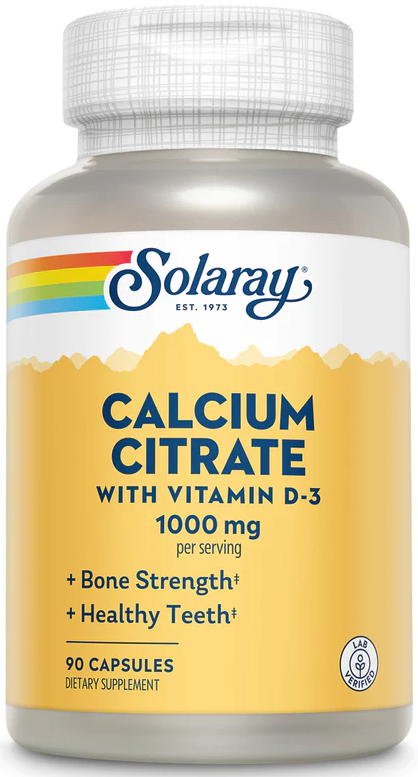
- *MSRP:
$12.19- Our Price:
- $9.75
- Subscribe and Save:
- $7.45ea.
- Buy: at $9.75


The stomach-friendly, high-bioavailability calcium supplement engineered for maximum skeletal absorption—even if you have low stomach acid or take acid reducers.
✔ 24% to 27% Better Absorbed: Clinically proven superior bioavailability over standard calcium carbonate.If you have ever taken a calcium supplement and felt bloated, constipated, or like a heavy brick was sitting in your gut, you were likely taking calcium carbonate. Calcium carbonate is essentially limestone or chalk. While it is inexpensive to manufacture, it has one major biological flaw: it requires a substantial flood of hydrochloric stomach acid to break apart into absorbable calcium ions.
Calcium Citrate, by contrast, is calcium bonded directly to natural citric acid. Think of it as "pre-digested" or pre-solubilized mineral nutrition. Because it is already in an acidic form, it does not rely on your stomach producing heavy acid baths to dissolve. It breaks down easily in both acidic and neutral digestive environments, allowing calcium ions to pass directly into your small intestine for rapid uptake into the bloodstream.
In a landmark meta-analysis published in the American Journal of Therapeutics (Sakhaee et al., 1999), researchers analyzed 15 human clinical trials and found that calcium citrate absorption was consistently 22% to 27% higher than calcium carbonate across both fasting and fed conditions. A study published in The New England Journal of Medicine (Recker, 1985) confirmed that while people with low stomach acid absorbed almost zero calcium from carbonate, their bodies absorbed calcium citrate completely normally.
| Key Attribute | Calcium Citrate with Vitamin D-3 | Standard Calcium Carbonate |
|---|---|---|
| Stomach Acid Requirement | None (Absorbs freely in low acid) | High (Requires strong gastric acid) |
| Empty Stomach Absorption | Excellent (Can be taken anytime) | Very Poor (Must take with heavy meals) |
| Digestive Tolerance | Gentle (No gas or acid rebound) | Frequent constipation, gas, and bloating |
| Compatibility with PPIs & Antacids | Full Absorption Retained | Severely impaired by acid blockers |
| Kidney Stone Profile | Citrate naturally inhibits crystal binding | Does not provide urinary citrate benefits |
Taking calcium without Vitamin D is like buying a high-security lock without the key. In simple terms: Calcium is the construction material, but Vitamin D is the foreman that brings it into the building.
Without sufficient Vitamin D, your digestive tract can only passively absorb an estimated 10% to 15% of the calcium you consume. The rest simply passes through your system unused. However, when Vitamin D-3 (Cholecalciferol) enters your body, it converts into its active hormonal form (calcitriol), which communicates with your intestinal wall cells. It instructs your intestinal lining to produce specialized transporter proteins (such as calbindin-D9k) that actively grab calcium ions and pull them across the intestinal membrane into your bloodstream.
A landmark clinical trial published in the New England Journal of Medicine (Dawson-Hughes et al., 1997) demonstrated that supplementing healthy older men and women with combined calcium and vitamin D over three years significantly increased total-body bone mineral density and reduced non-vertebral fracture rates compared to a placebo.
While anyone looking to preserve their skeletal strength can benefit, certain groups have physiological reasons to choose Calcium Citrate over any other form:
To get the absolute highest return on your supplement investment, human biology dictates two essential dosing rules:
Clinical research demonstrates that the human small intestine can only absorb approximately 500 mg of elemental calcium at any one time (Heaney et al., 1990). Taking 1,000 mg all at once overwhelms your transport receptors. To maximize absorption, split your daily serving: take 2 capsules in the morning and 2 capsules in the afternoon or evening.
Calcium uses the same intestinal transport gates as iron and zinc. If you take a multivitamin with iron or an iron prescription, separate it from your calcium dose by at least 2 hours. If you take thyroid medications (such as levothyroxine), allow a 4-hour window between your medication and your calcium citrate supplement.
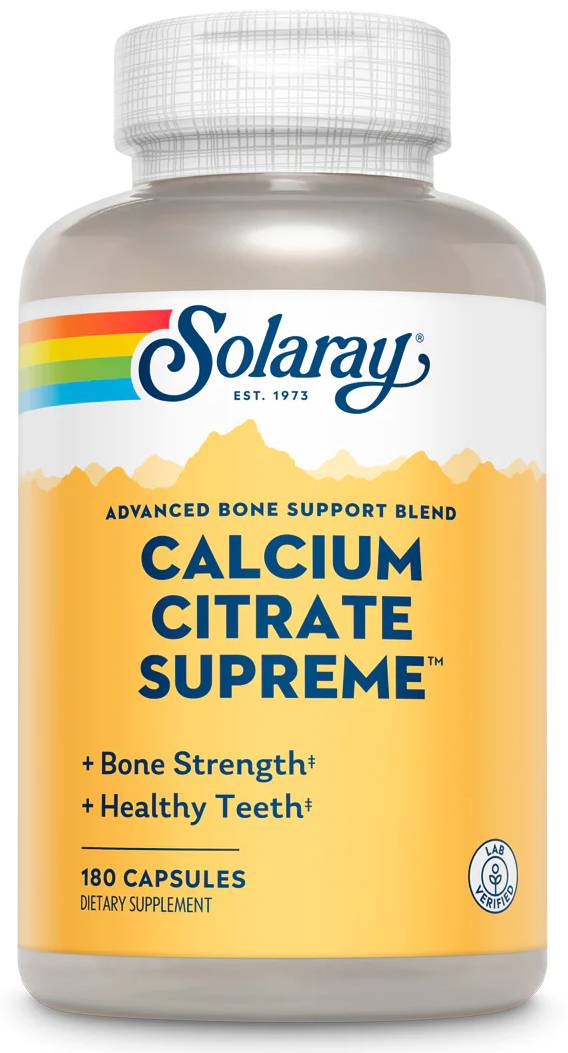
Solaray enhances this bioavailable calcium citrate formula with a proprietary whole-food herbal base designed to provide gentle nutritive plant cofactors:
A nutrient-dense cruciferous green naturally abundant in plant-based minerals and chlorophyll to support systemic alkalizing balance.
Traditionally revered for promoting digestive comfort, bile production, and gentle mineral assimilation in the gut.
Rich in natural phytonutrients, trace flavonoids, and botanical compounds that complement skeletal wellness.
Serving Size: 4 VegCaps | Servings Per Container: ~22
Amount Per Serving % Daily Value Vitamin D (as Cholecalciferol) (D-3) (400 IU) 10 mcg (50%) Calcium (from Calcium Citrate) 1,000 mg (77%) Special Nutritive Herbal Base* Daily Value (DV) not established.
Other Ingredients: Gelatin capsule, magnesium stearate, watercress leaf, dandelion root, and parsley leaf.
Suggested Use: Use only as directed. Take 4 capsules daily with a meal or a glass of water (preferably divided: 2 capsules in the morning and 2 in the evening). Store in a cool, dry place.
Quality Guarantee: Lab verified for identity, purity, and potency. Free from unnecessary fillers and artificial colors.
Calcium carbonate is essentially chalk and requires strong stomach acid to dissolve. In contrast, calcium citrate is bonded to citric acid, making it water-soluble and easily absorbed whether you have high stomach acid, low stomach acid, or take acid-blocking medications. Furthermore, the added Vitamin D-3 stimulates your intestinal wall to produce active transporter proteins that pull calcium directly into your bloodstream.
Yes. Unlike calcium carbonate, which must be taken with a heavy meal to stimulate digestive acid, calcium citrate does not depend on gastric acid. Clinical studies show calcium citrate is absorbed just as effectively on an empty stomach as it is with food, giving you complete flexibility on when you take it.
While you can, it is much better to divide your dose. The human intestine reaches a saturation threshold at approximately 500 mg of elemental calcium per sitting. For optimal absorption, take 2 capsules in the morning and 2 capsules in the afternoon or evening.
Yes. In fact, medical professionals and gastroenterologists specifically recommend calcium citrate for patients on proton pump inhibitors (like omeprazole or pantoprazole). Because PPIs shut off acid production, they prevent calcium carbonate from breaking down. Calcium citrate bypasses this entirely because it does not require stomach acid for dissolution.
Calcium citrate is the preferred form of calcium for individuals concerned about kidney stones. Citrate is a well-known natural inhibitor of kidney stones; it binds with calcium in the urine, preventing calcium from binding to oxalate and forming calcium oxalate crystals.
You should space them out. Calcium competes with iron, zinc, and magnesium for absorption pathways in the small intestine. If your multivitamin contains iron, separate them by at least 2 hours. If you take thyroid hormone replacement (such as levothyroxine), allow at least 4 hours between medications to prevent calcium from binding to the medication.