- *MSRP:
$10.89- Our Price:
- $9.80
- Subscribe and Save:
- $6.65ea.
- Buy: at $9.80


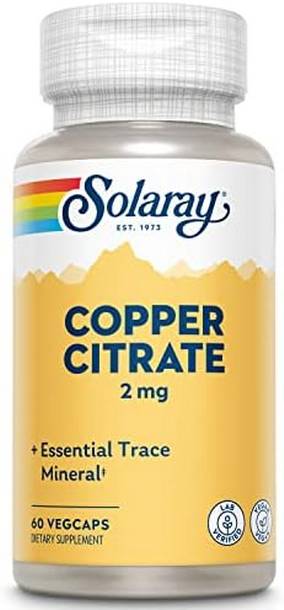
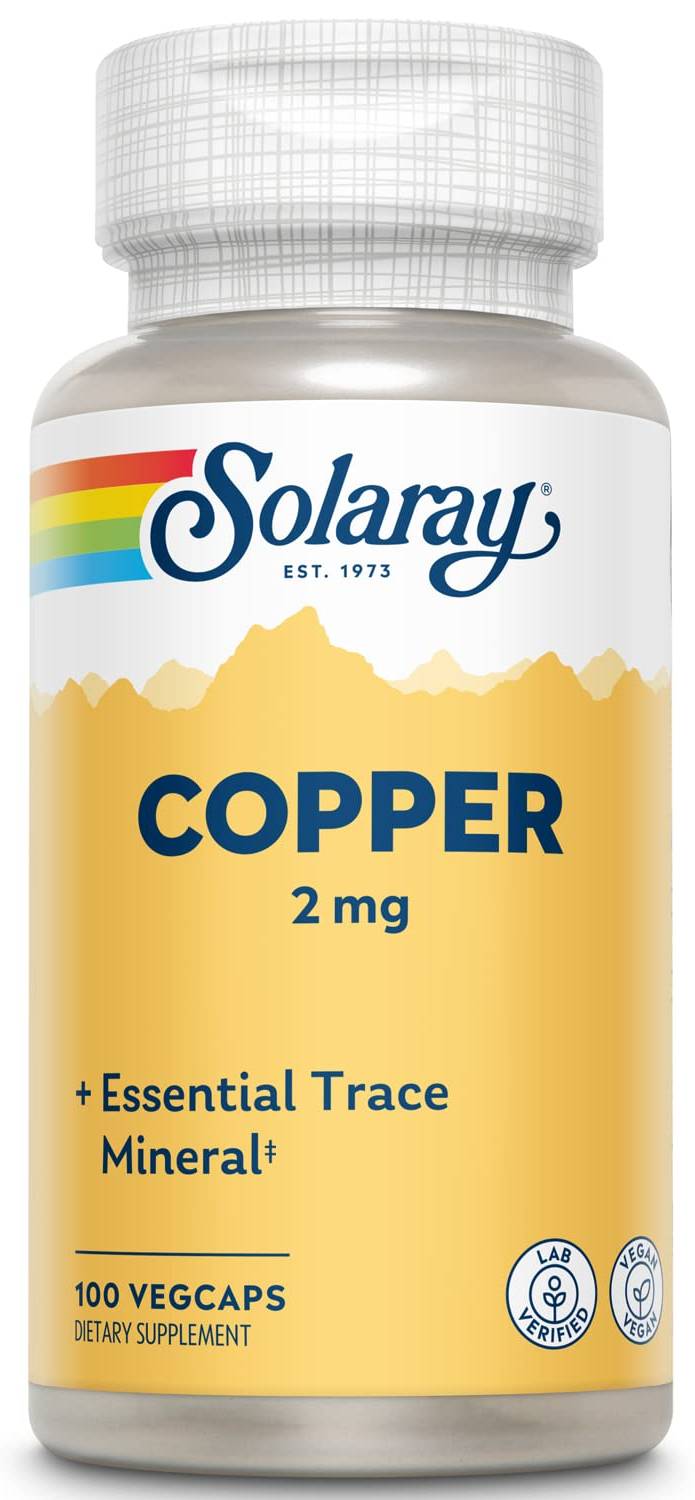
Copper is a vital trace mineral your body needs every single day to build red blood cells, generate cellular vitality, strengthen connective tissue, and maintain collagen integrity. Solaray Copper 100ct 2mg provides 222% of your daily value in an advanced Copper Amino Acid Chelate Complex, specially bound to amino acids to ensure superior absorption and gentle digestion.
Quick Product Overview: 100 Vegetarian Capsules (VegCaps) | 2 mg Chelated Copper per Serving | Non-GMO & Lab-Verified for Potency and Purity | Item SKU: #45931 | UPC: 076280459319
Think of copper as a tiny spark plug inside your cells. Even though you only need a small amount, copper acts as a co-factor (a necessary helper molecule) for several vital biological engines called cuproenzymes. Without enough copper, basic body functions slow down.
Copper powers an enzyme called ceruloplasmin, which converts iron into the exact form needed to hitch a ride on hemoglobin. Without copper, your body cannot move iron efficiently to build energetic red blood cells, even if you eat plenty of iron.
Your skin, joints, and bones depend on collagen and elastin fibers for flexibility and resilience. Copper activates lysyl oxidase, the enzyme that weaves and cross-links these structural proteins together to keep bones and blood vessels resilient.
Inside every cell's mitochondria (the cellular power plants), copper is built directly into cytochrome c oxidase. This key enzyme enables oxygen to be transformed into adenosine triphosphate (ATP), the primary fuel that runs your muscles and brain.
Along with zinc, copper forms the core of Superoxide Dismutase (Cu/Zn-SOD), one of your body’s frontline natural antioxidant systems. SOD continuously disarms damaging free radical particles before they can degrade healthy cells and tissues.
Not all copper supplements are absorbed the same way. Low-grade options often use inorganic salts like cupric oxide, which dissolve poorly in digestive fluids and can cause mild stomach upset.
Solaray Copper 2mg utilizes an organic Copper Amino Acid Chelate Complex. In chelation, the copper ion is molecularly bonded to amino acids. This creates an organic shield that mimics how copper naturally exists in food:
If you take zinc supplements for immune health, this section is essential reading for your daily wellness regimen.
Zinc and copper share the exact same absorption doorways in your small intestine. When you consume high doses of zinc (especially 30 mg to 50 mg or more per day over several weeks), your body produces excess amounts of an intestinal protein called metallothionein.
Metallothionein has a far stronger attraction to copper than to zinc. It latches onto copper, trapping it inside intestinal cells until those cells naturally shed, preventing copper from entering your bloodstream. Over time, high zinc intake without copper can cause an accidental, zinc-induced copper deficiency.
Clinical nutritionists frequently recommend maintaining a zinc-to-copper dietary ratio between 10:1 and 15:1. Supplementing with Solaray Copper 2mg once daily with food provides targeted support to safeguard your copper levels while taking daily zinc.
Serving Size: 1 VegCap
Servings Per Container: 100
| Amount Per Serving | % Daily Value |
|---|---|
|
Copper (from Copper Amino Acid Chelate Complex) |
2 mg 222% |
* Daily Value (DV) based on a 2,000 calorie diet.
Whole Rice Concentrate, Vegetable Cellulose Capsule (hydroxypropyl methylcellulose), Rice Extract Blend, Citric Acid (from Non-GMO Tapioca), and Silica.
Suggested Use: Adults take 1 VegCap daily with a meal or an 8-ounce glass of water, or use as specifically directed by your qualified healthcare professional.
Copper amino acid chelate is elemental copper bonded directly to amino acids. This biochemical structure matches how minerals naturally occur in whole foods. Compared to inorganic copper oxide (which is poorly soluble and can irritate the stomach), the chelated form passes easily through digestive barriers, offers higher bioavailability, and is gentle on the digestive tract.
Zinc and copper compete for the same absorption pathways in the gut. High or ongoing zinc supplementation triggers a binding protein called metallothionein, which traps copper and prevents it from reaching your blood. Taking a 2 mg copper supplement helps keep your copper levels stable and protects your healthy zinc-to-copper balance.
Iron cannot be properly packaged into hemoglobin without a copper-dependent enzyme called ceruloplasmin. When copper is low, iron becomes trapped in storage tissues like the liver and intestinal lining instead of forming oxygen-carrying red blood cells. Ensuring adequate copper intake helps unlock stored iron so it can circulate freely and support cellular energy.
Yes. The Food and Nutrition Board of the National Academy of Medicine sets the adult Tolerable Upper Intake Level (UL) for copper at 10 mg (10,000 mcg) per day. At 2 mg (2,000 mcg), Solaray Copper provides a supportive daily amount that is well below the established safety threshold for healthy adults.
It is best to take your copper capsule with a balanced meal and an 8-ounce glass of water. Taking minerals alongside food promotes optimal digestive enzyme secretion and minimizes any potential stomach sensitivity. If you also take high doses of zinc or iron, consider taking your copper at an alternate meal to maximize absorption.