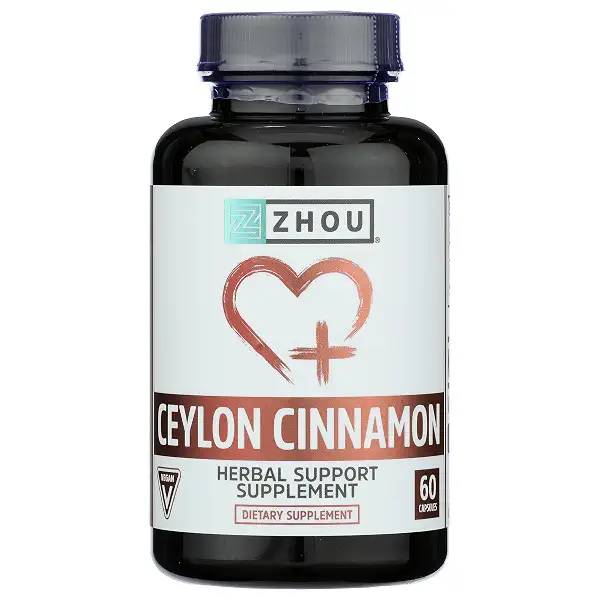
Zhou Nutrition Ceylon Cinnamon 1000 mg with Chromium Picolinate
Clinical-Grade True Cinnamon (Cinnamomum verum) Bark for Targeted Glucose Metabolism and Metabolic Cell Support
Potent 1,000 mg Dose: Delivers pure inner-bark Ceylon Cinnamon (Cinnamomum verum) per 2-capsule daily serving.
Dual-Action Synergy: Fortified with 200 mcg of Chromium Picolinate (571% DV) to support insulin receptor tyrosine kinase activity.
Ultra-Low Coumarin Safety: Contains up to 250 times less coumarin than common Cassia cinnamon, eliminating hepatotoxic accumulation risks.
Third-Party Lab Verified: Tested for botanical identity, heavy metals (Pb, As, Cd, Hg), microbiological purity, and potency in cGMP-certified facilities.
100% Clean Formulation: Non-GMO, vegan, gluten-free, with zero synthetic fillers or artificial excipients.
What Is Ceylon "True" Cinnamon?
Cinnamon has been revered for millennia in Ayurvedic and traditional medicine, but not all cinnamon species offer the same metabolic efficacy and systemic safety profile. Zhou Nutrition Ceylon Cinnamon 1000 mg is sourced exclusively from the delicate inner bark of Cinnamomum verum (also classified botanically as Cinnamomum zeylanicum), indigenous to Sri Lanka.
Known globally as "True Cinnamon," Ceylon cinnamon provides a concentrated matrix of naturally occurring type-A proanthocyanidin oligomers and polyphenols without the hazardous coumarin concentrations present in commercial grocery store varieties (Cinnamomum cassia). Paired with biologically active Chromium Picolinate, this supplement is designed to support healthy postprandial glucose disposal, cellular insulin sensitivity, and long-term lipid equilibrium.
Mechanism of Action: How Ceylon Cinnamon & Chromium Modulate Glucose Homeostasis
Maintaining glycemic balance requires continuous, multi-tissue signaling between pancreatic beta cells, hepatic glycogen stores, and peripheral muscle tissue. Zhou's Ceylon Cinnamon 1000 mg works across three primary biochemical pathways:
Insulin Receptor Autophosphorylation & GLUT-4 Translocation:
The water-soluble polyphenol polymers (specifically methylhydroxychalcone polymers, or MHCP) in Cinnamomum verum act as insulin mimetics. In vitro and animal studies demonstrate that these bioflavonoids stimulate the phosphorylation of the insulin receptor-beta subunit while inhibiting protein tyrosine phosphatase 1B (PTP1B). This pathway triggers the mobilization of GLUT-4 glucose transporter vesicles to the outer cell membrane of skeletal muscle and adipocytes, facilitating direct glucose uptake from the bloodstream without excessive pancreatic insulin secretion.
Chromodulin-Mediated Insulin Signaling:
Each serving provides 200 mcg of Chromium Picolinate. Chromium is an essential trace mineral that binds intracellularly to the oligopeptide chromodulin. Low-molecular-weight chromodulin binds directly to active insulin receptors, enhancing receptor kinase activity eightfold and amplifying downstream intracellular signaling cascades.
Delayed Carbohydrate Hydrolysis (Intestinal Enzyme Inhibition):
Polyphenolic constituents in Ceylon cinnamon modestly inhibit intestinal brush-border enzymes—specifically alpha-glucosidase and pancreatic alpha-amylase. By slowing the enzymatic breakdown of complex starches into disaccharides and monosaccharides in the small intestine, it helps attenuate rapid postprandial glycemic spikes.
The Critical Safety Difference: Ceylon (C. verum) vs. Cassia (C. cassia)
For daily, therapeutic nutritional supplementation, botanical species identification is critical to liver health. Ordinary store-bought cinnamon and low-cost extracts typically utilize Cassia (Chinese, Indonesian, or Saigon cinnamon), which naturally contains high concentrations of coumarin—a benzopyrone compound linked in clinical literature to liver parenchymal damage and hepatic enzyme elevation.
The European Food Safety Authority (EFSA) established a strict Tolerable Daily Intake (TDI) for coumarin of 0.1 mg per kg of body weight per day. For a 70 kg (154 lb) adult, the maximum safe daily intake is 7 mg of coumarin. Just one teaspoon of Cassia cinnamon can exceed 7 to 18 mg of coumarin, breaching safe daily thresholds.
Characteristic / Metric
Ceylon Cinnamon (Cinnamomum verum)
Cassia Cinnamon (Cinnamomum cassia / loureiroi)
Origin
Sri Lanka ("True Cinnamon")
China, Indonesia, Vietnam
Coumarin Concentration
0.004% – 0.02% (Trace / Negligible)
1.0% – 5.0% (High toxicity profile)
Daily High-Dose Safety
Safe for long-term daily metabolic supplementation
Risk of hepatotoxicity with prolonged daily intake
Bark Physical Morphology
Soft, multi-layered fragile quill; thin tan layers
Hard, thick, hollow, single-layer dark reddish roll
Flavonoid Profile
High proanthocyanidins, cinnamaldehyde, eugenol
High cinnamaldehyde, negligible eugenol, high coumarin
Zhou Nutrition Ceylon Cinnamon utilizes 100% verified Cinnamomum verum bark, keeping coumarin levels far below any clinical threshold of hepatic concern.
Scientific References & Clinical Evidence
Numerous published clinical trials and systematic meta-analyses evaluate the metabolic properties of cinnamon and chromium:
Systematic Meta-Analysis on Glycemic & Lipid Markers: A comprehensive meta-analysis of 10 randomized controlled trials (RCTs) published in The Annals of Family Medicine (Allen et al., 2013) demonstrated that cinnamon consumption is statistically associated with significant reductions in fasting plasma glucose, total cholesterol, LDL-C, and triglycerides, alongside increases in HDL-C.
Safety & Efficacy of True Ceylon Cinnamon: A phase I randomized clinical trial published in BMC Complementary and Alternative Medicine (Ranasinghe et al., 2017) confirmed that therapeutic administration of genuine Cinnamomum zeylanicum over 3 months demonstrated a favorable safety profile with no significant adverse hepatic or renal side effects, alongside notable support for blood pressure and lipid balance.
Chromium Picolinate for Insulin Resistance: Systematic reviews across clinical endocrinology demonstrate that bioactive chromium supplementation improves glycemic regulation in subjects exhibiting impaired glucose tolerance by augmenting intracellular insulin sensitivity.
Complete Ingredient Listing & Supplement Facts
Suggested Use: Adults take two (2) vegetable capsules daily, preferably with a carbohydrate-containing meal, or as directed by a healthcare practitioner.
Supplement Facts
Serving Size: 2 Vegetable Capsules
Servings Per Container: 30 (60 Capsules total)
Amount Per Serving
% Daily Value*
Total Carbohydrate
<1 g (<1%*)
Dietary Fiber
<1 g (2%*)
Chromium (as Chromium Picolinate)
200 mcg (571% DV)
Ceylon Cinnamon (Cinnamomum verum) (bark)
1,000 mg (†)
* Percent Daily Values (% DV) are based on a 2,000-calorie diet. † Daily Value not established.
Other Ingredients: Vegetable cellulose (capsule), microcrystalline cellulose.
Free Of: Gluten, soy, milk, eggs, fish, shellfish, tree nuts, peanuts, wheat, artificial colors, preservatives, or chemical binders. 100% Vegan & Non-GMO.
Quality Assurance, Purity & Identity Verification
Because botanical adulteration is widespread in the spice industry—where low-grade Cassia is frequently mixed with or substituted for true cinnamon—Zhou Nutrition employs rigorous quality standards:
Botanical Identification (HPTLC / HPLC): High-Performance Thin-Layer Chromatography verifies that the cellular raw material matches Cinnamomum verum exclusively, ensuring zero Cassia adulteration.
Heavy Metal Inductively Coupled Plasma Mass Spectrometry (ICP-MS): Every production batch is tested to confirm compliance with strict limits for lead, arsenic, cadmium, and mercury.
Current Good Manufacturing Practices (cGMP): Manufactured in an FDA-inspected, NSF-certified facility located in the United States.
Important Usage, Contraindications & Precautions
Healthcare Professional Guidance: If you are currently taking prescription medication for diabetes (such as metformin, glipizide, or insulin), consult your endocrinologist or physician prior to use. Because Ceylon cinnamon and chromium enhance insulin sensitivity, concurrent administration may cause additive hypoglycemic effects, requiring dosage adjustments of prescribed medications.
Do not use if pregnant or nursing. Discontinue use two weeks prior to scheduled surgery. This product is not intended to diagnose, treat, cure, or prevent any disease.
Frequently Asked Questions About Ceylon Cinnamon 1000 mg
Why is Ceylon cinnamon referred to as "True Cinnamon"?
Ceylon cinnamon comes from the tree species Cinnamomum verum, which literally translates from Latin as "True Cinnamon." Native exclusively to Sri Lanka, it is biologically distinct from Cassia cinnamon (Cinnamomum cassia), which is cheaper, darker, and harvested from different species in China and Indonesia. Ceylon cinnamon has a more delicate, sweet aroma and contains only microscopic traces of toxic coumarin.
How does Ceylon Cinnamon 1000 mg help support healthy blood sugar levels?
Ceylon cinnamon contains bioactive water-soluble type-A polyphenolic polymers (including methylhydroxychalcone polymers) that mirror the action of insulin in peripheral tissues. They stimulate glucose transport into muscle and fat cells by encouraging GLUT-4 transporter mobilization and activating insulin receptor autophosphorylation. In clinical meta-analyses, regular intake has been shown to support healthy fasting blood glucose and postprandial levels.
Why is Chromium Picolinate included in this formula?
Chromium is an essential trace mineral required for carbohydrate, lipid, and protein metabolism. Zhou Nutrition pairs 1,000 mg of Ceylon Cinnamon with 200 mcg of Chromium Picolinate because chromium binds with the intra-cellular peptide chromodulin to dramatically enhance the sensitivity of cell-surface insulin receptors. This creates a clinically rational synergy: cinnamon mimics insulin signaling, while chromium sharpens cell receptor responsiveness.
Is this 1,000 mg Ceylon Cinnamon formula safe for long-term daily use?
Yes. Unlike grocery store Cassia cinnamon, which contains substantial levels of coumarin (1% to 5%) that can stress the liver, pure Ceylon cinnamon contains almost undetectable coumarin levels (typically 0.004% to 0.02%). This places Zhou's Ceylon Cinnamon well beneath the European Food Safety Authority's daily tolerable intake limit, making it ideal for ongoing daily supplementation.
When is the best time of day to take Ceylon cinnamon capsules?
For optimal metabolic support, take the two capsules daily with a meal—ideally your largest meal containing dietary carbohydrates. Taking cinnamon with food allows its bioactive polyphenol compounds to help temper the post-meal glucose spike and support smooth carbohydrate processing.
Can I take this supplement if I am already on diabetes or blood pressure medications?
You must consult your prescribing physician before combining Ceylon cinnamon and chromium with prescription hypoglycemic agents (such as insulin, metformin, sulfonylureas) or antihypertensive medications. Because both ingredients naturally support glycemic control, combining them with pharmaceuticals can increase the risk of hypoglycemia (abnormally low blood sugar) without physician-guided dosage calibration.