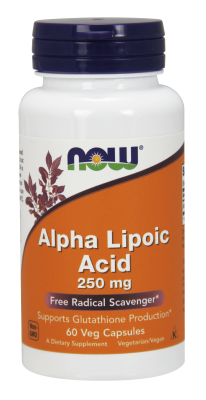
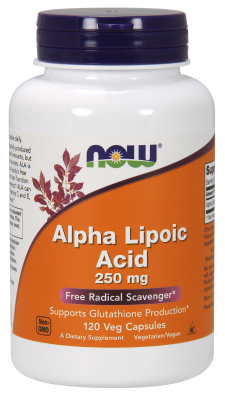
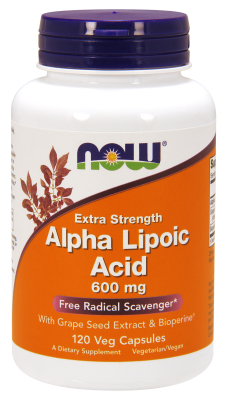
NOW Alpha Lipoic Acid 250 mg: The Universal Antioxidant for Nerve Comfort and Cellular Energy
Alpha Lipoic Acid 250 mg is one of the most versatile cellular protectors in human nutrition. While most antioxidants work exclusively in water-based bodily fluids (such as Vitamin C) or fatty tissues (such as Vitamin E), Alpha Lipoic Acid (ALA) is uniquely soluble in both. This allows it to protect virtually every cell, tissue, and organ system in your body. At VitaNet, LLC, our family-owned team has helped customers navigate dietary supplements since 1995 with over 31 years of direct retail experience[cite: 1]. We know that individuals seeking Alpha Lipoic Acid 250 mg are usually looking for dependable support for healthy peripheral nerve comfort, metabolic balance, or daily healthy aging.
Quick Overview: What Makes NOW Alpha Lipoic Acid 250 mg Stand Out?
Full Potency Dose: Delivers 250 mg of pure Alpha Lipoic Acid per single vegetarian capsule.
Dual-Action Solubility: Shields both watery cell interiors and fatty cell membranes against daily free-radical stress.
Antioxidant Recycling Power: Actively recharges spent Vitamin C, Vitamin E, and cellular Glutathione.
Metabolic & Nerve Support: Aids glucose transport into muscle cells while nurturing endoneurial blood flow to hands and feet.
Clean & Allergen-Friendly: Non-GMO, vegan-friendly, and free from gluten, soy, dairy, nuts, and corn.
The "Universal Antioxidant": How Alpha Lipoic Acid Works in Plain English
To understand why Alpha Lipoic Acid is so widely recommended by healthcare practitioners, think of oxidative stress as biological rust. Normal metabolic processes, stress, poor diet, and environmental toxins create unstable molecules called free radicals. These free radicals bounce around your body, stealing electrons from healthy cellular structures and accelerating wear and tear. Antioxidants act like rust-prevention paint: they safely donate electrons to neutralize free radicals before damage occurs.
However, standard antioxidants have strict biological boundaries. Vitamin C is water-soluble; it circulates through your bloodstream and liquid cell compartments but cannot cross fatty cell membranes. Vitamin E is fat-soluble; it protects cell walls but cannot travel through watery plasma. Alpha Lipoic Acid is biologically unique because it dissolves effortlessly in both water and fat (Packer, Witt, & Tritschler, Free Radical Biology and Medicine, 1995).
The Cellular Recharge Network
When other antioxidants neutralize a free radical, they lose their charge and become inactive. Alpha Lipoic Acid steps in as a master electron donor. Once absorbed, it converts into dihydrolipoic acid (DHLA), which transfers energy to restore depleted Vitamin C, Vitamin E, and your body's master detoxifier, Glutathione, back into their active defensive states. Furthermore, because ALA easily penetrates the blood-brain barrier, it delivers protective coverage directly to delicate central nervous system tissues (Rochette et al., Molecular Nutrition & Food Research, 2013).
Evidence-Based Health Benefits of Alpha Lipoic Acid 250 mg
While Alpha Lipoic Acid is naturally synthesized in trace amounts by human liver tissue, clinical research demonstrates that supplemental doses produce targeted therapeutic benefits across multiple body systems:
1. Supporting Peripheral Nerve Function and Comfort
Peripheral nerves—the microscopic pathways running to your fingers, toes, and feet—are vulnerable to oxidative stress and reduced microcirculation. In landmark human clinical trials, oral administration of Alpha Lipoic Acid significantly reduced subjective symptoms of sensory nerve discomfort, including burning, prickling sensations, numbness, and tingling (Ziegler et al., "The SYDNEY 2 Trial," Diabetes Care, 2006). ALA supports microvascular blood flow to nerve fibers (endoneurial perfusion) while replenishing local nerve glutathione levels.
2. Healthy Glucose Metabolism and Insulin Sensitivity
Your body relies on specialized transport proteins called GLUT4 to move glucose from the bloodstream into muscle cells for fuel. Studies indicate that Alpha Lipoic Acid stimulates the intracellular insulin signaling cascade, promoting GLUT4 translocation even when cellular insulin resistance is present (Jacob et al., BioFactors, 1999). This supports steady blood glucose balance and reduces the formation of harmful Advanced Glycation End-products (AGEs) that stiffen blood vessels.
3. Mitochondrial Energy Production and Healthy Aging
Within your cells, the mitochondria function as microscopic power generators. Alpha Lipoic Acid is a critical cofactor for two core mitochondrial enzyme complexes: pyruvate dehydrogenase and alpha-ketoglutarate dehydrogenase. By helping convert dietary carbohydrates and fats into cellular adenosine triphosphate (ATP), ALA supports sustained physical vitality and cellular longevity.
How to Take NOW Alpha Lipoic Acid 250 mg for Maximum Absorption
Many supplement labels provide generic instructions, but practical pharmacokinetics reveal distinct differences in how your digestive system absorbs this compound:
The Empty Stomach Protocol (Maximum Uptake)
Clinical bioavailability trials show that co-ingesting Alpha Lipoic Acid with heavy meals significantly reduces peak plasma concentrations (Cmax) and total absorption by roughly 20% to 30% due to competition with food nutrients (Gleiter et al., European Journal of Clinical Pharmacology, 1996). For maximum clinical uptake, take 1 capsule 30 minutes before your morning meal with a full 8 oz glass of water.
The Meal-Buffered Protocol (Sensitive Stomachs)
Because Alpha Lipoic Acid is an organic sulfur-bearing acid, taking it on a completely empty stomach can produce a transient sensation of warmth or mild heartburn in sensitive individuals. Over our 31 years of serving supplement customers at VitaNet, LLC, our hands-on recommendation is simple: if you experience mild gastric reflux, take your capsule alongside a light, low-fat snack or meal[cite: 1]. Consistency over time is far more valuable than acute peak absorption.
Smart Supplement Synergies: Alpha Lipoic Acid pairs well with Acetyl-L-Carnitine for cellular nerve energy, CoQ10 for cardiovascular defense, and high-potency B-complex vitamins (especially B6 and B12) for neurological maintenance.
Understanding the Racemic Blend: R-ALA vs. S-ALA Explained
When evaluating alpha lipoic acid products, you will notice formulas sold as "R-ALA" alongside standard "Alpha Lipoic Acid." Understanding the difference helps you make the most cost-effective decision for your daily wellness regimen:
The Chirality Mirror Concept: Alpha Lipoic Acid exists in two optical mirror images, called enantiomers: R-Lipoic Acid and S-Lipoic Acid. The "R" form is the biological structure naturally synthesized by living plant and animal tissues. The "S" form is the chemical mirror image created during standard laboratory synthesis.
The 50/50 Racemic Balance: NOW Alpha Lipoic Acid 250 mg provides a classic 50/50 racemic mixture of both R and S forms. Each 250 mg capsule delivers a robust 125 mg of the bioactive R-enantiomer, accompanied by 125 mg of the S-enantiomer.
Practical Cost-to-Benefit Value: While isolated R-ALA is biologically active, it is notoriously unstable, degrades rapidly when exposed to ambient room temperatures, and carries a significantly higher price point. A 250 mg racemic capsule provides a steady, proven therapeutic dose of active R-ALA at a fraction of the cost, making it the most economical choice for long-term daily supplementation.
NOW Foods Rigorous Lab Testing & Strict Contaminant Constraints
The dietary supplement marketplace contains thousands of unverified brands, but NOW Foods sets the gold standard for quality assurance in North America. Operating over 45,000 square feet of state-of-the-art laboratory testing facilities in Bloomingdale, Illinois, and Sparks, Nevada, NOW conducts approximately 19,000 analytical tests every single month.
How NOW Verifies Every Batch of Alpha Lipoic Acid:
Testing Target
Analytical Instrumentation
Quality & Contaminant Standard
Heavy Metal Toxins
ICP-MS (Inductively Coupled Plasma Mass Spectrometry)
Screens for Lead, Arsenic, Cadmium, and Mercury down to parts-per-billion (ppb) limits, meeting stringent California Prop 65 constraints.
Screens raw materials against hundreds of agricultural pesticides and volatile extraction solvents.
Microbial Pathogens
Real-Time PCR & Automated Plating
Guarantees total absence of Salmonella, E. coli, Staphylococcus aureus, coliforms, yeast, and molds.
ISO/IEC 17025 Accreditation & Industry Accountability: NOW's in-house laboratories maintain ISO/IEC 17025 accreditation, confirming that their analytical testing methods and equipment calibrations meet the highest international scientific benchmarks. NOW also leads an industry-wide consumer defense program, regularly purchasing discount brand supplements from open e-commerce platforms and publishing lab data exposing adulterated or non-existent active ingredients. When you buy NOW from VitaNet, you receive verified label claims and clean potency.
✓ Origin: Formulated, encapsulated, and quality tested in the USA.
Safety Guidelines, Contraindications, and Medication Interactions
Alpha Lipoic Acid has an exceptional safety record in clinical trials, but because it actively influences cellular metabolism, responsible supplementation requires attention to personal medical history and medication schedules:
Key Drug Interactions to Discuss with Your Doctor:
Diabetes Medications (Insulin, Metformin, Glipizide): Because ALA enhances insulin-stimulated glucose uptake, combining it with prescription blood sugar medications may cause blood glucose to drop below normal (hypoglycemia). Monitor blood sugar levels closely and consult your physician for dosage management.
Thyroid Hormone Therapy (Levothyroxine, Synthroid): Alpha Lipoic Acid can bind to thyroid medications or alter peripheral thyroxine (T4 to T3) conversion. Separate intake of ALA and thyroid hormone replacement by at least 4 hours.
Chemotherapy Agents: High-dose antioxidants may theoretically diminish the intended oxidative mechanism of certain chemotherapeutic drugs. Cancer patients should only take ALA under direct oncological supervision.
Thiamine (Vitamin B1) Nutritional Note: Prolonged, high-dose ALA utilization increases the body's requirement for Vitamin B1. Individuals with chronic alcohol use or known malabsorption should ensure adequate daily thiamine intake alongside ALA.
Common Mild Side Effects: Most adults tolerate 250 mg without incident. Minor, transient reactions can include mild acid indigestion, a slight sulfurous taste, or a temporary, harmless odor change in urine (similar to the effect of eating asparagus, caused by natural sulfur metabolites).
Frequently Asked Questions About Alpha Lipoic Acid 250 mg
What is Alpha Lipoic Acid 250 mg used for?
NOW Alpha Lipoic Acid 250 mg is commonly used to protect cells against free-radical oxidative damage, support healthy peripheral nerve comfort in the hands and feet, promote balanced glucose metabolism, and recharge vital antioxidants like Glutathione, Vitamin C, and Vitamin E.
How long does it take for Alpha Lipoic Acid to work?
Intracellular antioxidant recycling and glucose support begin within hours of your first dose. However, noticeable benefits for peripheral nerve comfort, microcirculation, and sensory vitality typically build gradually over 3 to 6 weeks of continuous daily use, as observed in clinical trials.
Should I take Alpha Lipoic Acid on an empty stomach or with a meal?
For highest absorption, take your capsule 30 minutes before a meal with a full glass of water. If you have a sensitive stomach or experience mild heartburn due to ALA's natural acidic properties, taking it with a light meal or snack will eliminate stomach discomfort while still providing strong daily nutritional benefits.
Is a 250 mg dose sufficient, or do I need 600 mg?
A daily dose of 250 mg is an ideal maintenance intake for overall cellular protection, healthy blood sugar support, and sustained antioxidant defense. While acute clinical trials for advanced diabetic nerve discomfort frequently use 600 mg daily, 250 mg provides long-term support with minimal incidence of gastric upset.
Can I take Alpha Lipoic Acid alongside my daily multivitamin?
Yes. In fact, Alpha Lipoic Acid works cooperatively with the nutrients in a quality multivitamin, specifically helping to recycle Vitamin C and Vitamin E. If your multivitamin contains high levels of minerals (like iron, calcium, or magnesium), you may take ALA 2 hours apart, as ALA can mildly chelate certain dietary minerals.
Why choose NOW Alpha Lipoic Acid from VitaNet?
VitaNet, LLC is an independent, family-owned discount retailer based in Hartville, Ohio, serving wellness customers online since 1995[cite: 1]. We offer authentic, factory-fresh name-brand supplements at everyday discount prices, backed by an unconditional 100% money-back guarantee where we even cover return shipping—giving you complete peace of mind with every order[cite: 1].
Helpful Customer Reviews
Review of ALPHA LIPOIC ACID 250mg 60 CAPS - NOW Product N3042 Reviewed by ALPHA LIPOIC ACID
Friday, May 6, 2011 Rating: 5/5
Lipoic acid (ALA) has been identified as a powerful antioxidant found naturally in our diets, but appears to have increased functional capacity when given as a supplement in the form of a natural or synthetic isolate. ALA and its active reduced counterpart, dihydrolipoic acid (DHLA), have been shown to combat oxidative stress by quenching a variety of reactive oxygen species (ROS). Because this molecule is soluble in both aqueous and lipid portions of the cell, its biological functions are not limited solely to one environment. In addition to ROS scavenging, ALA has been shown to be involved in the recycling of other antioxidants in the body including vitamins C and E and glutathione. Not only have the antioxidant qualities of this molecule been studied, but there are also several reports pertaining to its blood lipid modulating characteristics, protection against LDL oxidation and modulation of hypertension. Therefore, ALA represents a possible protective agent against risk factors of cardiovascular disease (CVD). The objective of this review is to examine the literature pertaining to ALA in relation to CVD and describe the most powerful actions and potential uses of this naturally occurring antioxidant. Despite the numerous studies on ALA, many questions remain relating to the use of ALA as a supplement. There is no consensus on dosage, dose frequency, form of administration, and/or preferred form of ALA. However, collectively the literature increases our understanding of the potential uses for supplementation with ALA and identifies key areas for future research.