- *MSRP:
$15.98- Our Price:
- $11.52
- Buy: at $11.52


Occasional heartburn, sour stomach, and digestive burning can disrupt your daily routine. While conventional antacids temporarily shut down your stomach acid, your stomach actually needs that acid to break down food, absorb key nutrients, and keep bad bacteria in check.
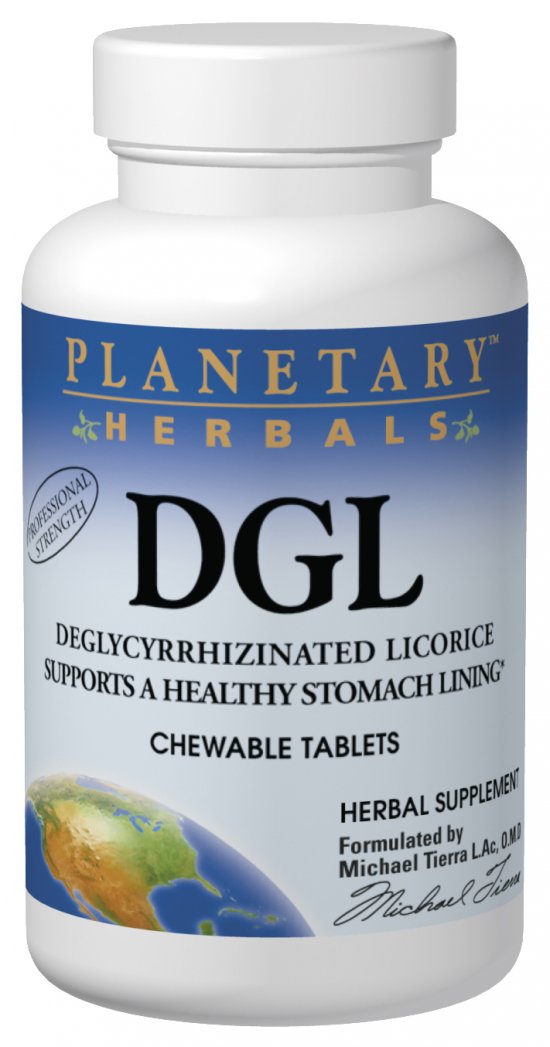
Planetary Herbals DGL Licorice delivers 380 mg of premium, deglycyrrhizinated licorice root extract (10:1 concentration) in pleasant orange-flavored chewable tablets. Rather than interfering with your body’s natural digestive fluids, DGL works with your body to stimulate your stomach’s own natural protective mucous lining.
Think of your stomach like a wood-burning fireplace. To keep the fire from damaging the surrounding walls, you need thick, heat-resistant bricks. In your digestive tract, those "bricks" are made up of a specialized gel layer called mucus, produced by cells in the stomach wall.
When stress, coffee, spicy foods, or medications wear that protective layer thin, stomach acid makes contact with delicate tissue, resulting in burning sensations and discomfort.
Standard medications often work by lowering the temperature of the "fire" (shutting down stomach acid production). DGL takes the opposite, tissue-supporting approach:
Many people wonder why Planetary Herbals formulates DGL as a chewable wafer instead of a quick-swallow pill or capsule. The answer lies in how digestion begins: in your mouth.
When you chew a DGL tablet:
If you have researched licorice root, you may have read that it can raise blood pressure. That is a valid medical concern for unprocessed, whole licorice candy or raw herbal extracts, but it does not apply to DGL.
Raw licorice root contains an active compound known as glycyrrhizin (glycyrrhizic acid). When consumed in high amounts, glycyrrhizin blocks a kidney enzyme called 11-beta-HSD2. When that enzyme is blocked, your body holds onto sodium, flushes out potassium, and increases blood pressure.
The Deglycyrrhizination Advantage: Planetary Herbals removes the glycyrrhizin compound through a specialized water extraction and filtration process, reducing it to negligible traces. This preserves the beneficial, tissue-soothing flavonoids (such as liquiritin and isoliquiritigenin) while removing the component associated with hypertension and fluid retention.Planetary Herbals DGL Licorice is formulated in line with dosages and extraction methods examined in published gastrointestinal research:
Serving Size: 1 Chewable Tablet | Servings Per Container: 100
Amount Per Serving % Daily ValueTo get the greatest benefit from your chewable DGL tablets, follow these practical tips:
DGL stands for Deglycyrrhizinated Licorice. It is licorice root from which the compound glycyrrhizin has been filtered out, allowing you to use it for stomach protection without affecting blood pressure or potassium levels.
Many people feel a soothing, coating effect in their throat and upper stomach within minutes of chewing a tablet. For chronic stomach lining support and digestive comfort, clinical studies recommend regular daily use for 2 to 4 weeks.
No. Whole licorice can raise blood pressure because of glycyrrhizin. Because Planetary Herbals DGL removes this component, it is safe for regular daily use and does not alter healthy blood pressure regulation.
Swallowing the tablet whole is far less effective. DGL relies on chewing to blend with your saliva and coat the esophagus and stomach lining directly. Chewing the tablet unlocks its full digestive coating action.
No. DGL is not an acid blocker. Instead of lowering stomach acid (which is necessary for protein breakdown and mineral absorption), DGL helps your stomach build up its own mucosal barrier, protecting tissue from irritation naturally.
This formula is naturally flavored with natural orange oil, giving it a mild, pleasant citrus-sweet flavor rather than a harsh, overpowering black licorice taste.
Serving online customers since 1995, VitaNet ®, LLC guarantees fresh stock, rapid fulfillment from our climate-controlled facilities, and authentic products directly sourced from trusted manufacturers.