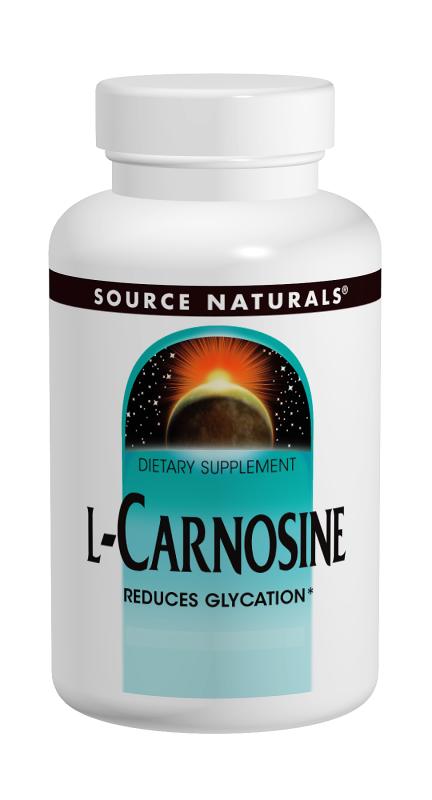
- *MSRP:
$22.50- Our Price:
- $16.21
- Buy: at $16.21


Scientifically reviewed and verified against peer-reviewed biochemical literature. Compliant with standard dietary supplement structure/function guidelines.
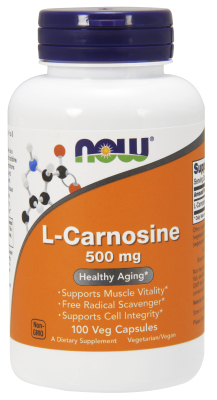
Source Naturals® L-Carnosine 500 mg supplies a clinically benchmarked dose of pure beta-alanyl-L-histidine, an endogenous hydrophilic dipeptide naturally concentrated in metabolically demanding excitable tissues, including skeletal muscle, cardiac myocytes, and the central nervous system.
As human tissue ages, natural carnosine concentrations decline significantly—dropping by an estimated 63% between early adulthood and advanced age in skeletal tissue (Severin et al., 1953; Hipkiss, 2009). This depletion leaves vital structural proteins vulnerable to oxidative degradation and post-translational modification by reactive carbonyl species (RCS).
Formulated with high-potency dipeptide complexes and bound with dibasic calcium phosphate to ensure physical stability and uniform disintegration, Source Naturals L-Carnosine 500 mg serves as a primary biological buffer, sacrificial antioxidant, and cross-linking inhibitor designed to protect cellular integrity at the molecular level.
L-Carnosine operates through three interrelated biochemical mechanisms: the inhibition of Advanced Glycation End Products (AGEs), intracellular proton buffering, and transition metal chelation.
Glycation occurs when reducing sugars—such as glucose, fructose, or reactive dicarbonyl intermediates like methylglyoxal (MG) and malondialdehyde (MDA)—react non-enzymatically with the free amino groups of proteins, lipids, and nucleic acids (the Maillard reaction). This cascade results in irreversible protein cross-linking, tissue stiffening, and the formation of toxic AGEs, which bind to the Receptor for Advanced Glycation End Products (RAGE) to trigger sustained inflammatory signaling (Brownson & Hipkiss, 2000).
L-Carnosine acts as a sacrificial biological decoy. Due to its reactive primary amino group on the β-alanine moiety and the nucleophilic imidazole nitrogen on the L-histidine residue, carnosine intercepts reactive carbonyls prior to their interaction with structural proteins. This reaction forms harmless, water-soluble carnosine-carbonyl adducts—a protective process known as carnosinylation—which are then safely eliminated through normal renal filtration (Aldini et al., 2005; Hipkiss et al., 2016).
Seminal studies by McFarland and Holliday demonstrated that physiological concentrations of L-carnosine (20–50 mM) significantly extended the replicative lifespan of human diploid fibroblasts (cells responsible for synthesizing collagen and connective tissue). In in vitro cultures, carnosine-treated fibroblasts avoided senescent cell morphology and preserved functional genomic integrity for substantially longer passages compared to controls (McFarland & Holliday, 1994, 2000).
Free redox-active transition metals—primarily cuprous/cupric (Cu+/Cu2+) and ferrous (Fe2+) ions—catalyze Fenton reactions, yielding cytotoxic hydroxyl radicals (•OH). Carnosine's unique stereochemical configuration allows it to form biologically inert, stable coordination complexes with excess copper and zinc ions, thereby blocking transition-metal-catalyzed lipid peroxidation and DNA strand scission (Boldyrev et al., 2013).
The brain consumes approximately 20% of the body's resting metabolic energy, generating considerable oxidative and glycative stress. L-Carnosine readily crosses the blood-brain barrier via the proton-coupled peptide oligopeptide transporter PepT2 (SLC15A2). Within cerebral tissue, carnosine dampens microglial overactivation, suppresses pro-inflammatory cytokine expression (TNF-α, IL-6), and directly hinders the beta-sheet fibrillogenesis and neurotoxic aggregation of amyloid-beta (Aβ1–42) oligomers (Caruso et al., 2022; O'Toole et al., 2025).
During sustained, high-intensity muscular contractions, anaerobic glycolysis drives lactic acid dissociation and hydrogen ion (H+) accumulation, dropping intramuscular pH from ~7.1 to below 6.5. This acidosis inhibits phosphofructokinase (PFK) and impairs calcium binding to troponin C, culminating in neuromuscular fatigue. The imidazole ring of carnosine has an ideal biological pKa of 6.83, positioning it as an essential non-bicarbonate physicochemical buffer that absorbs excess H+ ions, sustaining mechanical power output and muscular endurance (Derave et al., 2010).
Arterial stiffness and endothelial dysfunction are exacerbated by the deposition of AGE cross-links within vascular collagen. By blocking glycation pathways and modulating endogenous nitric oxide (NO) synthase activity, carnosine preserves vascular compliance, reduces the oxidative alteration of low-density lipoproteins (LDL), and protects myocardial contractility against ischemic reperfusion stress (Boldyrev et al., 2013).
Consumers frequently confuse L-Carnosine with L-Carnitine due to their phonetic similarities, or debate whether to supplement with Beta-Alanine instead:
| Compound | Chemical Structure | Primary Biological Function | Targeted Tissues |
|---|---|---|---|
| L-Carnosine (Source Naturals SN1557) | Dipeptide (β-alanyl-L-histidine) | Anti-glycation, carbonyl scavenging, AGE cross-link prevention, heavy metal chelation, cellular longevity. | Brain, eyes, heart, skeletal muscle, vascular endothelium. |
| L-Carnitine | Quaternary ammonium compound (derived from lysine & methionine) | Mitochondrial fatty acid transport (CPT-1 shuttle system) for β-oxidation and cellular ATP production. | Mitochondria-dense cardiac and skeletal muscle cells. |
| Beta-Alanine | Non-proteinogenic beta amino acid | Rate-limiting precursor for endogenous muscle carnosine synthesis; primarily used for athletic sprint endurance. | Fast-twitch skeletal muscle fibers (limited systemic anti-glycation). |
Why direct oral supplementation? While beta-alanine effectively elevates muscle carnosine, ingesting intact L-carnosine yields direct bioactive fragments upon hydrolysis by tissue carnosinase enzymes (CNDP1/CNDP2) and provides rapid circulating anti-glycation protection that isolated beta-alanine cannot achieve alone.
Source Naturals adheres strictly to Good Manufacturing Practices (cGMP). Every batch of SN1557 undergoes rigorous identity, purity, and potency testing to ensure full label compliance and the total absence of harmful contaminants or heavy metals.
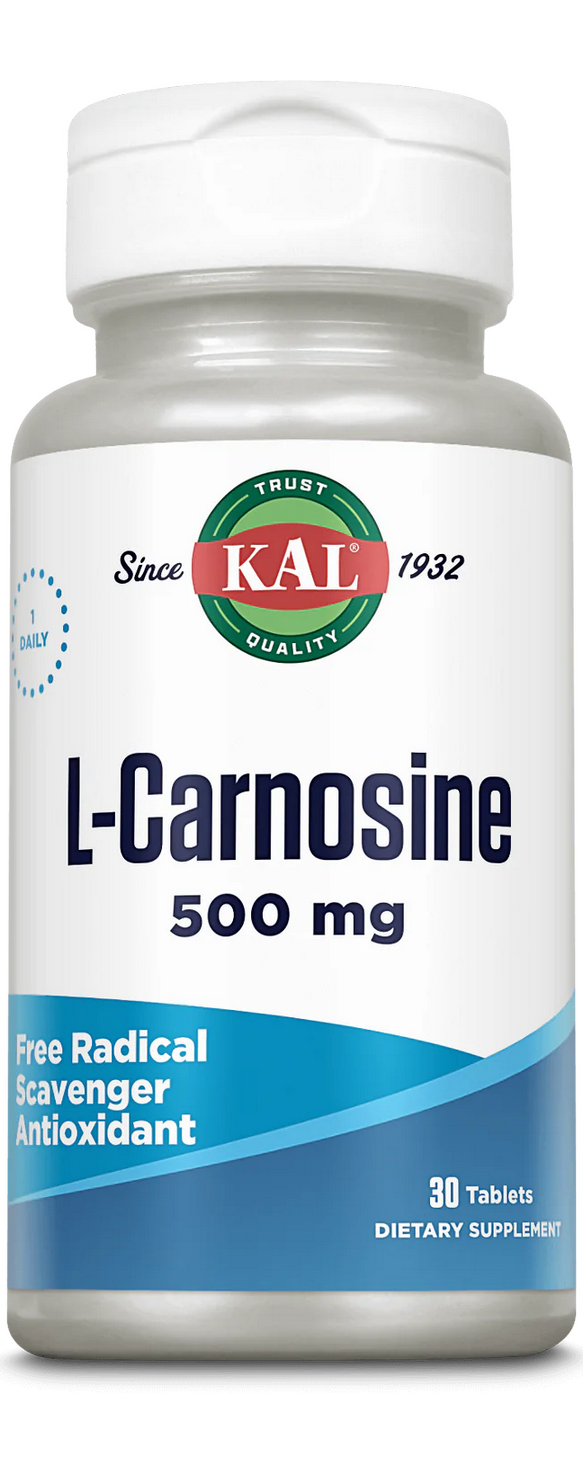
Serving Size: 1 Tablet
Servings Per Container: 30
| Amount Per Serving | % Daily Value |
|---|---|
| Calcium (as dibasic calcium phosphate) 88 mg | 7% |
| L-Carnosine (β-alanyl-L-histidine) 500 mg | * |
* Daily Value (DV) not established.
Suitable for Vegetarians. Contains NO yeast, dairy, egg, gluten, corn, soy, or wheat. Contains NO sugar, starch, salt, preservatives, or artificial colors, flavors, or fragrances. Non-GMO.
Recommended Dose: Take 1 tablet (500 mg) one to three times daily with meals, or as directed by your qualified healthcare provider.
Bioavailability Insight: Circulating human carnosine is regulated by serum carnosinase-1 (CNDP1), an enzyme that hydrolyzes carnosine into beta-alanine and histidine. Splitting your intake into 1 tablet (500 mg) across separate meals prevents enzyme saturation, prolongs plasma carnosine retention, and enhances uptake by peripheral tissues via proton-coupled PepT1 and PepT2 transporters (Boldyrev et al., 2013).
L-Carnosine is an endogenous molecule with an exceptional clinical safety track record. Human clinical trials evaluating dosages ranging from 500 mg up to 2,000 mg daily have documented no systemic toxicity or severe adverse events. Unlike acute high-dose beta-alanine supplementation, pure L-carnosine does not induce paresthesia (neuropathic skin tingling or itching). Mild gastrointestinal discomfort is rare and virtually eliminated when taken alongside food.
Source Naturals L-Carnosine 500 mg is primarily used as an anti-aging and cellular longevity supplement. Its primary mechanism is anti-glycation: it prevents reactive blood sugars from binding to structural proteins (such as collagen, elastin, and neural proteins) to form Advanced Glycation End Products (AGEs). It also supports intracellular muscle buffering, promotes cognitive clarity, and protects vital tissues against oxidative stress.
L-Carnosine operates as a sacrificial peptide target. Its molecular structure possesses high affinity for reactive carbonyl species (such as methylglyoxal and malondialdehyde). By reacting directly with these intermediate sugars in a process called "carnosinylation," L-carnosine neutralizes them before they can cross-link with collagen, organs, or blood vessels, allowing the body to harmlessly eliminate them.
It is best taken with meals, divided across 1 to 3 daily servings (e.g., 500 mg at breakfast and 500 mg at dinner). Consuming L-carnosine with food slows gastrointestinal transit time and avoids overwhelming serum carnosinase enzymes, maximizing intestinal peptide absorption into peripheral blood and brain tissues.
Despite their similar names, they are distinct compounds with different functions. L-Carnosine is a dipeptide of beta-alanine and histidine focused on anti-glycation, cellular anti-aging, brain health, and tissue buffering. L-Carnitine is an amino acid derivative synthesized from lysine and methionine that transports long-chain fatty acids into mitochondria to be burned for cellular energy (ATP).
Each tablet contains 88 mg of calcium derived from dibasic calcium phosphate. This excipient serves two purposes: it provides a stable, non-hygroscopic structural base that keeps the L-carnosine dipeptide stable and dry, while simultaneously supplying a modest 7% of the Daily Value of dietary calcium.
No. The paresthesia (itching or tingling sensation) common with athletic beta-alanine powders is triggered by sudden plasma surges binding to sensory neuron receptors (MrgprD). Because L-carnosine is a bound dipeptide that is gradually metabolized, it does not induce acute paresthesia at standard 500 mg doses.
Yes. Source Naturals L-Carnosine 500 mg (SN1557) is suitable for vegetarians and contains no yeast, dairy, egg, gluten, corn, soy, or wheat. It contains no sugar, preservatives, starch, or artificial flavors, colors, or fragrances.
Physiological effects vary by endpoint. Intracellular muscle buffering and recovery benefits can manifest within 2 to 4 weeks of consistent daily supplementation. Deep cellular anti-glycation and systemic vascular/neurological defense operate cumulatively over 8 to 12 weeks and beyond, as measured by markers of oxidative damage and protein turnover.