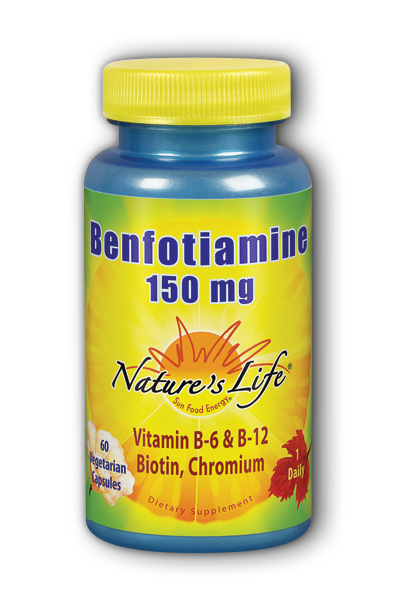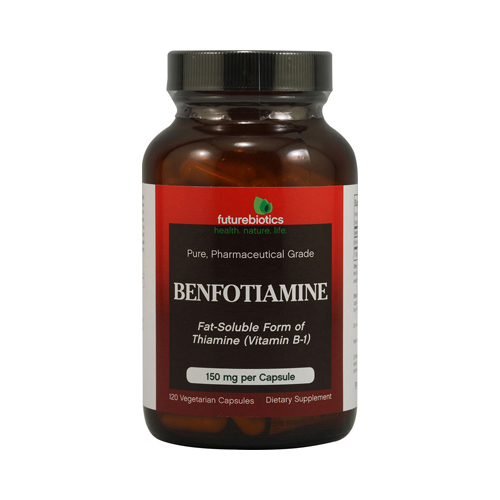
- *MSRP:
$15.98- Our Price:
- $11.52
- Buy: at $11.52


High-Bioavailability, Fat-Soluble Vitamin B-1 (Thiamine) for Peripheral Nerve Comfort, Normal Glucose Metabolism, and Cellular Defense
SKU: SN1906 UPC: 021078019060 Vegetarian-Friendly Non-GMO & Gluten-FreeIf you struggle with occasional tingling, burning, or numbness in your feet, fingers, or extremities, or if you are working to protect your body from the long-term cellular wear-and-tear caused by elevated blood sugar, everyday water-soluble Vitamin B1 supplements often fall short. Your body simply flushes most of them away before your cells can absorb them.
Source Naturals Benfotiamine 150 mg solves this absorption bottleneck. As an advanced, fat-soluble derivative of thiamine (vitamin B-1), benfotiamine passes easily through fatty cell membranes, delivering up to 3.6 times higher peak blood levels and 5 times greater cellular bioavailability than standard thiamine hydrochloride. Each vegetarian tablet delivers 150 mg of pure benfotiamine to fuel healthy nerve function, activate your body’s natural glucose-clearing enzymes, and protect delicate microvascular tissues in your eyes and kidneys.
To understand why benfotiamine 150 mg is so effective, think about how our cells are built. Every cell in your body—especially your delicate nerve fibers and the endothelial cells lining your blood vessels—is wrapped in a protective wall made of lipids (fats).
Standard Vitamin B-1 (thiamine) is water-soluble. Trying to push water-soluble vitamins through a fatty cell wall is like spraying water onto a waterproof raincoat: most of it bounces off, collects in your urine, and is eliminated within hours. Your gut also has strict transport proteins that create an "absorption speed limit," capping regular thiamine uptake at roughly 8 to 15 mg per dose regardless of how much you swallow.
The Benfotiamine Difference: First synthesized in Japan in the late 1950s, benfotiamine (S-benzoylthiamine O-monophosphate) is modified to be lipid-soluble. It bypasses the gut’s speed limit by diffusing directly through the intestinal lining into your bloodstream. Once absorbed, enzymes cleave its protective side-chain, releasing active thiamine pyrophosphate directly inside your nerve cells, blood vessel linings, and vital organs where it is needed most.
When blood glucose levels spike after a meal, excess sugar floods into cells that cannot defend themselves, like nerve endings, retina capillaries, and kidney filters. This creates a backup, like a clogged kitchen sink. That overflowing sugar ferments into cellular toxins called Advanced Glycation End-products (AGEs), which stiffen blood vessels and irritate nerve fibers. Benfotiamine switches on an enzyme called transketolase. Think of transketolase as opening an emergency overflow drain: it safely siphons away excess sugar metabolites down harmless alternative metabolic routes before toxic AGEs can form.
If you take standard thiamine mononitrate or thiamine hydrochloride, your bloodstream and red blood cells absorb only a fraction of each dose. Pharmacokinetic clinical trials confirm that benfotiamine delivers dramatically superior tissue concentration.
| Feature / Performance Metric | Benfotiamine 150 mg | Standard Thiamine (B-1 HCl) |
|---|---|---|
| Solubility Profile | Lipid-Soluble (Fat-Soluble Prodrug) | Water-Soluble |
| Intestinal Absorption Mechanism | Passive lipid diffusion; uncapped saturation | Active carrier-dependent; saturates quickly (~8-15 mg) |
| Peak Blood Concentration (Cmax) | Up to 360% (3.6x) higher | Low baseline |
| Overall Bioavailability (AUC) | Roughly 500% (5x) greater incorporation | Rapidly cleared in urine |
| Nerve & Tissue Penetration | Deep penetration into myelin sheaths & peripheral nerves | Limited peripheral nerve uptake |
Reference: Greb A, Bitsch R. (1998). "Comparative bioavailability of various thiamine derivatives after oral administration." International Journal of Clinical Pharmacology and Therapeutics, 36(4): 216-221.
When peripheral nerves are deprived of cellular energy or damaged by metabolic stress, individuals experience prickling, "pins and needles," numbness, or painful shooting sensations in their feet and hands. In Europe, doctors have utilized benfotiamine for decades as a targeted intervention for diabetic polyneuropathy.
In the randomized, double-blind, placebo-controlled BEDIP study (Haupt et al., 2005), researchers evaluated patients suffering from diabetic polyneuropathy over three weeks. The group receiving benfotiamine demonstrated statistically significant reductions in neuropathy symptom scores, with the most pronounced relief seen in burning pain sensations. Later evaluations in the BENDIP trial (Stracke et al., 2008) confirmed that higher daily doses (300 mg to 600 mg daily) resulted in sustained, cumulative improvements in total nerve symptom scores and patient comfort.
When circulating glucose binds haphazardly to proteins and fats in your bloodstream, it triggers a destructive biological browning reaction, creating "cellular crust" known as Advanced Glycation End-products (AGEs). AGEs damage delicate blood vessel walls, accelerate premature aging, and spark chronic oxidative stress.
In landmark research published in Nature Medicine, Dr. Hans-Peter Hammes and his team demonstrated that benfotiamine completely inhibits three separate biochemical pathways of hyperglycemia-induced vascular damage (the hexosamine pathway, the AGE formation pathway, and the protein kinase C pathway) by supercharging the transketolase enzyme (Hammes et al., 2003). By diverting toxic glucose byproducts into safe pentose-phosphate sugars, benfotiamine shields capillaries from structural deterioration.
The fine capillary networks inside your retinas (eyes) and glomeruli (kidneys) are especially vulnerable to blood sugar fluctuations. A landmark clinical human trial published in Diabetes Care evaluated endothelial microvascular function following an AGE-rich meal. Patients pretreated with benfotiamine maintained healthy microvascular dilation and showed significantly reduced oxidative stress markers (TBARS) compared to control subjects (Stirban et al., 2006).
At VitaNet, we believe in 100% label transparency. Source Naturals manufactures every batch to strict Good Manufacturing Practices (cGMP) standards, verifying purity, potency, and identity via rigorous laboratory testing.
Serving Size: 1 Tablet
Servings Per Container: 60
| Active Ingredient | Amount Per Serving | % Daily Value |
|---|---|---|
| Calcium (as dibasic calcium phosphate) | 38 mg | 3% |
| Benfotiamine | 150 mg | † |
† Daily Value (DV) not established.
Other Ingredients: Dibasic calcium phosphate, microcrystalline cellulose, stearic acid, modified cellulose gum, and silica.
Allergen Free & Clean Formula: Suitable for vegetarians. Contains NO yeast, dairy, egg, gluten, corn, soy, or wheat. Contains NO sugar, starch, salt, preservatives, or artificial colors, flavors, or fragrances.
Storage Instructions: Store tightly sealed in a cool, dry place away from direct sunlight. Keep out of reach of children.
Take 1 tablet up to 4 times daily with meals, or as recommended by your physician or integrative health practitioner. Many individuals start with 1 tablet twice daily (300 mg/day) for general support.
Because benfotiamine is lipid-soluble, taking your tablet alongside a meal or snack containing healthy fats (such as avocado, olive oil, nuts, or yogurt) optimizes cellular absorption and prevents digestive upset.
Benfotiamine pairs exceptionally well with Alpha-Lipoic Acid (R-ALA) and Methylcobalamin (Vitamin B-12). Together, this trio supports comprehensive nerve regeneration and antioxidant protection.
If you are pregnant, planning to become pregnant, or breastfeeding, consult your healthcare provider before using this supplement. Benfotiamine has an excellent safety record in human clinical trials with no known significant toxicities; however, if you take prescription medications for diabetes or blood pressure, monitor your numbers closely with your doctor as metabolic function improves.
We believe in medical rigor and full transparency. The statements regarding benfotiamine’s bioavailability and metabolic benefits are supported by peer-reviewed clinical literature:
Standard Vitamin B1 (thiamine mononitrate or thiamine hydrochloride) is water-soluble. It quickly reaches an intestinal saturation limit where excess is flushed out in urine. Benfotiamine is an S-acyl, fat-soluble thiamine derivative. It easily dissolves through cellular lipid membranes, resulting in approximately 3.6 times higher peak plasma concentrations and up to 5 times greater overall tissue absorption compared to standard water-soluble B1.
In double-blind human clinical trials such as the BEDIP and BENDIP trials, significant reductions in nerve discomfort, burning sensations, and tingling began appearing within 3 to 6 weeks of continuous daily use. Because nerve tissue recovers gradually, the best results are typically achieved when taken consistently for 8 to 12 weeks.
Yes. In fact, healthcare practitioners frequently recommend combining benfotiamine with Alpha-Lipoic Acid and active Vitamin B-12 (methylcobalamin). Benfotiamine supports glucose pathway clearance and myelin integrity, Alpha-Lipoic Acid reduces oxidative stress in both water and fat cellular environments, and Vitamin B-12 promotes nerve repair and red blood cell formation.
The suggested usage on the bottle is 1 tablet up to 4 times daily with meals. For general cellular and glucose metabolism support, many users take 1 tablet once or twice daily (150 mg to 300 mg). Clinical studies addressing peripheral nerve health commonly evaluated doses between 300 mg and 600 mg daily (2 to 4 tablets). Always check with your doctor for your personalized dosage.
Benfotiamine is remarkably well-tolerated. Clinical trials show side effect profiles comparable to placebo. Rare, mild symptoms may include mild stomach upset or mild skin rash. Because it is a form of thiamine, it does not accumulate toxically in the body. If you are pregnant, nursing, or taking prescription medications, consult your doctor before use.
Regulatory Disclaimer: The statements on this page have not been evaluated by the Food and Drug Administration. This product is not intended to diagnose, treat, cure, or prevent any disease. Always consult your healthcare provider prior to making changes to your dietary supplement routine.