- *MSRP:
$30.50- Our Price:
- $21.97
- Buy: at $21.97


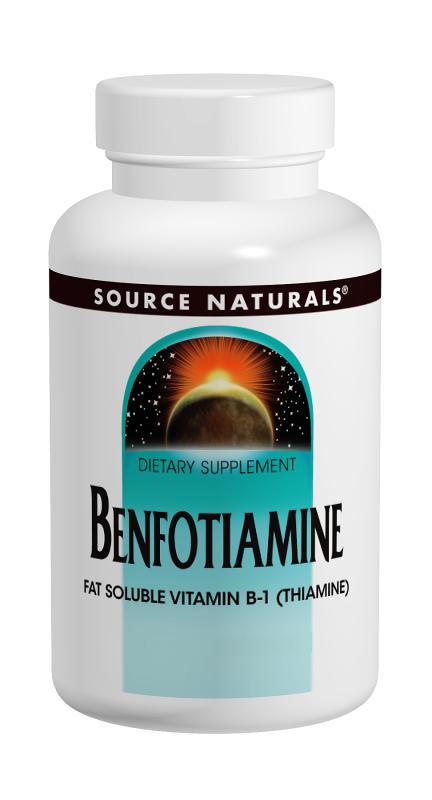
Standard water-soluble thiamine (Vitamin B1) has a major limitation: the human body struggles to absorb large amounts before washing it out. Source Naturals Benfotiamine 150mg solves this cellular barrier. As an advanced, lipid-soluble (fat-soluble) derivative of thiamine, benfotiamine passes easily through cell membranes, delivering up to 5 times greater cellular absorption directly where your nerves, blood vessels, and kidneys need it most.
To understand why Benfotiamine 150mg is widely recognized in metabolic and neurological nutrition, consider how your intestines handle standard vitamins:
Regular Vitamin B1 (thiamine hydrochloride or thiamine mononitrate) dissolves only in water. It depends entirely on specialized transport channels in the intestinal wall. These microscopic channels quickly become overloaded; once saturated, any extra thiamine is excreted through the urine without benefiting your tissues.
In contrast, benfotiamine has an open-ring, fat-soluble structure. Instead of waiting for intestinal transport pumps, it dissolves across cell membranes passively like a key sliding into a lock. Once absorbed into the bloodstream, it converts directly into active thiamine pyrophosphate (TPP).
| Feature | Standard Thiamine (B-1) | Source Naturals Benfotiamine 150mg |
|---|---|---|
| Solubility Profile | Water-Soluble | Fat-Soluble (Lipophilic) |
| Intestinal Absorption | Limited by carrier saturation | Direct passive diffusion across membranes |
| Relative Bioavailability | Low (baseline) | Up to 5x higher in blood; up to 3.6x higher in tissues |
| Cellular Retention Time | Short (excreted rapidly) | Prolonged cellular presence and physiological activity |
Clinical Note: Pharmacokinetic trials published in the Annals of Nutrition and Metabolism confirmed that oral benfotiamine produces significantly higher peak plasma concentration (Cmax) and area under the curve (AUC) than equal doses of water-soluble thiamine salts (Bitsch et al., 1991).
Whenever blood sugar levels rise, cells break down glucose to generate energy. However, when cells absorb more glucose than their metabolic engines can handle, excess sugar metabolites build up inside the cells. This overflow triggers chemical cascades that form Advanced Glycation End-Products (AGEs).
Think of AGEs as biological "caramelized rust." When loose sugars react haphazardly with delicate proteins inside your nerves and blood vessels, they stiffen tissues, restrict capillary blood flow, and cause chronic cellular irritation.
This is where Source Naturals Benfotiamine 150mg acts as a biochemical safety valve. Benfotiamine strongly stimulates an essential enzyme called transketolase. Transketolase diverts excess sugar breakdown products away from damaging toxic pathways and reroutes them safely into the harmless pentose-phosphate pathway.
In a landmark study published in Nature Medicine, researchers demonstrated that benfotiamine activated transketolase in vascular cells by over 300%, simultaneously blocking three major pathways of high-glucose damage: the hexosamine pathway, the protein kinase C (PKC) pathway, and intracellular AGE production (Hammes et al., 2003).
Peripheral nerves in the feet, toes, and hands are vulnerable to oxidative stress and impaired glucose metabolism. In the double-blind, randomized BENDIP trial, individuals taking benfotiamine showed statistically significant improvements in sensation, pain reduction, and overall nerve symptom scores compared to placebo (Stracke et al., 2008).
The lining of tiny blood vessels (endothelium) in the retina and kidneys relies on steady glucose balance. By reducing oxidative free radicals and blunting advanced glycation, benfotiamine supports healthy microcirculation and blood vessel flexibility.
Thiamine pyrophosphate is a compulsory cofactor for converting carbohydrates and fats into adenosine triphosphate (ATP), the primary energy currency of your cells. Supplementing with bioavailable benfotiamine helps alleviate cellular fatigue caused by subclinical thiamine deficits.
Source Naturals adheres to stringent Good Manufacturing Practices (cGMP), with raw material testing to ensure identity, purity, and potency.
Serving Size: 1 Tablet
Servings Per Container: 120
| Amount Per Serving | % Daily Value |
|---|---|
| Calcium (as dibasic calcium phosphate) 38 mg | 3% |
| Benfotiamine 150 mg | * |
*Daily Value (%DV) not established.
Other Ingredients: Dibasic calcium phosphate, microcrystalline cellulose, stearic acid, modified cellulose gum, and colloidal silicon dioxide.
Allergen Cleanliness: Contains NO yeast, dairy, egg, gluten, corn, soy, or wheat. Contains NO sugar, starch, salt, preservatives, artificial colors, artificial flavors, or fragrances.
Dietary Suitability: Suitable for vegetarians. Hypoallergenic formulation.
Recommended Adult Intake: Take 1 tablet 1 to 4 times daily with meals, or as advised by your healthcare practitioner.
Because benfotiamine is fat-soluble, consuming your tablet alongside a balanced meal containing healthy fats (such as avocado, olive oil, eggs, or nuts) promotes smooth assimilation through your digestive tract.
Expected Timeline: Clinical trials indicate that while cellular enzyme stimulation begins within hours, noticeable sensory nerve relief and structural benefits typically develop gradually over 3 to 12 weeks of daily, consistent supplementation.
Benfotiamine has a demonstrated record of clinical safety and tolerability in human trials lasting from weeks to over a year, showing no evidence of toxicity at standard supplemental doses.
Regular Vitamin B1 (thiamine) is water-soluble, which means your digestive tract can only absorb small fractions at a time before expelling the rest. Benfotiamine is a synthetic, fat-soluble precursor that passes straight through cellular membranes without being bottlenecked by intestinal carrier limits, producing substantially higher concentrations inside nerve and vascular tissues.
Most randomized clinical trials, including the BEDIP and BENDIP trials, measure noticeable improvements in peripheral nerve comfort, tingling, and tactile sensation after 3 to 6 weeks of continuous daily use, with sustained benefits continuing through 12 weeks and beyond.
Yes. In fact, combining Benfotiamine with Alpha Lipoic Acid (ALA) is one of the most widely recommended nutritional regimens for nerve health. While Benfotiamine blocks destructive sugar metabolite pathways via transketolase activation, Alpha Lipoic Acid supplies antioxidant protection against free radical oxidation within nerve axons.
Benfotiamine significantly raises thiamine and thiamine monophosphate levels throughout peripheral tissue and circulating red blood cells. While it readily enters peripheral nerves, its passage directly into the central brain parenchyma is modest compared to compounds like sulbutiamine; however, it supports overall vascular endothelial tone and cerebral blood circulation.
VitaNet has provided authentic, factory-sealed vitamins online since 1995. Every bottle of Source Naturals Benfotiamine 150mg (SKU: SN1907) is stored in climate-controlled conditions, backed by a complete 100% money-back guarantee, and sold at deep discount prices well below standard retail MSRP.