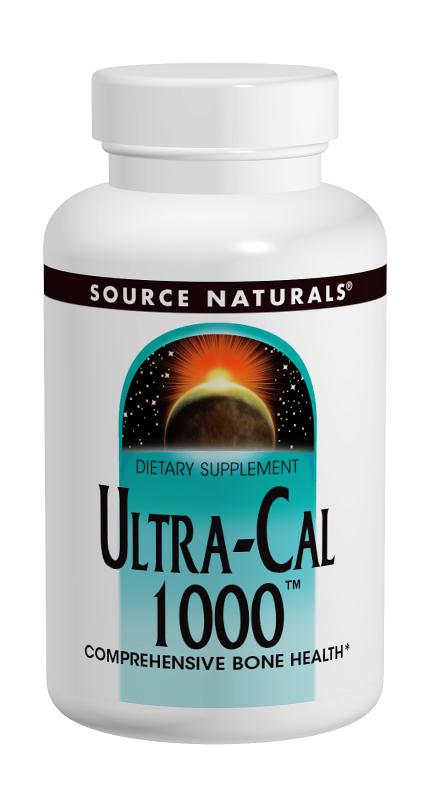
Source Naturals Ultra-Cal 1000™ is a comprehensive, clinically rationalized bone-remineralization formula engineered to support bone mineral density (BMD), trabecular bone architecture, and connective organic matrix integrity. Unlike conventional single-source calcium carbonate supplements that suffer from poor physiological absorption and risk calcifying arterial soft tissues, Ultra-Cal 1000 utilizes Microcrystalline Calcium Hydroxyapatite (MCHA)—a whole-bone mineral compound identical to the crystalline structure of human bone tissue—paired synergistically with activated Vitamin D-3, MenaQ7® Vitamin K-2, OptiZinc®, Glucosamine Sulfate, and Triple-Source Boron.
The Clinical Architecture of Bone Health: Why Elemental Calcium Alone Fails
Human bone is not an inert calcium reservoir; it is a dynamic, living biphasic structure consisting of 70% inorganic mineral crystals embedded within a 30% organic protein matrix (primarily Type I collagen). Supplementing with high-dose isolated calcium carbonate or calcium citrate fails to supply the osteoblast cofactors required to incorporate minerals into this matrix. Ultra-Cal 1000 operates via a multi-pathway mechanism designed to target every stage of the bone remodeling cycle:
Whole-Food Matrix Remineralization (MCHA): Supplies elemental calcium and phosphorus in a natural 2:1 physiological ratio, accompanied by naturally occurring bone morphogenetic proteins (BMPs) and organic matrix peptides that stimulate osteoblast differentiation.
Targeted Calcium Shunting (Vitamins D3 & K2 Synergy): Cholecalciferol (Vitamin D3) upregulates intestinal expression of calcium-binding proteins (calbindin-D9k). Simultaneously, MenaQ7® (Menaquinone-7) acts as a necessary cofactor for the gamma-glutamyl carboxylase enzyme, activating osteocalcin (to bind calcium directly into hydroxyapatite crystals) and Matrix Gla Protein (MGP) (which inhibits pathological calcium precipitation in arterial walls).
Cross-Linked Collagen Scaffolding: Zinc (as OptiZinc®), Copper Sebacate, and Manganese Ascorbate serve as essential trace mineral coenzymes for lysyl oxidase, the rate-limiting enzyme responsible for covalent collagen cross-linking in osteoid tissue.
Antiresorptive Mineral Preservation: Boron downregulates 24-hydroxylase, prolonging the serum half-life of 1,25-dihydroxyvitamin D3 while significantly reducing the urinary excretion of both calcium and magnesium.
MCHA vs. Conventional Calcium: Bioavailability & Safety Analysis
Clinical investigations consistently confirm that microcrystalline hydroxyapatite produces a more sustained, physiologically balanced elevation of serum calcium without the sharp, transient spikes linked to cardiovascular calcification concerns in isolated calcium salts.
Formulation Attribute
MCHA (Ultra-Cal 1000)
Calcium Carbonate
Calcium Citrate
Biological Composition
Complex crystalline calcium + phosphorus + Type I collagen + trace polypeptides
Isolated mineral salt (CaCO3) derived from limestone/shells
Synthesized calcium salt of citric acid
Stomach Acid Dependence
Low to Moderate (readily processed across varying gastric pH levels)
High (requires robust hydrochloric acid; poorly absorbed with PPIs or age)
Low (acid-independent absorption)
Effect on Trabecular Bone Density
Superior; clinically shown to arrest trabecular thinning and stimulate osteoblasts
Serving Size: 3 Capsules Servings Per Container: 80 (Provides a 40-day supply at the recommended 6 capsules daily dosage, or an 80-day maintenance supply).
Suggested Adult Use: Take 3 capsules twice daily with meals (e.g., 3 capsules with breakfast and 3 capsules with dinner), or as directed by your healthcare professional. Splitting the dosage across morning and evening maximizes intestinal transporter saturation thresholds and ensures constant 24-hour plasma mineral availability.
Important Safety & Drug Interaction Warnings
Anticoagulant / Blood-Thinning Medications: Ultra-Cal 1000 contains Vitamin K1 and Vitamin K2 (MK-7). Vitamin K directly counteracts the therapeutic anticoagulant action of warfarin (Coumadin®) and heparin. Do not take this product if you are on anticoagulant therapy without explicit oversight from your prescribing physician.
Thyroid & Bisphosphonate Separation: Minerals such as calcium, magnesium, and zinc bind to levothyroxine and bisphosphonates (e.g., alendronate), drastically diminishing drug bioavailability. Administer Ultra-Cal 1000 at least 4 hours apart from thyroid medications and at least 2 hours apart from bisphosphonates or tetracycline/quinolone antibiotics.
Pre-Existing Conditions: Consult your healthcare provider prior to use if you have a personal or family history of nephrolithiasis (kidney stones), hypercalcemia, hyperparathyroidism, bile duct obstruction, gallstones, or severe renal impairment.
Peer-Reviewed Scientific Literature & Clinical Citations
Castelo-Branco, C., et al. (1999). "Circulating levels of calcium and bone metabolism markers after administration of ossein-hydroxyapatite compound." Gynecological Endocrinology, 13(4), 269–275. [Demonstrates significant preservation of bone mass and bone formation markers with MCHA compared to calcium carbonate].
Knapen, M. H. J., et al. (2013). "Three-year low-dose menaquinone-7 supplementation helps decrease bone loss in healthy postmenopausal women." Osteoporosis International, 24(9), 2499–2507. [Confirms long-term clinical efficacy of low-dose MenaQ7 in attenuating age-related lumbar and femoral neck bone mineral decline].
Maresz, K. (2015). "Proper Calcium Use: Vitamin K2 as a Promoter of Bone and Cardiovascular Health." Integrative Medicine: A Clinician’s Journal, 14(1), 29–34. [Elucidates the protective MGP vascular-carboxylation mechanism].
Pizzorno, L. (2015). "Nothing Boring About Boron." Integrative Medicine: A Clinician’s Journal, 14(4), 35–48. [Explores renal mineral conservation and vitamin D activation through targeted boron supplementation].
Strause, L., et al. (1994). "Spinal bone loss in postmenopausal women supplemented with calcium and trace components." The Journal of Nutrition, 124(7), 1060–1064. [Confirms that calcium supplemented alongside copper, manganese, and zinc prevents spinal bone loss significantly better than calcium alone].
Frequently Asked Questions About Source Naturals Ultra-Cal 1000 (SN2215)
What makes Microcrystalline Calcium Hydroxyapatite (MCHA) superior to Calcium Carbonate or Citrate?
Microcrystalline Calcium Hydroxyapatite (MCHA) provides whole-bone mineral architecture rather than an isolated chemical salt. It supplies calcium and phosphorus locked in a natural 2:1 physiological crystalline matrix, alongside micro-proteins and collagen. Clinical studies indicate that MCHA supports bone mineral density without causing the rapid serum calcium spikes associated with arterial plaque formation and gastrointestinal upset.
Why are Vitamin K2 (MenaQ7®) and Vitamin D3 included together in Ultra-Cal 1000?
Vitamin D3 stimulates the synthesis of osteocalcin, the primary protein responsible for anchoring calcium into bone tissue. However, osteocalcin remains inactive without Vitamin K2. MenaQ7® (Menaquinone-7) activates osteocalcin through gamma-carboxylation while simultaneously activating Matrix Gla Protein (MGP), ensuring calcium is directed into bones and kept out of coronary arteries and soft tissues.
How many capsules of Ultra-Cal 1000 should I take per day?
The standard therapeutic daily dosage is 3 capsules taken twice daily with meals (6 capsules total), delivering 1,000 mg of elemental calcium from MCHA, 500 mg of magnesium, and full clinical doses of supporting trace minerals. For maintenance or those consuming dietary calcium, many clinicians suggest a lower dose of 3 capsules daily.
Can I take Ultra-Cal 1000 if I take prescription blood thinners like Warfarin?
No. Ultra-Cal 1000 contains both Vitamin K1 (phytonadione) and Vitamin K2 (menaquinone-7). Vitamin K promotes blood coagulation pathways and can neutralize the therapeutic anticoagulation effects of warfarin (Coumadin®). Consult your cardiologist or hematologist before introducing any vitamin K-containing formula.
Is Source Naturals Ultra-Cal 1000 suitable for vegetarians or individuals with shellfish allergies?
No. Ultra-Cal 1000 is encapsulated in bovine gelatin capsules and contains MCHA derived from bovine bone. Additionally, it contains glucosamine sulfate sourced from shellfish (crab and shrimp). Individuals with shellfish allergies or those adhering to a vegetarian or vegan lifestyle should choose a plant-based calcium alternative.
How long does one bottle of Source Naturals Ultra-Cal 1000 (240 Capsules) last?
At the full clinical dose of 6 capsules per day (3 capsules twice daily), this 240-capsule bottle (SKU SN2215) provides a 40-day supply. If consumed at a maintenance dose of 3 capsules daily, one bottle provides an 80-day supply.