The functional efficacy of pure beet root powder is driven primarily by its high concentration of bioavailable inorganic nitrates, water-soluble betalain antioxidants, and methyl donors. Peer-reviewed clinical trials have validated the multi-system benefits of whole beet root supplementation:
1. The Nitrate-Nitrite-Nitric Oxide () Vascular Pathway
Upon ingestion, inorganic nitrate () undergoes enterosalivary circulation. Symbiotic facultative anaerobic bacteria located on the dorsal surface of the tongue reduce nitrate to nitrite (). Once swallowed and absorbed into the systemic circulation, nitrite is reduced to bioactive nitric oxide (NO), especially under hypoxic and low-pH conditions across the microvasculature.
Nitric oxide activates soluble guanylyl cyclase (sGC), raising intracellular cyclic guanosine monophosphate (cGMP) within vascular smooth muscle cells. This cascade triggers smooth muscle relaxation, systemic vasodilation, improved arterial compliance, and clinically demonstrated reductions in systolic and diastolic blood pressure [1, 2].
By augmenting systemic NO bioavailability, dietary beetroot reduces the oxygen cost of submaximal exercise. Groundbreaking trials demonstrate a 1% to 3% improvement in exercise economy and up to a 15% extension in time-to-exhaustion (TTE) during high-intensity endurance testing [3]. Mechanistically, beet-derived nitrates optimize mitochondrial oxidative phosphorylation by lowering the proton leak across the inner mitochondrial membrane via adenine nucleotide translocase (ANT) regulation [4].
3. Betalain Pigments & Free-Radical Scavenging
The deep burgundy hue of Beta vulgaris is produced by betalains, divided into violet betacyanins (primarily betanin) and yellow betaxanthins. Unlike anthocyanins, betalains retain antioxidant and anti-inflammatory activity across a broader physiological pH range. Betanin interrupts lipid peroxidation cascades, inhibits cyclooxygenase-2 (COX-2) pro-inflammatory signaling, and downregulates nuclear factor kappa B (NF-κB) expression [5].
4. Methylation & Liver Detoxification via Betaine (TMG)
Beetroot is nature's richest whole-food source of trimethylglycine (betaine). Betaine serves as an indispensable methyl donor for the enzyme betaine-homocysteine S-methyltransferase (BHMT) in the liver, converting cytotoxic homocysteine into methionine. This enzymatic pathway shields the hepatic parenchyma from lipid accumulation while mitigating cardiovascular endothelial damage [6].
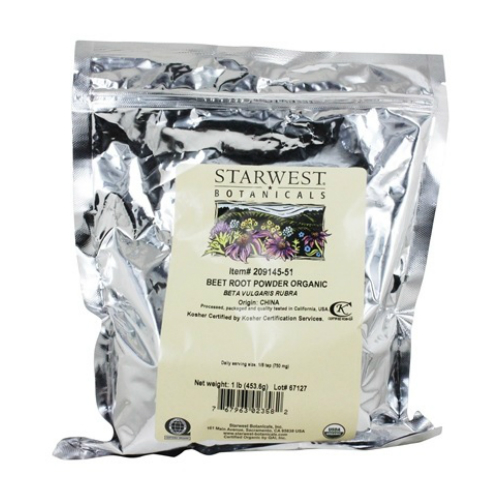
Nutritional Information (Starwest Botanicals Organic Beet Root)
Nutrient
Amount Per Serving (1 tsp / ~3.5 g)
Amount Per 100 g
Calories
12 kcal
340 kcal
Total Carbohydrates
2.8 g
70.0 g
— Dietary Fiber
0.8 g
20.0 g
— Naturally Occurring Sugars
1.9 g
48.0 g
Protein
0.4 g
11.5 g
Total Fat
0.05 g
1.2 g
Potassium
112 mg (2.4% DV)
3,200 mg (68% DV)
Sodium
26 mg (1.1% DV)
750 mg (32% DV)
Iron
0.3 mg (1.7% DV)
8.0 mg (44% DV)
Folate (Vitamin B9)
18 mcg (4.5% DV)
520 mcg (130% DV)
Total Dietary Nitrates (approx.)
~80–110 mg
~2,300–3,100 mg
*Percent Daily Values (DV) are based on a 2,000-calorie diet. Naturally occurring phytochemical values fluctuate naturally between seasonal crop batches.
Certified Organic by QAI: Cultivated without synthetic herbicides, synthetic pesticides, or chemical fertilizers, meeting strict USDA National Organic Program (NOP) criteria.
Non-Irradiated & No ETO: Ethylene oxide gas (ETO) and ionizing gamma irradiation are strictly banned across Starwest processing lines.
cGMP Certified Facility: Manufactured and milled under current Good Manufacturing Practices (21 CFR Part 111) in state-of-the-art facilities.
Third-Party Laboratory Tested: Every lot undergoes rigorous testing for microbials (Salmonella, E. coli, yeast, and mold), physical identification (HPTLC), and heavy metals (Lead, Cadmium, Arsenic, and Mercury) to ensure compliance with strict purity baselines.
Kosher Certified: Inspected and certified Kosher by Kosher Certification Services.
Recommended Usage Protocols & Serving Suggestions
For Daily Cardiovascular & General Wellness:
Mix 1 to 2 teaspoons (approx. 3.5 g to 7 g) of organic beet root powder into 8–10 oz of cold water, freshly squeezed orange juice, apple cider, or your favorite daily green smoothie.
For Athletic Endurance & Pre-Workout Nitric Oxide Support:
Consume 1 to 2 tablespoons (approx. 10 g to 15 g) approximately 90 to 150 minutes prior to training or competition. Plasma nitrite concentrations peak between 2 and 3 hours post-ingestion [3, 4].
Clinical Tip for Maximum Nitric Oxide Conversion: Avoid using chlorhexidine or antibacterial mouthwashes immediately before or after consuming beet root powder. Antibacterial rinses destroy oral bacterial nitrate reductases, blunting nitric oxide production by up to 90% [7].
Culinary & Food Formulation Uses:
Starwest Botanicals fine-mesh beet powder serves as a clean-label natural food colorant (blush pink to deep ruby) for royal icings, artisanal pasta dough, pancakes, raw energy bars, homemade red velvet desserts, and savory soups or vinaigrettes.
Important Safety Precautions & Medical Contraindications
While organic beet root powder is classified as generally recognized as safe (GRAS), consumers with the following clinical profiles must exercise prudence:
Beeturia: The excretion of pink or red urine and stool occurs in roughly 10% to 14% of the population following concentrated beetroot ingestion due to un-metabolized betanin. This effect is benign and harmless, but should not be confused with hematuria (blood in urine).
Calcium Oxalate Kidney Stones (Nephrolithiasis): Like spinach and Swiss chard, red table beets contain significant levels of dietary oxalates. Individuals with a history of hyperoxaluria or recurrent calcium oxalate renal calculi should consult a nephrologist or registered dietitian before incorporating high-dose beet root powder into their regimen.
Hypotension & Antihypertensive Medications: Beetroot powder can augment the blood pressure-lowering action of prescription antihypertensives (e.g., ACE inhibitors, beta-blockers, calcium channel blockers). Monitor blood pressure readings closely.
Phosphodiesterase-5 (PDE5) Inhibitors & Organic Nitrates: Do not co-ingest supplemental beetroot powder with prescription nitroglycerin or PDE5 inhibitors (e.g., sildenafil, tadalafil) without physician oversight due to potential synergistic hypotensive reactions.
*FDA Compliance Statement: The statements on this page have not been evaluated by the Food and Drug Administration. This product is not intended to diagnose, treat, cure, or prevent any disease.
Clinical References & Scientific Bibliography
Kapil, V., et al. (2015). Dietary nitrate provides sustained blood pressure lowering in hypertensive patients: a randomized, phase 2, double-blind, placebo-controlled study. Hypertension, 65(2), 320–327.
Siervo, M., et al. (2013). Inorganic nitrate and beetroot juice supplementation reduces blood pressure in adults: a systematic review and meta-analysis. The Journal of Nutrition, 143(6), 818–826.
Bailey, S. J., et al. (2009). Dietary nitrate supplementation reduces the O2 cost of low-intensity exercise and enhances tolerance to high-intensity exercise in humans. Journal of Applied Physiology, 107(4), 1144–1155.
Larsen, F. J., et al. (2011). Dietary inorganic nitrate improves mitochondrial efficiency in humans. Cell Metabolism, 13(2), 149–159.
Clifford, T., et al. (2015). The potential benefits of red beetroot supplementation in health and disease. Nutrients, 7(4), 2801–2822.
Craig, S. A. (2004). Betaine in human nutrition. The American Journal of Clinical Nutrition, 80(3), 539–549.
Govoni, M., et al. (2008). The increase in plasma nitrite after a dietary nitrate load is markedly attenuated by an antibacterial mouthwash. Nitric Oxide, 19(4), 333–337.
Frequently Asked Questions About Organic Beet Root Powder
What is the difference between beet root powder and beet juice powder?
Whole organic beet root powder (such as Starwest Botanicals SW0087) is produced by dehydrating and milling the entire beet taproot. This preserves the complete dietary fiber matrix, whole-food micronutrients, and slow-release carbohydrates. Beet juice powder is produced by pressing the root, extracting the liquid, and spray-drying the filtered juice (often utilizing maltodextrin as a drying carrier), removing all natural insoluble dietary fiber.
How much organic beet root powder should I take daily?
For general cardiovascular support and micronutrient supplementation, a daily intake of 1 to 2 teaspoons (approx. 3.5 g to 7 g) is standard. For athletic endurance or pre-workout vasodilation, clinical trials frequently utilize dosages between 10 g and 15 g (equivalent to roughly 1 to 2 level tablespoons) consumed 2 to 2.5 hours prior to high-intensity training.
Does beet root powder effectively lower blood pressure?
Multiple double-blind, placebo-controlled clinical trials indicate that dietary inorganic nitrates from beetroot produce modest, clinically significant reductions in resting systolic blood pressure (typically ranging between 4 and 10 mmHg). These reductions occur via the systemic enterosalivary nitrate-to-nitric oxide pathway, which relaxes vascular tone and improves endothelial elasticity.
Why does beet root powder cause red or pink urine (beeturia)?
Beeturia is a harmless phenomenon occurring in 10% to 14% of healthy individuals. It is caused by the physiological transit and renal excretion of betanin pigments that have passed unoxidized through the stomach and intestines. It is completely benign and typically resolves within 24 to 48 hours.
Does this Starwest Botanicals Beet Root Powder contain heavy metals or additives?
No. Starwest Botanicals Organic Beet Root Powder contains 100% pure organic Beta vulgaris root with zero added silicon dioxide, anticaking agents, or preservatives. Starwest tests every batch under rigorous cGMP protocols for microbiological contaminants, chemical residues, and heavy metals (lead, arsenic, cadmium, mercury) to ensure full safety and quality compliance.
Can people prone to kidney stones consume beet root powder?
Individuals with a documented medical history of calcium oxalate kidney stones should consult their physician or nephrologist before using beet root powder. Table beets are naturally high in oxalates, which can bind with free calcium in the urinary tract, potentially elevating stone formation risks in susceptible individuals.