- *MSRP:
$16.49- Our Price:
- $14.02
- Subscribe and Save:
- $9.90ea.
- Buy: at $14.02


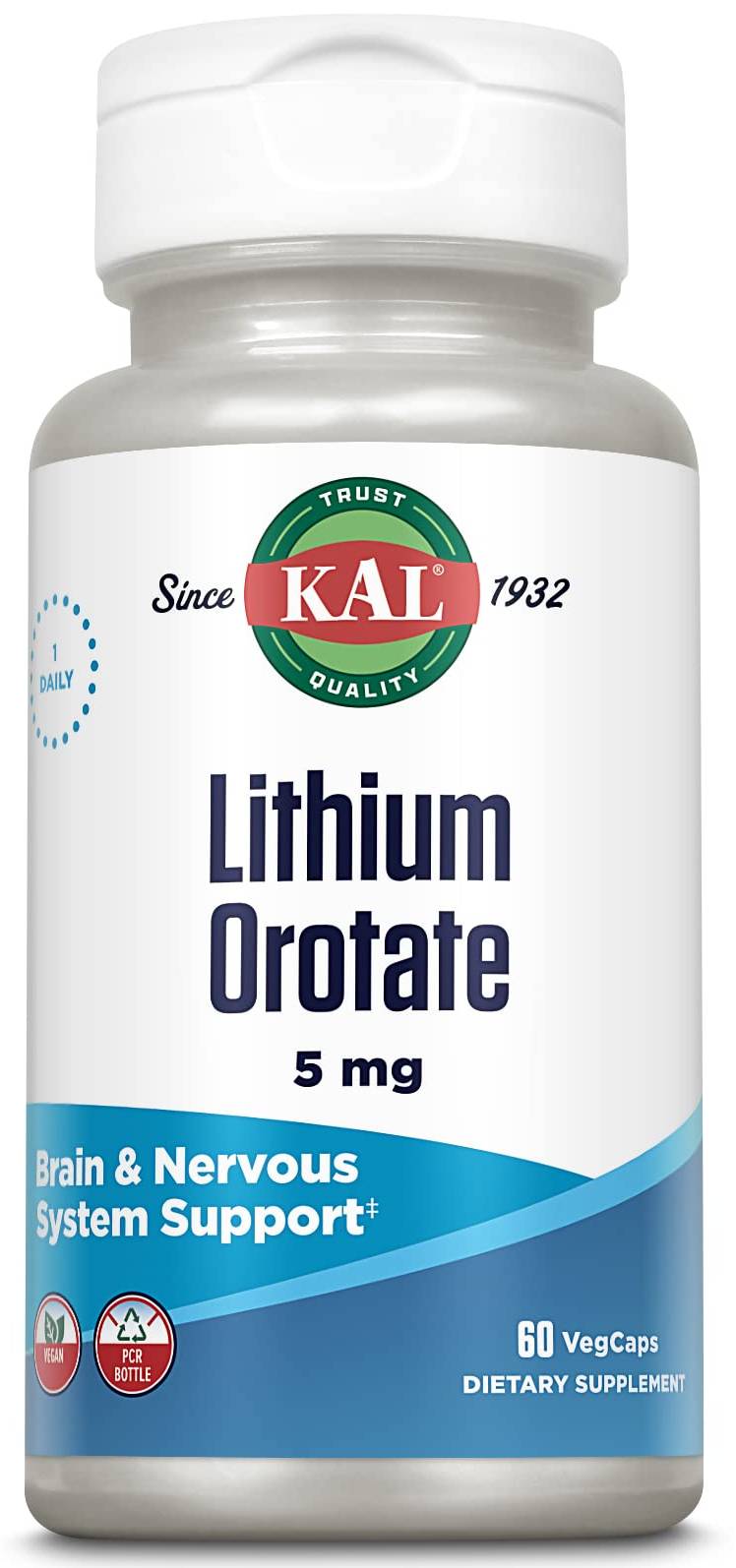
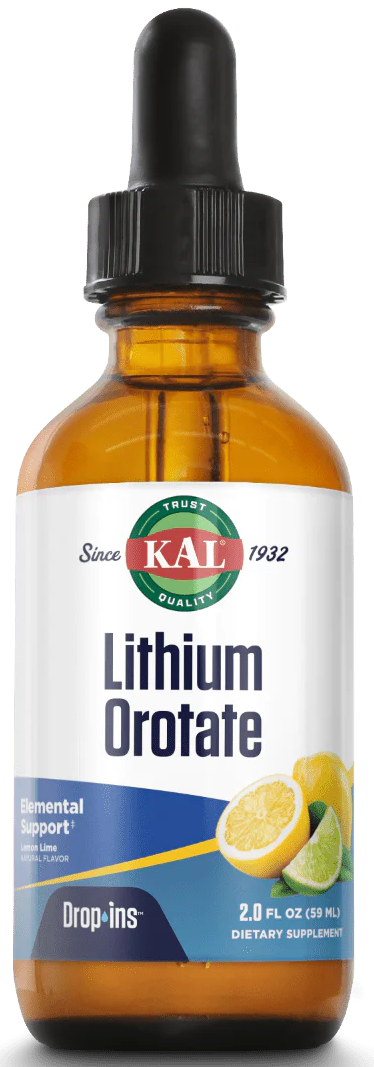
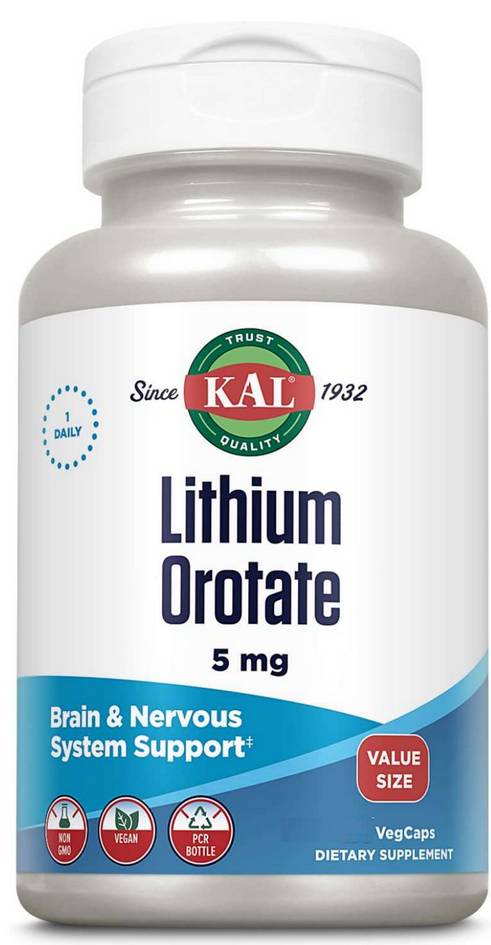
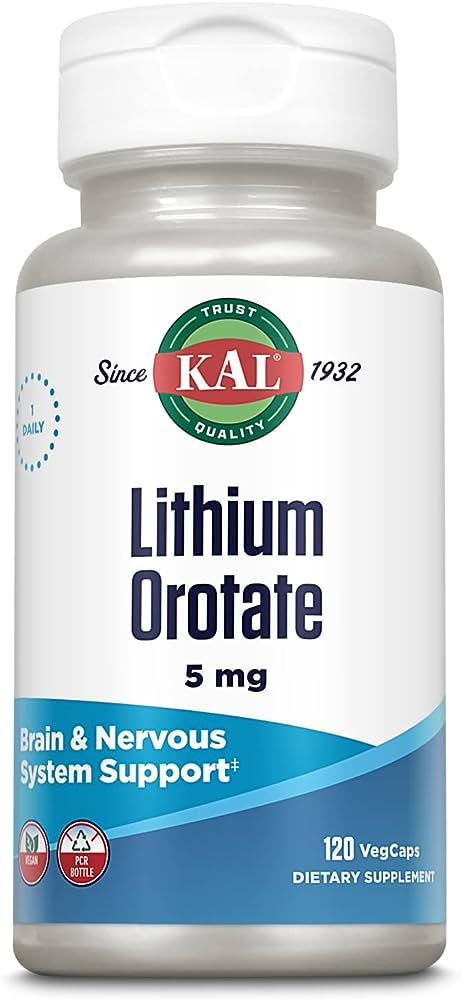
Nutritional Microdose Lithium Chelated with Orotic Acid for Healthy Neurotransmitter Balance, Everyday Stress Resilience, and Mental Calmness.
✓ 5 mg Elemental Lithium: Micro-dosed for gentle, daily wellness support.When many people hear the word lithium, they immediately picture heavy prescription psychiatric drugs. In reality, lithium is an essential, naturally occurring alkali trace element found in the earth's crust, natural spring waters, grains, legumes, and dark leafy vegetables.
Just like zinc, copper, or selenium, our nervous systems utilize trace amounts of lithium every day to regulate enzyme reactions, govern cellular communication, and maintain mood equilibrium. However, modern municipal water purification methods and depleted agricultural soils have significantly lowered the amount of trace lithium people receive from their daily diets.
KAL Lithium Orotate 5mg combines elemental lithium with orotic acid (a natural carrier compound produced in the body). This chelated bond allows the tiny mineral ion to pass smoothly through cell membranes and cross the blood-brain barrier intact. Because the orotate complex is utilized efficiently by neurological cells, you receive targeted cognitive and emotional support at a safe, nutritional micro-dose.
Understanding the critical difference between dietary trace mineral supplementation and pharmaceutical therapy:
Note: Dietary lithium orotate is not intended to treat, mitigate, or replace prescription protocols for bipolar affective disorder, clinical depression, or severe psychiatric conditions.
Clinical and neurobiological research demonstrates that micro-doses of lithium exert profound neuroprotective actions by modulating key enzyme networks and brain-derived growth factors:
Glycogen synthase kinase-3 beta (GSK-3β) is an enzyme that helps regulate cellular energy and emotional stability. When overactive due to chronic physical or mental stress, GSK-3β triggers excessive cellular wear and tear and damages nerve connections. Lithium naturally inhibits GSK-3β hyperactivity, acting like a protective brake pad that shields sensitive neurons from stress-induced exhaustion.
Brain-Derived Neurotrophic Factor (BDNF) is a vital signaling protein responsible for neurogenesis (the formation of new neurons) and synaptic plasticity (how the brain learns, remembers, and adapts). Scientific investigations show that low-dose lithium stimulates BDNF production, supporting healthy mental focus and long-term memory resilience as you grow older.
Restlessness, nervous tension, and brain fog frequently arise when glutamate (the primary excitatory neurotransmitter) over-stimulates nerve receptors. Microdose lithium helps clear excess synaptic glutamate while supporting calming GABA pathways and serotonin receptor sensitivity, promoting a serene yet focused state of mind without causing drowsiness.
Manufactured by KAL (pioneering supplement quality since 1932), this product is produced in state-of-the-art facilities compliant with current Good Manufacturing Practices (cGMP) and tested for heavy metals, purity, and active potency.
Serving Size: 1 VegCap
Servings Per Container: 120
Amount Per Serving % Daily Value Lithium (from Lithium Orotate) 5 mg ** Daily Value not established.
Active Ingredient: Lithium (as Lithium Orotate) – 5 mg elemental yield.
Other Ingredients: Cellulose, Vegetable Cellulose Capsule, Organic Rice Extract Blend, and Silica.
✓ 100% Vegan / Vegetarian | ✓ Non-GMO | ✓ Gluten-Free | ✓ Soy-FreeBecause lithium influences kidney filtration and electrolyte fluid balance, responsible use requires adhering to clear medical safety guidelines:
Take 1 VegCap daily with a meal or a tall glass of water, or use as directed by your licensed healthcare practitioner. Maintaining consistent daily hydration supports optimal renal clearance.
No. In KAL Lithium Orotate, 5 mg refers strictly to the yield of pure elemental lithium, which is bound to roughly 120 mg of organic orotic acid. By contrast, a standard clinical prescription dose of lithium carbonate (typically 300 mg to 900 mg) delivers 56 mg to 169 mg or more of elemental lithium. KAL provides a gentle dietary micro-dose rather than a clinical pharmacological dose.
At a standard nutritional dose of 5 mg elemental lithium daily, serum blood levels generally remain within standard baseline dietary ranges. Consequently, routine therapeutic drug monitoring (required for high-dose prescription lithium carbonate) is typically not required for healthy adults. However, periodic wellness blood panels with your primary physician are always good medical practice.
Individual responses vary depending on baseline dietary mineral levels and individual brain chemistry. Many customers report subtle improvements in daily calm, reduced mental irritation, and better stress management within 7 to 14 days of consistent daily use. Long-term neuroprotective benefits build cumulatively over several months.
Most individuals prefer taking 1 VegCap in the morning with breakfast to support a calm, centered mindset throughout a busy workday. Others take it in the evening with dinner because its calming effect on excitatory neurotransmitters helps ease evening mental chatter before sleep.
Significant weight gain, lethargy, and tremors are well-known side effects associated with pharmaceutical-level lithium carbonate. In contrast, nutritional lithium orotate at 5 mg of elemental lithium has an exceptionally high safety profile and is not typically associated with fluid retention, metabolic slowing, or sluggishness.
Yes. Trace lithium works synergistically with other neuro-supportive nutrients, including Magnesium Glycinate, L-Theanine, Vitamin B12 (methylcobalamin), and Omega-3 fatty acids. Always verify multi-supplement regimens with your healthcare provider if you take any prescription medications.