- *MSRP:
$66.50- Our Price:
- $47.89
- Buy: at $47.89


Broad-Spectrum Digestive Support for Gas, Bloating, and Complete Meal Breakdown
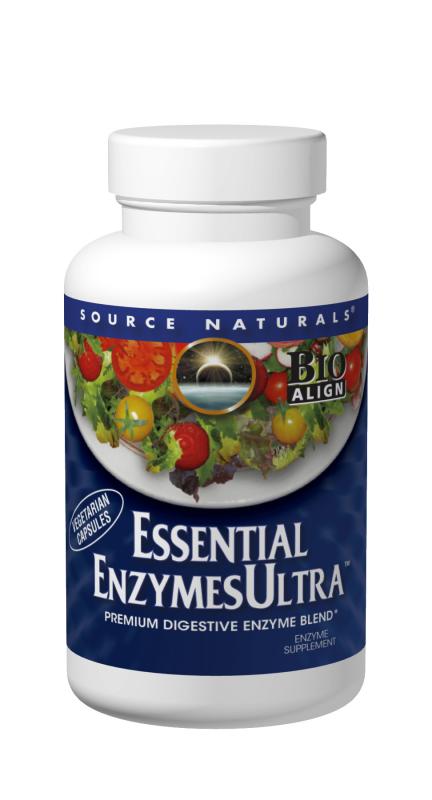
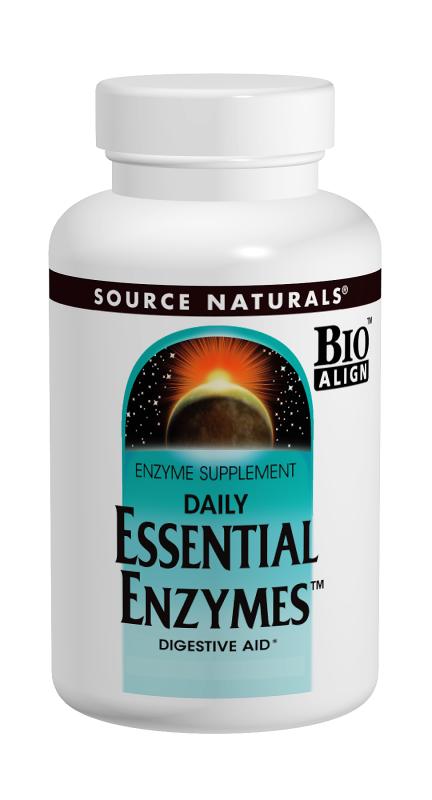
Even the most nutritious meal cannot benefit your body if your digestive system struggles to break it down. When digestion falls short, unabsorbed food can linger in the gut, leading to uncomfortable gas, post-meal bloating, occasional heartburn, and sluggish energy. Source Naturals Essential Enzymes 500MG is an all-vegetarian, multi-enzyme formula engineered to support your body's natural digestive rhythm at every single meal.
Unlike single-ingredient supplements, this Bio-Aligned Formula delivers eight specialized enzymes that work across a wide stomach-to-intestine pH range. Whether you are enjoying a heavy holiday dinner, a high-protein fitness meal, or a fiber-rich plant-based dish, each capsule provides the biological tools your digestive tract needs to unlock essential vitamins, minerals, and micronutrients without the uncomfortable aftereffects.
To understand how Essential Enzymes 500MG helps you feel your best, it helps to understand what digestive enzymes actually do. Think of digestive enzymes as biological scissors. When you swallow a bite of food, macronutrients (large proteins, dense fats, long starch chains, and tough plant fibers) are far too massive to cross your intestinal wall into your bloodstream. Enzymes snip these complex molecules into microscopic building blocks: amino acids, fatty acids, and simple sugars that your cells can readily use for energy and tissue repair.
Under ideal conditions, your salivary glands, stomach, and pancreas produce an abundant supply of these enzymatic tools. However, modern research shows that several everyday factors can deplete or compromise your natural enzyme output:
Clinical studies demonstrate that both gastric acid and pancreatic exocrine enzyme output naturally decline as we mature (Laugier et al., 1991). Meals that were easy to digest in your twenties can suddenly feel heavy and uncomfortable in your forties, fifties, and beyond.
Raw, fresh foods naturally contain indigenous enzymes that assist in self-digestion. However, cooking food above 118°F completely denatures and deactivates these natural enzymes, forcing your pancreas to shoulder the entire digestive burden alone.
Eating on the run, rushing through lunch, or feeling stressed triggers your sympathetic ("fight-or-flight") nervous system. This diverts blood flow away from the gut and sharply curtails enzyme secretion, leaving food partially digested.
What happens to undigested food? When partially broken down food leaves the small intestine and enters the colon, resident bacteria begin to rapidly ferment it. This bacterial fermentation produces excessive hydrogen, methane, and carbon dioxide gases, causing bloating, intestinal distension, cramps, and irregular stools (Roxas, 2008).
Many generic enzyme supplements rely on only one or two enzymes, leaving massive gaps in your digestive process. Source Naturals Essential Enzymes 500MG provides a comprehensive array of eight distinct enzyme activities designed to target all five primary food categories:
Proteins in meats, eggs, fish, tofu, and legumes are held together by tough peptide bonds. If proteins are not thoroughly broken down into individual amino acids, they can cause digestive heaviness, immune reactions, and sluggishness.
Fats from cooking oils, avocados, dairy, and fatty meats are hydrophobic (water-repelling), making them the slowest macronutrient to digest. Incomplete fat digestion often causes oily stools, bloating, and poor absorption of vital fat-soluble vitamins (A, D, E, and K).
Starches in potatoes, rice, pasta, bread, and grains are long repeating sugar chains. When starches bypass complete breakdown, gut microbes feed on them, creating intense lower-abdominal gas.
Humans do not genetically produce enzymes capable of breaking down cellulose plant walls found in raw vegetables, salads, nuts, seeds, and beans.
Up to 65% of adults produce insufficient natural lactase, meaning consuming dairy results in sudden stomach rumbling, pressure, and urgent bowel movements (Suarez et al., 1995).
A common question among health-conscious shoppers is whether plant-derived enzymes perform as well as traditional animal-derived pancreatic extracts (such as porcine or bovine pancreatin). Peer-reviewed gastroenterology research demonstrates that plant and microbial enzymes offer distinct clinical advantages due to their extraordinary pH stability (Roxas, 2008; Ianiro et al., 2016).
Your stomach is an extremely acidic chamber, typically maintaining a pH between 1.5 and 3.5. Animal-derived enzymes (like standard porcine pancreatin) are naturally delicate: they are denatured and permanently deactivated by strong stomach acid unless they are treated with chemical enteric coatings. Furthermore, animal enzymes only turn on once they reach an alkaline environment (pH 6.5 to 8.0) in the lower small intestine.
In contrast, the vegetal and microbial enzymes in Source Naturals Essential Enzymes 500MG are naturally acid-tolerant. They remain functional across an expansive pH curve ranging from pH 2.0 to pH 9.0 (Roxas, 2008).
Because vegetal enzymes tolerate stomach acid, they begin predigesting food during the 30 to 60 minutes that a meal rests in the upper stomach (fundus), dramatically reducing the digestive workload downstream.
As chyme moves from the stomach into the alkaline duodenum, these microbial enzymes continue working alongside your body's native secretions for seamless nutrient absorption.
Digestive enzymes are backed by extensive double-blind, placebo-controlled human clinical trials verifying their efficacy for functional gastrointestinal comfort:
In a randomized, double-blind, placebo-controlled clinical trial published in the Journal of Medicinal Food, researchers evaluated individuals experiencing frequent post-meal fullness, bloating, and digestive discomfort (Majeed et al., 2018). Patients receiving a broad-spectrum multienzyme complex experienced statistically significant improvements in bloating, upper abdominal pain, and overall gastrointestinal comfort scores compared to the placebo group within weeks of starting mealtime enzyme therapy.
Citation: Majeed M, Majeed S, Nagabhushanam K, et al. J Med Food. 2018;21(11):1120-1128. [PMID: 30160996]
A seminal clinical study published in The New England Journal of Medicine proved that supplemental lactase enzymes effectively hydrolyze dietary lactose, directly reducing breath hydrogen excretion (the biological marker of bacterial fermentation) and significantly minimizing gas, cramping, and diarrhea in lactose-intolerant individuals (Suarez et al., 1995).
Citation: Suarez F, Savaiano DA, Levitt MD. N Engl J Med. 1995;333(1):1-4. [PMID: 7776987]
When evaluating digestive enzymes, never judge quality by milligrams alone. Milligrams only tell you how much powder is inside the capsule; they tell you nothing about biological strength. Premium supplements like Source Naturals Essential Enzymes 500MG list activity units established by the Food Chemicals Codex (FCC) and United States Pharmacopeial Convention (USP). Units like HUT (protease activity), DU (amylase activity), FIP (lipase activity), and ALU (lactase activity) measure the exact rate at which the enzyme digests food under standardized laboratory conditions.
Every capsule of Source Naturals Essential Enzymes delivers a guaranteed 500 mg proprietary multi-enzyme complex with verified laboratory activity levels:
| Active Ingredient / Enzyme Component | Enzymatic Activity (FCC Units) | Primary Target |
|---|---|---|
| Essential Enzymes® Proprietary Blend | 500 mg † | Full Meal Digestion |
| Vegetal Analog of Pancreatin (Fungal) | 28,625 HUT | Proteins & Polypeptides |
| Acid-Stable Protease | 70 SAP | Stomach Acid Proteins |
| Lipase | 375 FIP | Fats, Lipids & Oils |
| alpha-Amylase | 630 DU | Starches & Complex Carbs |
| Amyloglucosidase (Glucoamylase) | 2 AG | Starch Terminal Bonds |
| Cellulase | 100 CU | Plant Fiber & Cell Walls |
| Hemicellulase | 325 HCU | Grains & Vegetable Fibers |
| Lactase | 40 ALU | Milk Sugar (Lactose) |
† Daily Value (DV) not established. Standardized FCC Units: HUT (Hemoglobin Units on Tyrosine basis), SAP (Spectrophotometric Acid Protease Units), FIP (Federation Internationale Pharmaceutique), DU (Dextrinizing Units), AG (Amyloglucosidase Units), CU (Cellulase Units), HCU (Hemicellulase Units), ALU (Acid Lactase Units).
Other Ingredients: Gelatin (capsule shell), calcium sulfate anhydrous, stearic acid, colloidal silicon dioxide, and magnesium stearate.
Allergen Free Guarantee: Contains NO yeast, dairy, egg, gluten, soy, or wheat. Contains NO sugar, salt, artificial color, artificial flavor, fragrance, or chemical preservatives.
Note: The enzymes are 100% vegetarian derived through microbial fermentation. However, the outer capsule shell contains standard pharmaceutical gelatin.
Because enzymes work by physically contacting food, timing is everything. Follow these evidence-based best practices to get the most digestive comfort from every capsule:
Consult Your Physician: If you are pregnant, planning to become pregnant, or breastfeeding, speak with your healthcare provider before introducing enzyme supplements.
Active Ulcers or Gastritis: If you have active stomach or duodenal ulcers, severe erosive gastritis, or are taking prescription blood thinners, consult your doctor prior to use. High-activity proteases may cause mild irritation to already damaged stomach mucosa.
Source Naturals Essential Enzymes provides supplemental enzymes that break down proteins, dietary fats, carbohydrates, plant fiber, and dairy lactose. By speeding up and completing the breakdown of food in the stomach and upper small intestine, it prevents undigested food from reaching the colon where bacteria ferment it into gas, helping relieve post-meal heaviness, bloating, and indigestion.
The ideal time to take your capsule is right with your first few bites of food at the start of a meal. Taking enzymes after you finish eating is far less effective because the enzyme needs to be thoroughly mixed into the meal as it enters the stomach to begin digestive action immediately.
"Vegetal Analog of Pancreatin" refers to plant- and fungus-derived enzymes (typically produced via careful microbial fermentation like Aspergillus) that mimic the protein-splitting capabilities of animal pancreatic enzymes. The primary advantage is that vegetal enzymes are acid-stable, meaning they withstand stomach acid and work across a much broader pH range (pH 2.0 to 9.0) than traditional animal pancreatin.
No. Unlike prescription hormones (such as thyroid medication or testosterone), oral digestive enzymes do not trigger negative feedback loops that shut down your pancreas. Your body produces pancreatic enzymes based on neurochemical and gastrointestinal hormones like secretin and cholecystokinin (CCK) released when food arrives. Supplemental enzymes simply assist in digesting that specific meal and are subsequently broken down or eliminated naturally.
Yes. You can gently open the gelatin capsule and sprinkle the fine enzyme powder over cool or room-temperature food such as applesauce, rice, or oatmeal right before eating. However, never mix the powder with hot food or boiling liquids, as intense heat destroys enzyme activity.
The active enzyme powder itself is 100% vegetarian and plant/fungal-derived. However, the standard 360-capsule bottle (SKU: SN1804) uses a traditional gelatin capsule shell. Strict vegetarians who avoid all animal gelatin can either open the capsule and consume the powder with food, or choose the manufacturer's vegetarian capsule line.