  |
The Dual Action of DLPA: Endorphin Shielding and Neurotransmitter Support |
|
 The Dual Action of DLPA: Endorphin Shielding and Neurotransmitter Support
|
Darrell Miller | 05/22/26 |
This content is for informational purposes only and is not a substitute for professional medical advice.


Date:
May 22, 2026 12:27 PM
Author: Darrell Miller
(support@vitanetonline.com)
Subject: The Dual Action of DLPA: Endorphin Shielding and Neurotransmitter Support
What is DLPA and How Does It Help Relieve Pain?
 DLPA (DL-phenylalanine) is a nutritional supplement that offers a unique approach to managing chronic pain. Instead of suppressing inflammation or directly numbing nerves like over-the-counter pain relievers, DLPA works by protecting and prolonging the body’s own built-in painkillers.
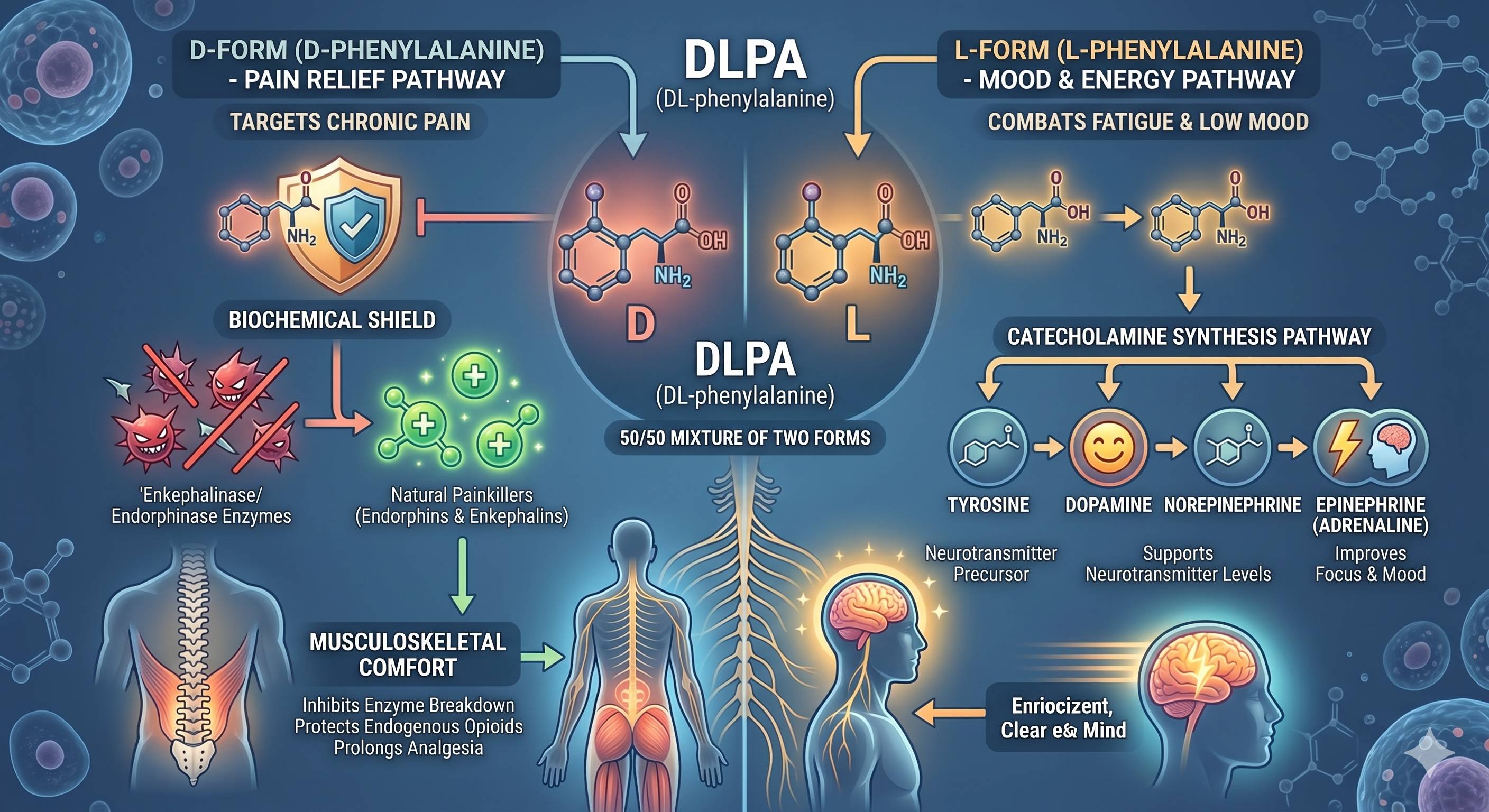
 To understand how it works, it helps to break down the molecule. DLPA is a 50/50 mixture of two stereoisomers (mirror-image structures) of the essential amino acid phenylalanine:
| Form | Origin | Primary Biological Role |
| L-phenylalanine | Naturally occurring in protein-rich foods | Synthesizes neurotransmitters like dopamine and epinephrine |
| D-phenylalanine | Synthesized in a laboratory | Inhibits enzymes that destroy the body's natural painkillers |
How D-Phenylalanine Relieves Pain
The human body has an endogenous analgesia system—a built-in network for managing pain perception. D-phenylalanine acts as a biochemical shield for this system through a very specific mechanism:- The Endorphin Release: When you experience physical trauma or chronic stress, your central nervous system releases endogenous opioids, primarily endorphins and enkephalins. These peptides bind to receptors in the brain and spinal cord, effectively blocking pain signals from reaching your conscious awareness.
- The Enzymatic Breakdown: The body doesn't leave these natural painkillers active indefinitely. To maintain physiological balance, it produces specific enzymes—known as enkephalinases and endorphinases—that rapidly degrade and destroy these peptides shortly after they are released.
- The Intervention: D-phenylalanine functions as an enkephalinase inhibitor. By binding to and slowing down the enzymes responsible for clearing out endorphins, DPA protects your natural painkillers from premature destruction.
Why Include the "L" Form?
You might wonder why a supplement doesn't just use pure D-phenylalanine if that's the part that stops the pain.Chronic pain rarely exists in a vacuum—it is deeply linked to systemic fatigue, mood degradation, and depression. Because chronic pain is neurologically exhausting, it frequently depletes the brain's stimulating neurotransmitters.
The L-phenylalanine half of DLPA acts as the raw precursor material for the catecholamine pathway. Your body converts it into tyrosine, which is then synthesized into dopamine, norepinephrine, and epinephrine (adrenaline). By combining both forms, DLPA provides a dual-action effect: the D-form raises the pain threshold, while the L-form combats the mental fatigue and mood dips that inevitably accompany long-term discomfort.
Key insight: Because DLPA relies on shifting enzyme levels and allowing endorphins to accumulate, it is primarily effective for chronic pain (like osteoarthritis or lingering injuries) rather than acute, immediate pain. It often requires several days to weeks of consistent use to reach its full therapeutic effect.
Summary:
DLPA (DL-phenylalanine) is a nutritional supplement combining two mirror-image forms of an essential amino acid to provide a unique approach to chronic pain management. Unlike standard pain relievers that suppress inflammation, the "D" form of the molecule acts as a biochemical shield for the body's built-in painkilling system. It functions as an enkephalinase inhibitor, meaning it blocks the specific enzymes responsible for destroying circulating endorphins and enkephalins. By protecting these natural opioids from premature breakdown, DLPA allows them to accumulate and remain active longer, effectively raising the body's natural pain threshold.
Because chronic pain is neurologically exhausting and frequently leads to fatigue or lowered mood, the "L" half of the supplement provides critical mental support. L-phenylalanine serves as a raw precursor for synthesizing stimulating neurotransmitters, including dopamine, norepinephrine, and epinephrine (adrenaline). Together, this dual-action mechanism addresses both the physical sensation of lingering discomfort and the mental fatigue that accompanies it, making DLPA uniquely suited for sustained, long-term pain conditions rather than immediate, acute injuries.