  |
The Amino Acid That Fights Chronic Pain, Fatigue, and Cravings Simultaneously |
|
 Is there anything else DLPA can do be sides Pain management and Mood?
|
Darrell Miller | 05/22/26 |
This content is for informational purposes only and is not a substitute for professional medical advice.


Date:
May 22, 2026 04:29 PM
Author: Darrell Miller
(support@vitanetonline.com)
Subject: Is there anything else DLPA can do be sides Pain management and Mood?
Here is what else DLPA can do:
When diving deeper into the physiological applications of DLPA, there are several advanced, highly specific mechanisms that make it particularly interesting, especially regarding athletic performance, metabolic pathways, and cellular recovery.
Here are a few of the more complex, nuanced roles of DLPA in the body:
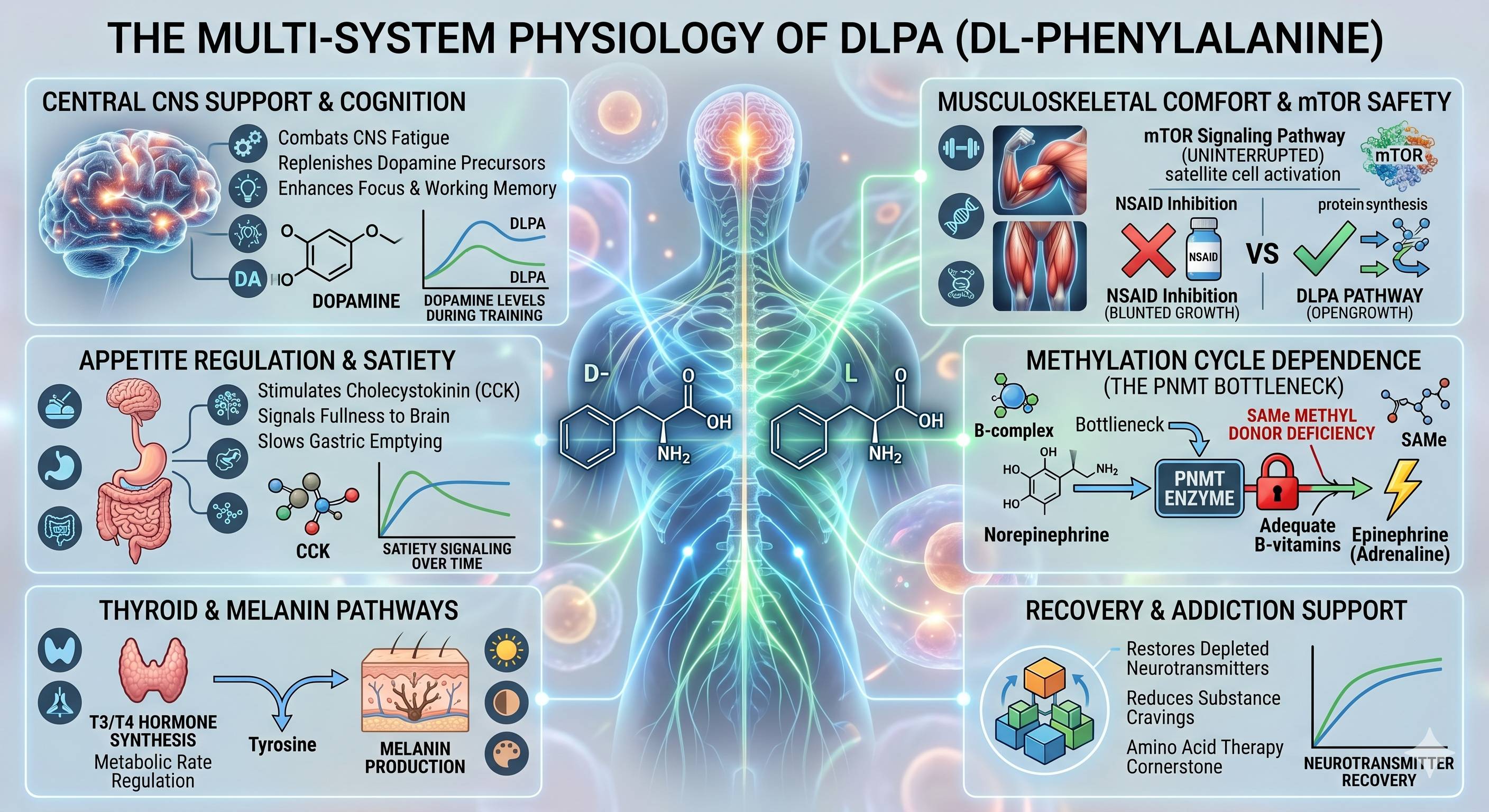
By supplementing with L-phenylalanine, the brain has a steady supply of precursor material to maintain dopamine synthesis. This helps delay the onset of CNS fatigue, allowing for sustained mental drive, higher intensity, and better neurological output throughout a grueling session.
Because the D-phenylalanine in DLPA does not interfere with inflammation or COX enzymes—working entirely by shielding circulating endorphins—it provides musculoskeletal comfort without compromising the cellular signaling required for muscle repair and growth. It allows the body's natural inflammatory repair mechanisms to run their course uninterrupted.
The enzyme responsible for this final step (PNMT) relies entirely on S-adenosylmethionine (SAMe) to donate a methyl group. If the methylation cycle is sluggish or deficient in necessary cofactors (like methylated B-vitamins), the catecholamine cascade bottlenecks at norepinephrine. Therefore, DLPA's ability to fully support the adrenal axis is directly dependent on the efficiency of the body's methylation pathways.
Would you like to explore how to position this mTOR-safe, CNS-supporting angle into a specific educational breakdown for a retail or blog audience?
Summary:
Beyond its foundational role in chronic pain relief, DLPA serves as a versatile precursor that supports several advanced metabolic, cognitive, and physical functions. Because the L-phenylalanine half converts into tyrosine, it provides the essential raw materials required for thyroid hormone synthesis (T3 and T4), melanin skin pigmentation production, and the release of cholecystokinin (CCK), a gut peptide that signals satiety and regulates appetite. Furthermore, by elevating dopamine and norepinephrine, DLPA enhances executive function, working memory, and focus, making it a valuable asset in nootropic protocols and a supportive tool for rebuilding depleted neurotransmitter stores during substance recovery.
In the context of high-intensity athletic performance, DLPA offers unique physiological advantages for training and recovery. It directly combats central nervous system (CNS) fatigue by replenishing the dopamine depleted during heavy resistance training, thereby maintaining neural drive without interrupting muscle protein synthesis. Unlike traditional NSAIDs, which blunt the acute inflammatory response and stall the mTOR pathway, DLPA provides musculoskeletal comfort solely by shielding endogenous opioids (endorphins and enkephalins) from enzymatic breakdown. This allows the natural muscle-repair mechanisms to run their course uninterrupted while simultaneously prolonging the post-exercise "lifter's high." However, its full efficacy remains dependent on a healthy methylation cycle, as the final conversion of norepinephrine to adrenaline requires adequate methyl donors like SAMe.
Is there anything else DLPA can do be sides Pain management and Mood?
 Yes, beyond pain management and general mood elevation, DLPA has several other physiological effects. Because the body can convert the L-phenylalanine half of DLPA into tyrosine, it acts as a precursor for several other critical biological processes.
 1. Appetite Regulation and Satiety
L-phenylalanine is a potent stimulator of cholecystokinin (CCK), an intestinal peptide hormone. When released, CCK signals the brain that you are full and physically slows down gastric emptying. Because of this mechanism, DLPA is sometimes used off-label to help manage cravings and suppress appetite, making it easier to adhere to caloric deficits. 2. Thyroid Hormone Synthesis
The catecholamine pathway (dopamine, adrenaline) isn't the only system that relies on this amino acid. Once L-phenylalanine converts to tyrosine, that tyrosine is sent to the thyroid gland, where it binds with iodine to create thyroxine (T4) and triiodothyronine (T3). Adequate levels of these precursors are essential for maintaining a healthy metabolic rate and regulating cellular energy. 3. Melanin Production (Skin Pigmentation)
Tyrosine is also the foundational building block for melanin, the pigment responsible for the color of your skin, hair, and eyes. Because it feeds the melanin synthesis pathway, L-phenylalanine has been studied and utilized in dermatological treatments—often in conjunction with UVA light therapy—to help repigment the skin in conditions like vitiligo. 4. Attention and Executive Function
While the previous response mentioned that the dopamine and norepinephrine boost helps combat the fatigue associated with chronic pain, those specific neurotransmitters are also the primary drivers of focus, alertness, and working memory. DLPA is frequently used in nootropic stacks to enhance cognitive performance and has been explored as a supportive supplement for attention-deficit conditions. 5. Addiction Recovery Support
In amino acid therapy protocols designed for substance withdrawal (particularly alcohol and opiates), DLPA is often a cornerstone supplement. Prolonged substance abuse artificially floods the brain with dopamine and eventually depletes the brain's natural stores. DLPA provides the raw materials necessary to rebuild those depleted catecholamine levels, which can help reduce withdrawal-related depression and physical cravings. 6. Combating Central Nervous System (CNS) Fatigue
During heavy resistance training, the localized muscle tissue isn't the only thing that fatigues; the central nervous system also takes a massive hit. High-intensity lifting—particularly movements that demand high neurological output or pushing close to muscular failure—rapidly depletes dopamine levels in the brain. As dopamine drops, CNS fatigue sets in, diminishing neural drive and the ability to recruit high-threshold motor units. 7. Pain Management Without Blunting Hypertrophy
A major issue with traditional over-the-counter pain relievers (like NSAIDs such as ibuprofen) is that they work by inhibiting prostaglandins and blunting the acute inflammatory response. While this stops pain, it also directly interferes with the mTOR signaling pathway and satellite cell activation, effectively blunting muscle protein synthesis and hypertrophy. 8. The Methylation Cycle Bottleneck
The effectiveness of the L-phenylalanine half of DLPA is intricately tied to systemic health, specifically the body's methylation cycle. The conversion of phenylalanine to dopamine is relatively straightforward, but the final biochemical step—converting norepinephrine into epinephrine (adrenaline)—requires a methyl donor. 9. Prolonging the "Lifter's High"
Heavy physical exertion naturally triggers a massive release of endogenous opioids to help the body tolerate the physical stress of training. This is commonly referred to as a "runner's high" or "lifter's high." Because D-phenylalanine acts as an enkephalinase inhibitor, taking DLPA prior to or immediately following intense physical activity can significantly extend the half-life of these exercise-induced endorphins, enhancing post-training recovery and general well-being.