  |
Why Cutting Salt Isn’t Working for Your Blood Pressure (And the mineral to Fix BP) |
|
 The 5,000 mg Potassium Target: Why You Don't Need a Low-Sodium Diet
|
Darrell Miller | 06/19/26 |
This content is for informational purposes only and is not a substitute for professional medical advice.


Date:
June 19, 2026 12:22 PM
Author: Darrell Miller
(support@vitanetonline.com)
Subject: The 5,000 mg Potassium Target: Why You Don't Need a Low-Sodium Diet
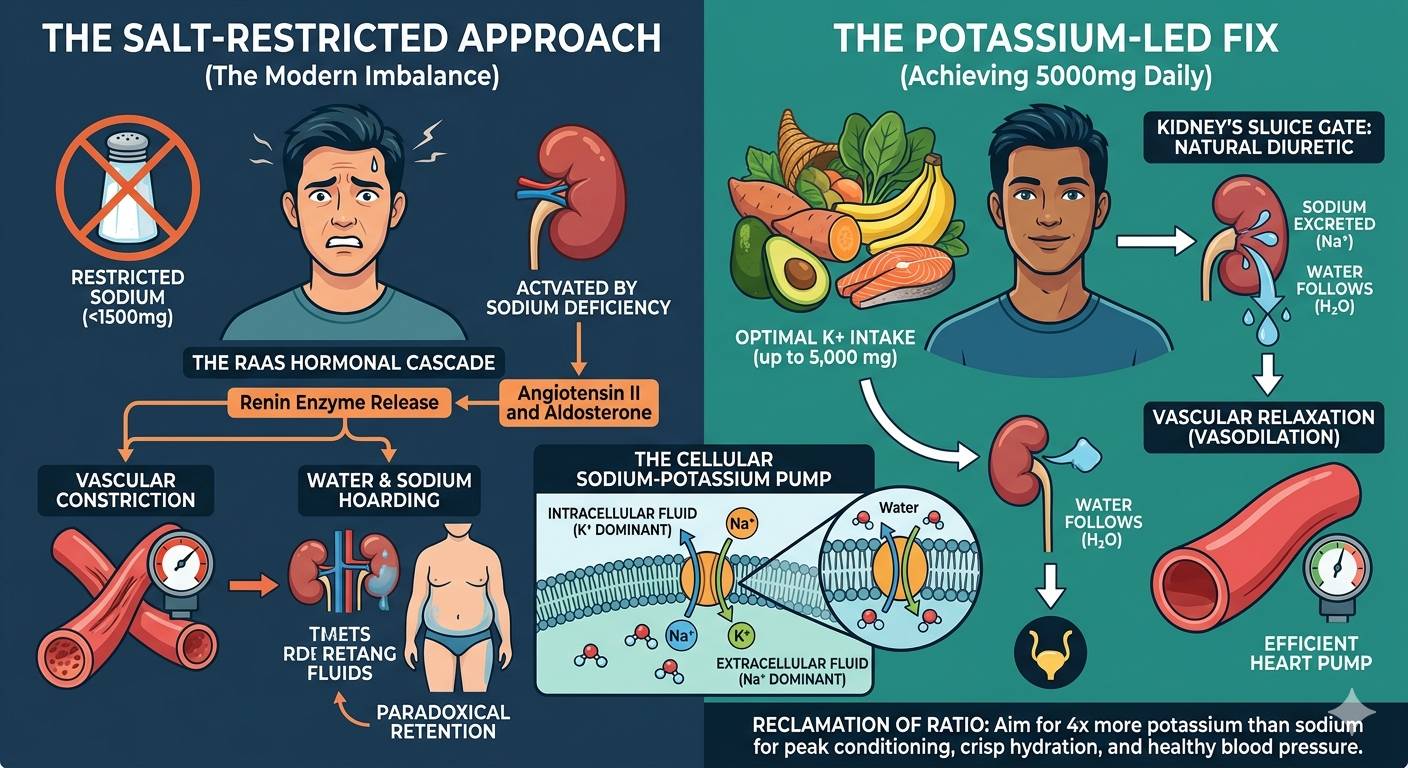
Potassium is far more than just a standard mineral - it is a heavy-hitting essential electrolyte that serves as the primary chemical counterweight to sodium. While sodium grabs most of the headlines for bloating and high blood pressure, potassium is the quiet regulator working behind the scenes to maintain cellular health, fluid dynamics, and vascular tone.
Here is exactly how it manages your water balance and keeps cardiovascular pressure in check.
1. Restoring Cellular Water Balance
To understand fluid balance, you have to look at where water lives in the body. Sodium dominates the fluid outside your cells (extracellular), while potassium is the absolute ruler of the fluid inside your cells (intracellular).They control fluid movement via a cellular mechanism called the sodium-potassium pump.
This microscopic pump works continuously to push sodium out of your cells and pull potassium in.
- When potassium is optimal: Water is drawn naturally into the intracellular space, keeping your muscles and organs properly hydrated and full.
- When potassium drops: The pump struggles. Excess sodium accumulates inside the cells, dragging water along with it. This disruption can trigger cellular swelling and fluid retention - often showing up as that soft, subcutaneous "holding water" look.
2. Lowering Blood Pressure: The Dual Mechanism
When your sodium-to-potassium ratio gets skewed in favor of sodium, your blood pressure inevitably creeps up. Potassium actively forces blood pressure down through two primary physiological pathways:Kidneys and Sodium Clearance
Your kidneys are responsible for filtering your blood and managing fluid volume. High sodium levels signal the body to hold onto water, which increases overall blood volume. Think of it like turning up the water pressure in a garden hose - more fluid equals higher pressure on the arterial walls.Potassium acts as a natural diuretic. When you consume enough of it, the kidneys are signaled to excrete excess sodium through your urine. As sodium leaves the building, it takes that excess water volume with it, dropping the pressure inside your cardiovascular system.
Vascular Relaxation (Vasodilation)
Beyond just managing fluid volume, potassium has a direct, relaxing effect on the physical structure of your blood vessels. High sodium and low potassium can cause blood vessel walls to become stiff and constricted.Potassium relaxes the smooth muscle cells lining your arteries. This widening of the blood vessels - known as vasodilation - instantly reduces resistance to blood flow, allowing your heart to pump more efficiently with less strain.
The Ratio Advantage: Clinical research consistently shows that focusing on the ratio of sodium to potassium is often more impactful for blood pressure management than simply cutting out salt entirely. For optimal cardiovascular and metabolic function, aiming for a 2:1 intake of potassium to sodium is an ideal target.
Vascular Health Beyond Low-Salt: How Potassium Relaxes Arteries and Keeps Muscles Full
For decades, the standard advice for managing fluid retention and high blood pressure has been a blanket directive: cut the salt. But treating sodium like a dietary villain ignores a fundamental biological truth - sodium is an essential electrolyte required for nerve transmission, muscle function, and blood volume regulation.Aggressively slashing salt is a blunt instrument that often creates new physiological imbalances. The real key to vascular health and crisp fluid dynamics isn't absolute sodium deprivation; it is maintaining a high potassium intake - up to 5,000 mg daily - to allow your body to balance salt levels naturally.
The Hidden Risks of Aggressive Salt Restriction
When you drastically cut sodium, your body doesn't just quietly lower your blood pressure. It views the sudden drop in a critical electrolyte as a survival emergency and activates the Renin-Angiotensin-Aldosterone System (RAAS).- Hormonal Cascade: Your kidneys release the enzyme renin, which triggers a cascade of hormones (angiotensin and aldosterone) that tell your body to aggressively hold onto whatever sodium and water it can find.
- Vascular Constriction: This hormonal surge can actually cause blood vessels to constrict, occasionally backfiring and keeping blood pressure elevated despite a low-salt diet.
- Metabolic Drag: Severe, prolonged sodium restriction has been linked in clinical studies to increased sympathetic nervous system activity, elevated stress hormones (like adrenaline), and a paradoxical increase in insulin resistance.
Why 5,000 mg of Potassium is the Real Solution
Instead of forcing your body into a low-sodium starvation state, a more effective approach is to supply it with the optimal amount of its natural physiological counterweight: potassium. Aiming for a robust target of 4,700 to 5,000 mg of potassium daily changes how your system processes salt.- The Kidney's Sluice Gate: High potassium intake signals the kidneys to stop hoarding fluid. When potassium levels are abundant, the kidneys naturally dump excess sodium into the urine. As that extra sodium leaves, it carries the bloated, extracellular water weight out with it, lowering blood volume and easing arterial pressure.
- Blunting the Salt Sensitivity: Many people aren't inherently "salt-sensitive"; they are simply severely potassium-deficient. When daily potassium hits that 5,000 mg threshold, it blunts the blood-pressure-raising effects of dietary sodium, allowing you to enjoy salt without the negative vascular side effects.
- Maintaining Cellular Voltage: Sodium and potassium work in tandem to maintain the electrical membrane potential of your cells. Keeping sodium intake stable while driving potassium up ensures your muscles stay hydrated, full, and electrically active, rather than flat and prone to cramping.
The Cooperative Electrolyte Relationship
Sodium and potassium should never be viewed as enemies; they are partners that require a specific ratio to optimize human physiology.| Electrolyte | Primary Location | Main Operational Role | Effect of Optimal Levels |
| Sodium | Outside the cell (Extracellular) | Maintains blood volume, drives nutrient transport into cells, regulates nerve impulses. | Stable blood pressure, strong muscle contraction, proper hydration. |
| Potassium | Inside the cell (Intracellular) | Relaxes blood vessel walls, pumps fluid back into cells, drives out excess sodium. | Reduced vascular resistance, elimination of subcutaneous bloating. |
Aggressive dietary salt restriction often backfires because sodium is an essential electrolyte required for nerve transmission and fluid regulation; cutting it too drastically triggers a survival response that constricts blood vessels and hoards water. Fluid balance is ultimately determined by the relationship between sodium outside the cells and potassium inside them, a delicate equilibrium managed by the cellular sodium-potassium pump. When this ratio is skewed by a lack of dietary potassium, cells lose their optimal hydration, causing extracellular fluid retention and the soft, bloated look of subcutaneous water weight.
Rather than starving the body of salt, driving daily potassium intake up to 5,000 mg fixes this modern imbalance and naturally eases blood pressure through a dual mechanism. This high intake acts as a natural diuretic, signaling the kidneys to flush out excess sodium along with the excess blood volume that strains arterial walls. Simultaneously, potassium promotes vasodilation by relaxing the smooth muscle lining of the blood vessels, reducing vascular resistance and allowing the heart to pump efficiently while keeping muscles full, hydrated, and performing at their peak.