  |
Is Your Cinnamon Causing Inflammation? The Hidden Risks of a Common Spice |
|
 Is Your Cinnamon Causing Inflammation? The Hidden Risks of a Common Spice
|
Darrell Miller | 07/16/26 |
This content is for informational purposes only and is not a substitute for professional medical advice.


Date:
July 16, 2026 05:28 PM
Author: Darrell Miller
(support@vitanetonline.com)
Subject: Is Your Cinnamon Causing Inflammation? The Hidden Risks of a Common Spice
Can Cinnamon Cause Inflammation?
Cinnamon is widely praised for its ability to improve cellular glucose uptake and support insulin sensitivity, but the direct answer is yes - under specific conditions, consuming cinnamon can cause or trigger inflammation.
While cinnamon naturally contains powerful anti-inflammatory polyphenols (like cinnamaldehyde), its potential to drive inflammation boils down to two distinct triggers: the specific variety you ingest, and your individual immune response to its volatile oils.
1. Coumarin-Induced Liver Inflammation
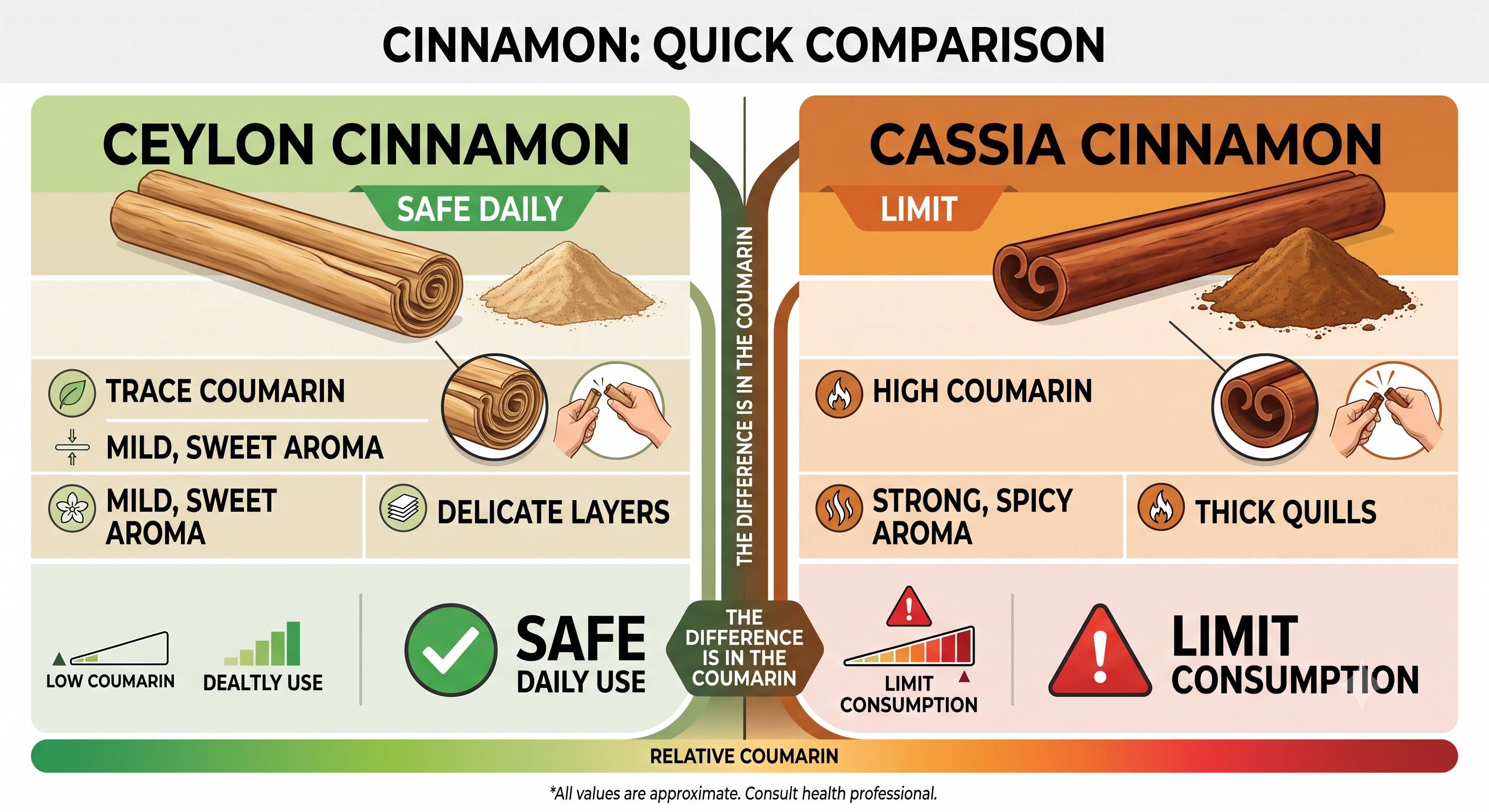
The primary metabolic risk stems from Cassia cinnamon, which is the standard, inexpensive variety found on most grocery store spice racks. Cassia contains significant concentrations of a naturally occurring compound called coumarin.- The Mechanism: When consumed regularly or in large supplement-grade doses, coumarin undergoes metabolic activation in the liver. In individuals who are sensitive or who consume high doses over extended periods, this pathway can overwhelm hepatic clearance, resulting in elevated liver enzymes and toxicity - ultimately causing acute liver inflammation.
- The Threshold: The European Food Safety Authority (EFSA) sets the Tolerable Daily Intake (TDI) for coumarin at a strict 0.1 mg per kg of body weight. For an adult weighing 200 pounds (~90 kg), that limit is about 9 mg of coumarin per day. Because a single teaspoon of Cassia cinnamon can yield between 7 and 18 mg of coumarin, daily medicinal dosing can easily cross the safety threshold and strain the liver.
2. Contact Hypersensitivity (Cinnamon Stomatitis)
Cinnamaldehyde gives cinnamon its signature warmth and flavor, but it is also a documented contact allergen.- The Mechanism: In sensitized individuals, contact with cinnamon oils triggers a Type IV delayed hypersensitivity reaction. Instead of an immediate histamine response, T-cells slowly mount an localized immune attack over several hours or days. This manifests as cinnamon contact stomatitis - a painful, burning inflammation of the tongue, gums, and inner cheeks characterized by redness, swelling, or peeling tissue.
3. Gastrointestinal Mucosal Irritation
Because concentrated spice powders contain highly concentrated volatile oils, taking large doses on an empty stomach can physically irritate the delicate mucous lining of the upper gastrointestinal tract. This localized chemical irritation can mimic or exacerbate inflammatory discomfort in the stomach wall, resulting in heartburn, acid reflux, or cramping.Mitigating the Risk: Ceylon vs. Cassia
If you are leveraging cinnamon as a daily tool for metabolic health and blood sugar management, switching to Ceylon cinnamon (often labeled as "True Cinnamon") fundamentally changes its biochemical impact.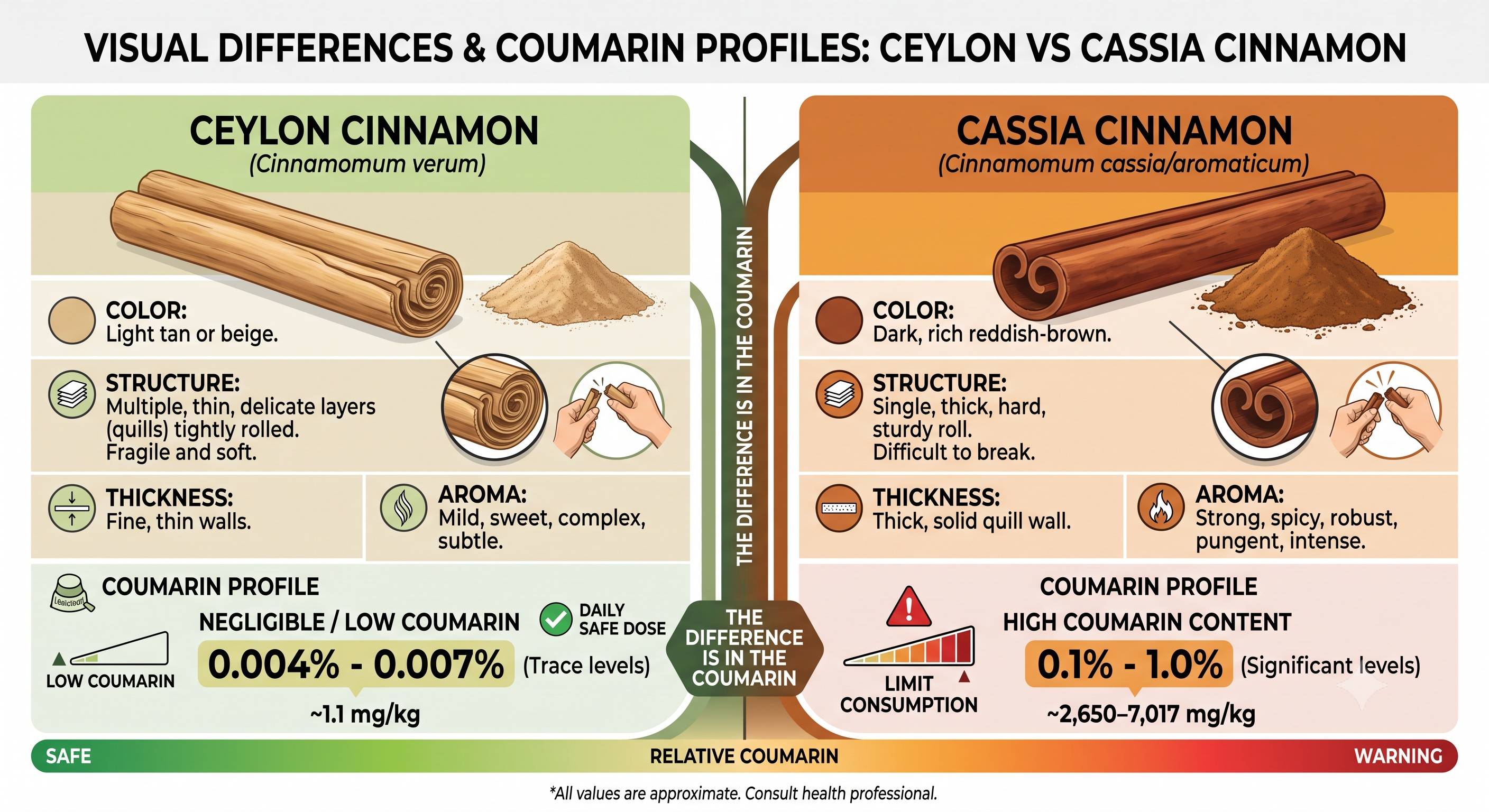
| Feature | Cassia Cinnamon (Common) | Ceylon Cinnamon ("True") |
| Coumarin Content | High (Up to 1% or ~2,650-7,017 mg/kg) | Negligible (Trace levels, highly safe for long-term use) |
| Inflammatory Profile | Potential to cause liver inflammation if overconsumed | Potently anti-inflammatory; safe systemic profile |
| Physical Appearance | Darker, thick, hard, single hollow quill | Lighter tan, thin, fragile, multi-layered roll |
While cinnamon is highly regarded for improving insulin sensitivity and managing blood sugar, it can paradoxically trigger inflammation under specific conditions. The primary systemic risk stems from Cassia cinnamon, the common grocery store variety, which contains high concentrations of a compound called coumarin. When consumed regularly or in large therapeutic doses, coumarin can overwhelm the liver's metabolic pathways, leading to elevated liver enzymes and acute hepatic inflammation. Beyond liver toxicity, cinnamon can also incite localized inflammation; its volatile oil, cinnamaldehyde, can induce a Type IV delayed hypersensitivity reaction known as contact stomatitis - causing painful burning and swelling in the mouth - while concentrated doses can physically irritate the gastrointestinal lining. To safely harness the metabolic benefits of the spice without triggering these inflammatory responses, switching to Ceylon cinnamon ("true cinnamon") is the most effective strategy. Systemically, Ceylon contains only trace, negligible levels of coumarin (0.004% to 0.007%), making it safe for daily medicinal dosing, whereas Cassia contains significant levels (up to 1.0%) that require strict consumption limits to avoid toxicity. Visually and structurally, the two varieties are distinctly different: Ceylon features a light tan color with multiple thin, fragile, and tightly rolled layers, while Cassia is characterized by a dark reddish-brown hue and a single, thick, hard quill that is difficult to break.